
Waxed Concrete: A Material We Continue to Come Back To
Few materials divide opinion as much as waxed concrete. Some associate it with ultra-minimalist interiors from the early 2000s, while others see it as one of the most elegant and enduring finishes available today.
At Studio Bisson, we believe waxed concrete remains one of the most interesting materials in contemporary interior architecture — when it is used thoughtfully and correctly.
Its appeal goes far beyond aesthetics. Waxed concrete creates continuity, softness, and architectural coherence in a way very few materials can. It can completely transform the perception of a space, making interiors feel calmer, more sculptural, and more fluid.
But it is also a material surrounded by misconceptions.
So what exactly is waxed concrete, why has it become so popular, and is it really as practical as people think?
What is waxed concrete exactly?
Despite its name, waxed concrete — often referred to as béton ciré or microcement — is not always a thick concrete slab.
In most residential interior projects today, it is actually a decorative coating applied in thin layers over existing surfaces. It is generally composed of cement, resins, pigments, and mineral powders, then protected with a sealing finish.
Its biggest strength lies in its seamless appearance.
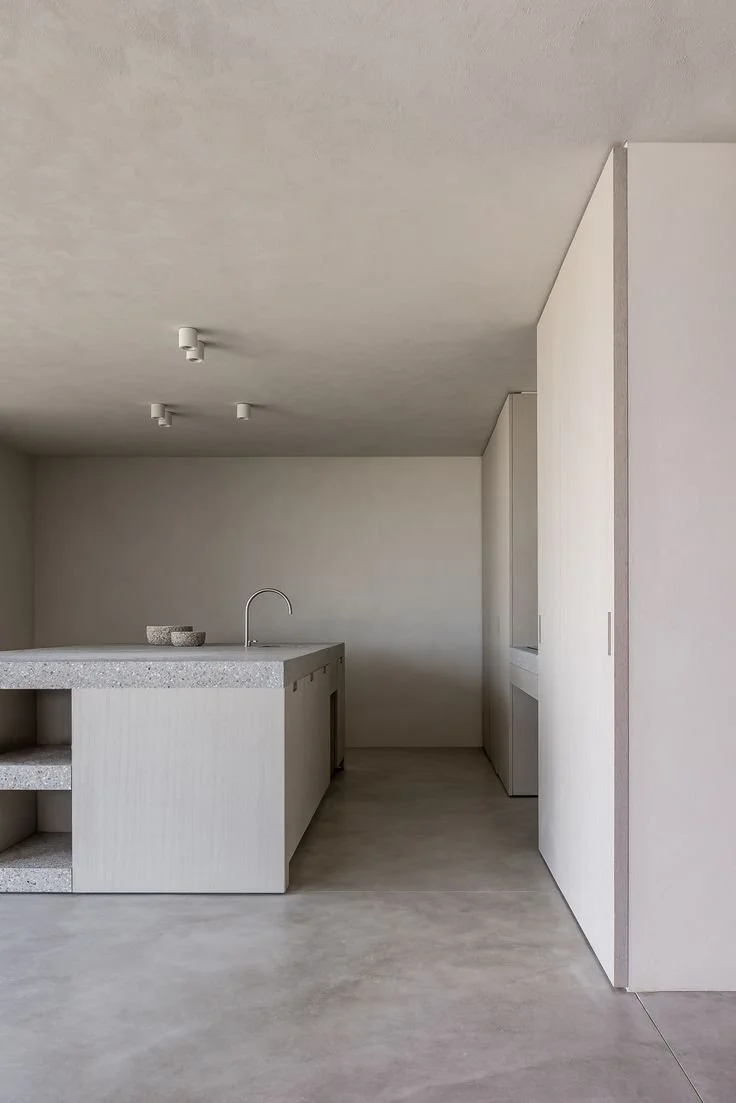
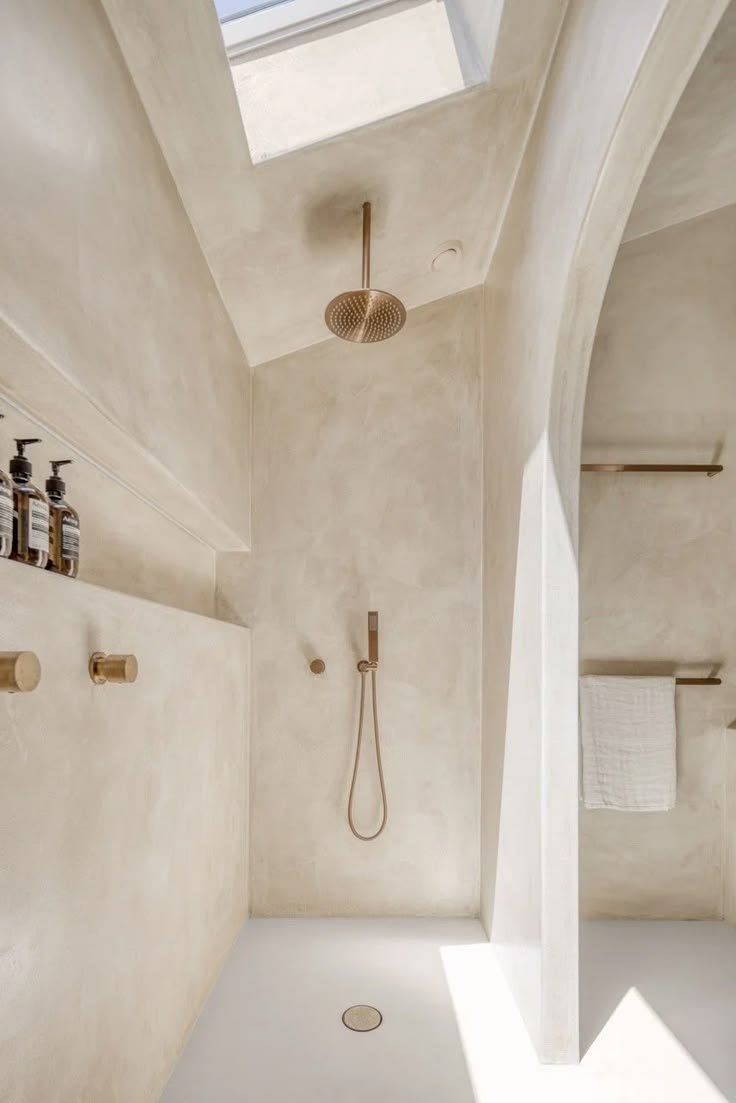
Unlike tiles, parquet, or stone slabs, waxed concrete creates continuous surfaces without visible joints. Floors, walls, countertops, bathrooms, stairs, and even built-in furniture can all visually blend together.
This continuity immediately changes the reading of a space:
rooms feel larger,
circulation feels smoother,
and interiors appear visually calmer.
Credits: Pinterest
That is one of the reasons why it has become so popular in contemporary residential design.
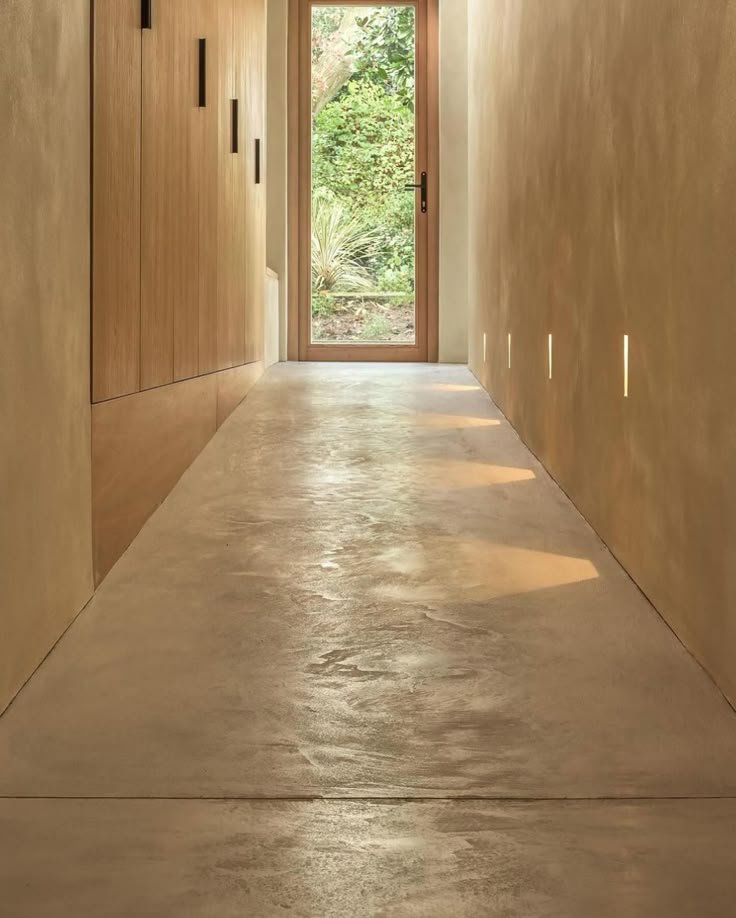
Technically, one of its major advantages is also its relatively thin application thickness compared to traditional materials. In renovation projects especially, microcement can often be applied directly over existing substrates without requiring heavy demolition work.
This makes it particularly interesting in apartments or historical buildings where floor heights and transitions must remain carefully controlled.
Credits: Pinterest
Why architects and designers love it
One of the main qualities of waxed concrete is its versatility.
It can adapt to very different aesthetics:
minimalist interiors,
Mediterranean-inspired homes,
brutalist spaces,
warm contemporary apartments,
or highly refined luxury projects.
The final result depends enormously on:
the texture,
the pigmentation,
the application technique,
and the finish selected.
Some waxed concrete surfaces feel raw and mineral, while others appear almost velvety and soft.
At Studio Bisson, what attracts us most is the atmosphere it creates. Because the material is continuous and understated, it allows architecture, light, proportions, and furniture to breathe.
It creates a form of visual silence that can be incredibly elegant.
We also appreciate the way it interacts with natural materials such as wood, linen, brushed metals, or stone. Its neutrality creates balance while still maintaining strong character.
One important aspect people often underestimate is how strongly waxed concrete reacts to light.
Because the surface contains subtle texture and tonal movement, natural light reveals different variations throughout the day. Large south-facing spaces can enhance the material’s mineral depth beautifully, while darker interiors often benefit from warmer pigments and softer matte finishes.
Artificial lighting also plays a crucial role. Indirect lighting and wall grazing can dramatically enhance texture, whereas overly cold or direct lighting can flatten the material visually.
For this reason, we always study lighting and microcement finishes together rather than treating them as separate decisions.
The importance of craftsmanship
Waxed concrete is one of those materials where execution changes everything.
A beautiful result depends less on the product itself and far more on the expertise of the artisan applying it. Texture, movement, depth, color consistency, and durability all rely heavily on technique.
Poorly applied waxed concrete can crack, stain, or age badly. Well-executed surfaces, on the other hand, can remain beautiful for years.
This is why choosing experienced professionals is essential.
Unlike industrial finishes, béton ciré retains a handcrafted quality. Subtle irregularities, texture variations, and natural movement are part of its charm. The objective is not perfection, but material richness.
In many ways, waxed concrete sits somewhere between architecture and craftsmanship.
From a technical perspective, substrate preparation is also critical.
Credits: Pinterest
Any instability beneath the surface — structural movement, humidity issues, or poor leveling — can eventually affect the finish itself. This is particularly important in older buildings where existing floors or walls may not be perfectly stable.
Expansion joints, waterproofing systems, and sealing layers must all be carefully considered during installation, especially in bathrooms and kitchens.
What often looks visually simple is in reality extremely detail-oriented.
Is waxed concrete practical?
This is probably the question we are asked most often. The answer is: yes — when it is properly installed and maintained. Modern waxed concrete systems have evolved enormously over the years. High-quality sealers now make the material much more resistant to humidity, stains, and daily wear than older versions. It works particularly well in:
bathrooms,
kitchens,
living spaces,
staircases,
and custom furniture applications.
However, like any natural-looking material, it does require a certain acceptance of evolution over time. Minor marks, patina, and subtle wear are part of its character. People expecting a completely frozen and industrial-perfect surface may sometimes be disappointed. But those who appreciate materials that age naturally often end up loving it even more with time. Maintenance also remains relatively simple:
gentle cleaning products,
avoiding highly abrasive chemicals,
and occasional resealing depending on use.
One misconception we often hear is that waxed concrete is fragile. In reality, most issues come either from poor installation or unrealistic expectations. Like natural stone or wood, it is a living surface. It performs beautifully when understood as a material that develops patina rather than remaining visually frozen forever.
The growing popularity of warm minimalism
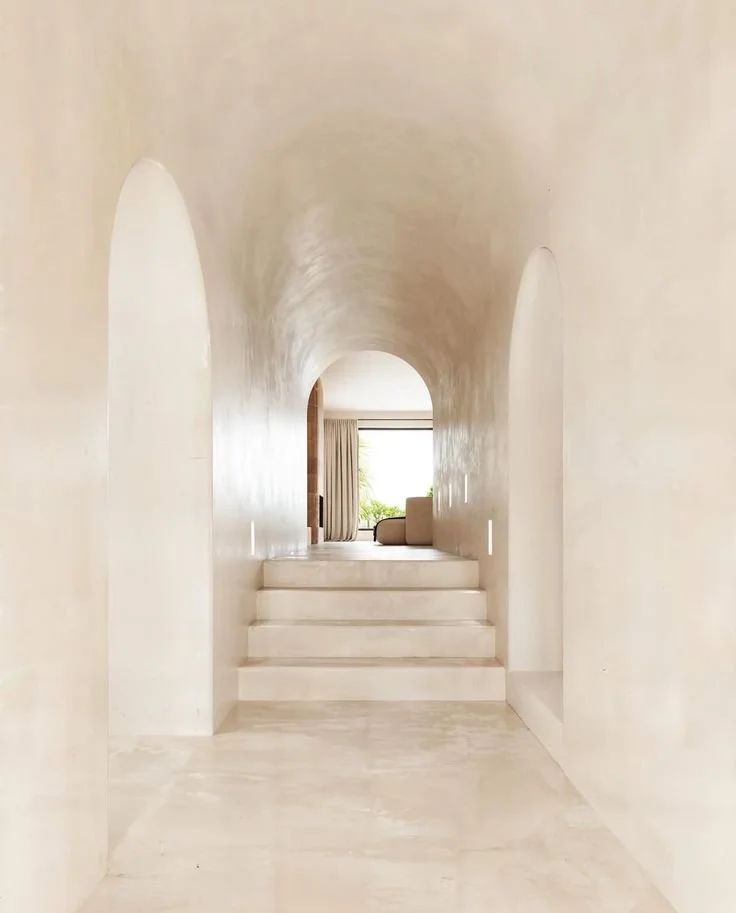
Part of the reason waxed concrete remains so relevant today is because interior design itself is evolving. Minimalism is becoming warmer, softer, and more tactile. People still want calm interiors, but they no longer want spaces to feel cold or sterile. Waxed concrete responds perfectly to this shift. Its matte finish, mineral texture, and soft tonal variations create depth without visual noise. It allows interiors to remain minimalist while still feeling warm and lived-in. We also notice that clients increasingly seek materials that create emotional calmness rather than purely decorative impact. In that sense, béton ciré is less about trend and more about atmosphere. We also believe its growing popularity reflects a broader return to material honesty in interior architecture. People are increasingly drawn to surfaces that feel handcrafted, imperfect, and sensory rather than overly polished or synthetic. Waxed concrete sits perfectly within that movement because it combines architectural simplicity with tactile richness.
Credits: Pinterest
Where we love using it most
At Studio Bisson, we particularly love integrating waxed concrete in spaces where continuity matters. Bathrooms are an obvious example. Using the same finish on floors, walls, and built-in elements creates a cocoon-like effect that feels incredibly calming.
We also love it in kitchens, where it can soften the visual transition between cabinetry, countertops, and architecture. In smaller apartments, continuous flooring can visually enlarge spaces dramatically by reducing fragmentation. And in Mediterranean environments like Lisbon or southern Europe more broadly, waxed concrete works beautifully with natural light. The material reflects light softly and enhances the feeling of simplicity and warmth. We also increasingly integrate microcement beyond floors and walls alone. Built-in benches, fireplaces, kitchen islands, shelving niches, and custom bathroom furniture can all become part of the same architectural language. This creates interiors that feel more sculptural and cohesive rather than assembled through separate decorative elements.
One important consideration, however, is balance. Because waxed concrete creates strong visual continuity, we often contrast it with softer materials such as natural wood, textured fabrics, linen curtains, or brushed metals to avoid interiors feeling overly monolithic.
Is waxed concrete enduring?
We believe it can be — if used with balance. Like any material that becomes highly popular, there is always a risk of overuse or trend-driven applications. But when integrated thoughtfully within an architectural vision, waxed concrete has an enduring quality because it is fundamentally simple. It is not decorative in an obvious way. Instead, it creates atmosphere through texture, light, and continuity. Ultimately, what makes waxed concrete so interesting is not the material itself, but the way it transforms spatial perception. It simplifies visual language, softens transitions, enhances light, and allows architecture to feel quieter and more intentional. And in contemporary interiors, that sense of calmness and material coherence is becoming increasingly valuable.
