
Focus on Wall Coverings options
When people think about transforming a space, they often focus first on furniture, lighting, or decorative objects. Yet one of the most powerful elements in interior architecture is much more structural: the walls themselves.
Wall coverings have the ability to radically change the atmosphere of a room. They influence light, texture, acoustics, proportions, and even the emotional perception of a space. More than a decorative layer, they create depth and character.
Over the past few years, we have noticed a strong return of textured and architectural wall finishes in residential interiors. People are moving away from flat, uniform white walls and looking instead for spaces that feel warmer, more layered, and more personal.
At Studio Bisson, wall treatments are never an afterthought. They are part of the architectural language of a project.
Why walls matter more than we think
Walls occupy most of the visual field inside a room, yet they are often treated in the simplest possible way. A standard paint finish may work in some contexts, but it can also leave interiors feeling cold or unfinished.
A wall covering changes how light moves through a space. Texture creates shadows, softness, rhythm, and visual warmth. Even subtle finishes can completely alter the perception of a room.
This becomes particularly important in contemporary interiors, where spaces are often more minimal. When furniture and decoration are reduced, materials become the true source of richness.
A textured wall can bring sophistication without adding visual clutter.
In practice, wall coverings also become a powerful tool to rebalance proportions within a room.
Vertical wood slats can visually heighten ceilings, while horizontal paneling can make narrow spaces feel wider. Reflective ceramic finishes can amplify natural light in darker interiors, whereas matte mineral textures absorb light and create a softer atmosphere.
We often approach wall treatments almost the same way we approach architectural volumes: as a way to manipulate perception rather than simply decorate surfaces.
Credits: Pinterest
Credits: Pinterest
Limewash, plaster and mineral finishes: the return of texture
One of the biggest shifts we have observed recently is the growing interest in mineral and handcrafted finishes.
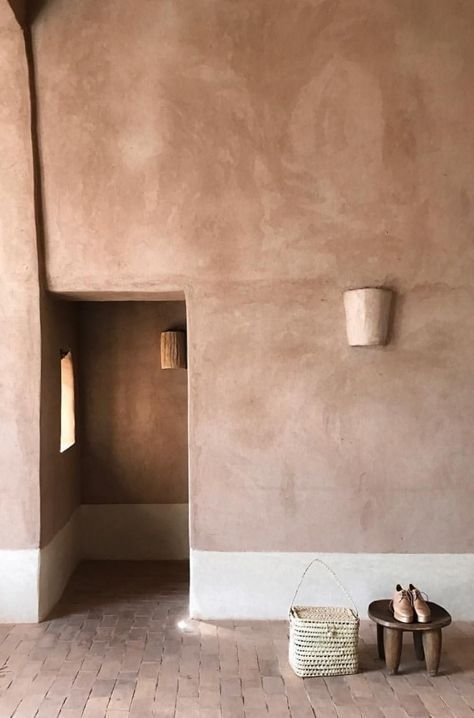
Limewash paint, textured plaster, Roman clay, and natural mineral coatings are increasingly used in high-end residential projects because they create movement and depth that standard paint simply cannot achieve.
What makes these finishes so interesting is their imperfect quality. They interact differently with natural light throughout the day, creating subtle variations and a softer atmosphere.
We particularly love using these finishes in living rooms, bedrooms, and circulation spaces where the objective is to create calmness and warmth. They also work beautifully in Mediterranean-inspired interiors because they naturally evoke architecture rooted in craftsmanship and raw materiality. Beyond aesthetics, many mineral finishes are also breathable and more environmentally conscious than synthetic alternatives, which explains part of their growing popularity.
One important element people often underestimate is lighting. Textured finishes reveal themselves through shadow and contrast, which means their effect changes completely depending on the orientation of the room and the quality of natural light. North-facing spaces generally benefit from warmer, softer mineral tones, while rooms flooded with southern light can support deeper textures and stronger material contrast.
Artificial lighting also plays a major role. Grazing light positioned close to a textured wall can dramatically enhance depth and movement. For this reason, we always study wall finishes together with the lighting plan rather than treating them as separate decisions.
Wood paneling: warmth and architectural rhythm
Wood wall paneling has also evolved considerably in recent years.
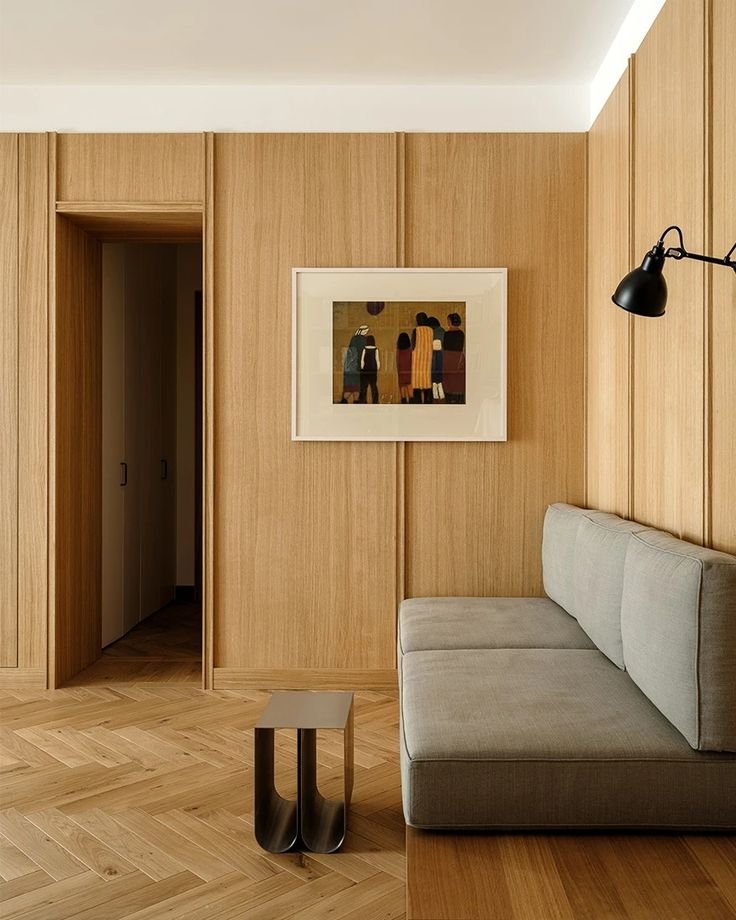
Far from the heavy traditional paneling associated with classic interiors, contemporary wood treatments feel lighter, more refined, and highly architectural. Vertical slats, oak veneer panels, smoked wood finishes, and integrated joinery systems can completely structure a space.
Wood brings immediate warmth and acoustic comfort to interiors. It also creates continuity between furniture and architecture, which helps spaces feel more cohesive.
In smaller apartments especially, custom wood paneling can become multifunctional:
integrating storage,
concealing doors,
framing spaces,
or visually enlarging a room through rhythm and repetition.
At Studio Bisson, we often use wood not only decoratively, but as a way to simplify visual composition and create calmer interiors.
Beyond aesthetics, wood paneling also requires careful technical consideration.
Credits: Pinterest
The spacing between slats, the wood veneer direction, the finish sheen, and even the junctions with ceilings or baseboards all influence the final visual result.
Poor detailing can quickly make a wall treatment feel decorative rather than architectural.
We usually favour integrated and flush detailing whenever possible, allowing the material to feel fully embedded into the architecture of the space.
Credits: Pinterest
Wallpaper is evolving too
Wallpaper has made a strong comeback, but in a very different way than in the past.
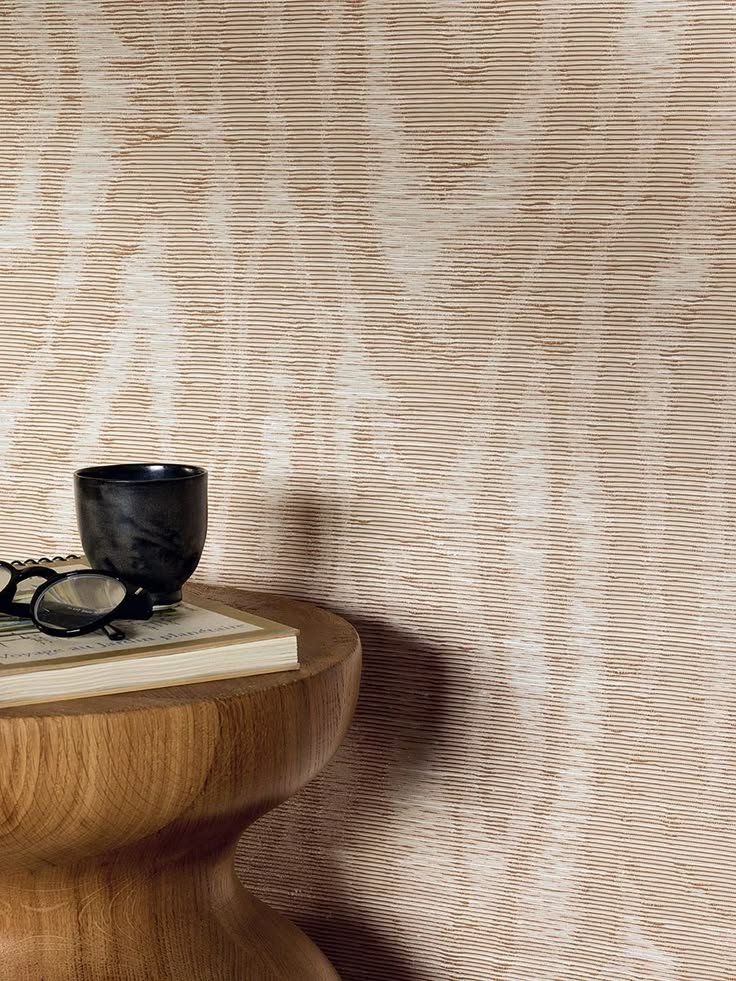
Today, many wall coverings are more tactile, artistic, and subtle. Textured linen wallpapers, natural fibers, panoramic landscapes, or hand-painted motifs are increasingly used to create immersive atmospheres.
What interests us most is not necessarily bold patterns, but wallpapers that create depth and softness.
In some projects, wallpaper can replace artwork entirely by becoming part of the architectural identity of the room itself.
We also find it particularly effective in smaller spaces:
entrance halls,
powder rooms,
bedrooms,
or transitional spaces that benefit from a stronger visual identity.
Because these rooms are more compact, clients are often more open to taking creative risks there.
One mistake we often see is applying strong wall treatments uniformly across an entire home. In reality, contrast is what creates balance. We generally recommend introducing stronger textures or expressive materials in moments of transition — entrance halls, alcoves, bathrooms, or feature walls — while allowing surrounding spaces to breathe more quietly. This creates rhythm throughout the interior and prevents material fatigue.
Ceramic wall coverings: the return of craftsmanship and materiality
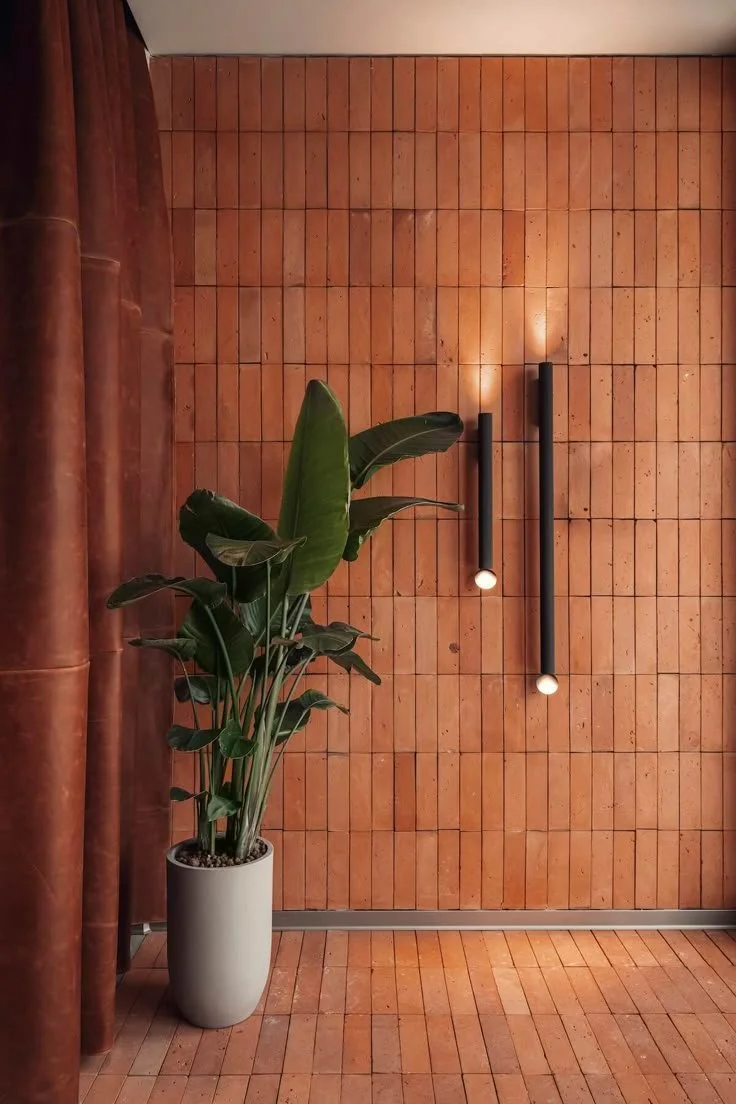
Among the wall finishes we increasingly love integrating into residential projects, ceramic surfaces occupy a very special place. Over the past few years, we have seen a strong return of handcrafted ceramic wall coverings — especially zellige tiles, textured ceramics, glazed finishes, and artisanal terracotta. These materials bring something unique that industrial finishes often struggle to replicate: depth, irregularity, and life.
What makes ceramic coverings so interesting is the way they interact with light. Unlike perfectly flat surfaces, handcrafted tiles reflect light unevenly, creating movement and subtle variations throughout the day. A wall finished in zellige, for example, never looks completely uniform — and that is precisely what makes it beautiful.
Originally rooted in Moroccan craftsmanship, zellige tiles are traditionally hand-cut and glazed, which explains their slightly imperfect appearance. Each piece carries variations in tone, texture, and reflection. When assembled together, the result feels rich, vibrant, and deeply organic.
We particularly love using ceramic wall coverings in kitchens, bathrooms, and transitional spaces, where they can transform highly functional rooms into spaces with real architectural identity.
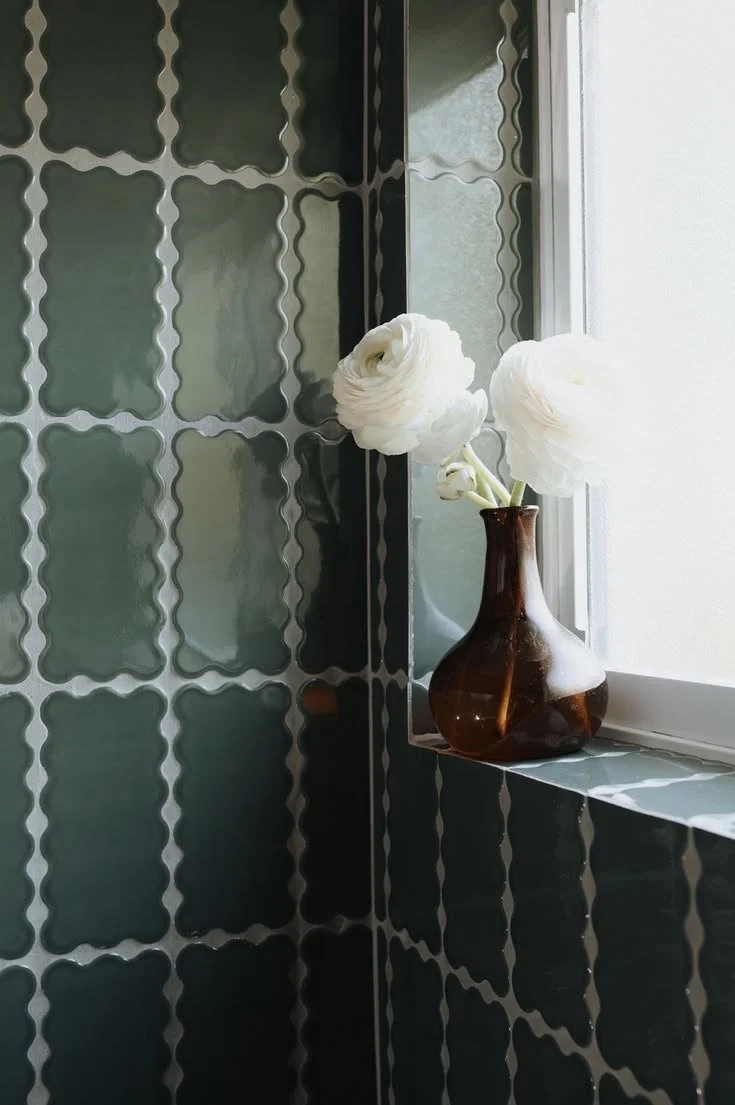
Credits: Pinterest
But today, ceramics are moving far beyond traditional wet areas.
More and more, we are seeing tiled surfaces integrated into living spaces, fireplace surrounds, built-in furniture, or even full feature walls. Used thoughtfully, ceramics can bring sculptural quality and tactility to interiors without overwhelming them.
Another reason for their growing popularity is the balance they create between craftsmanship and durability. Ceramic materials age beautifully, are easy to maintain, and often become even more interesting over time.
At Studio Bisson, we are especially drawn to ceramic finishes that feel artisanal rather than overly polished:
irregular glazed tiles,
matte terracotta,
handmade textures,
natural earthy tones,
or ceramics with visible imperfections.
These materials instantly create warmth and authenticity.
In many ways, the renewed interest in ceramic wall coverings reflects a larger movement in interior design today: the desire for spaces that feel more human, sensory, and connected to craftsmanship.
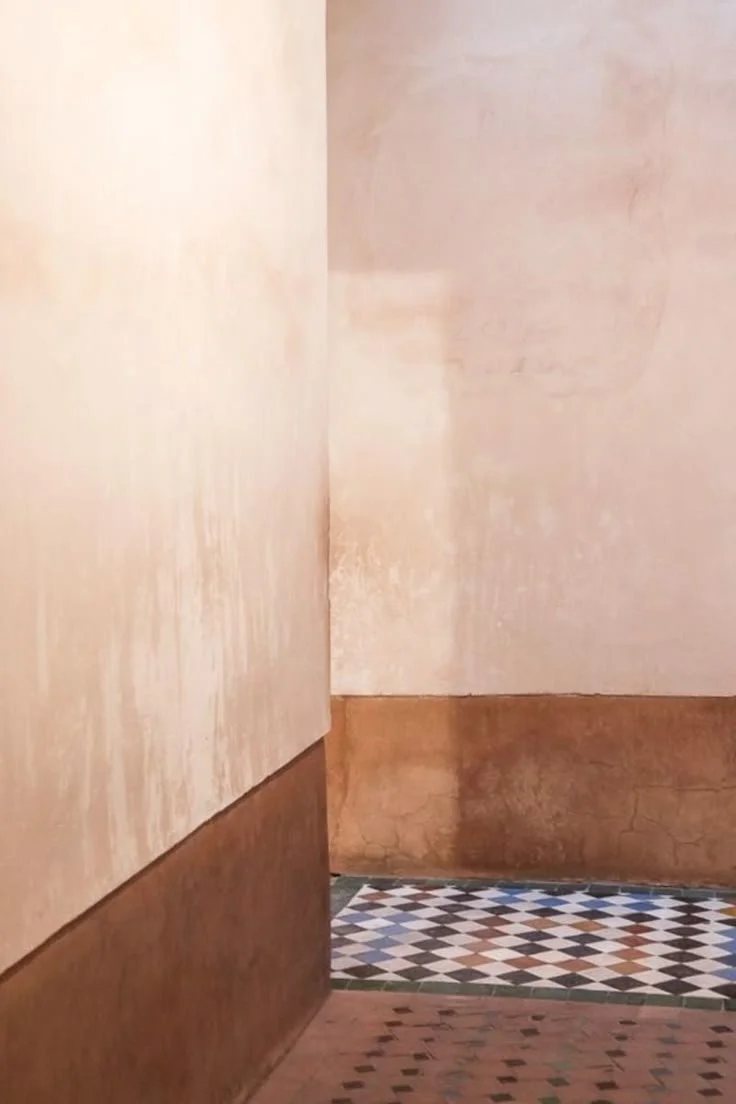
Credits: Pinterest
Combining materials thoughtfully
One of the most interesting aspects of wall design today is the combination of multiple finishes within the same project.
Mineral plaster alongside smoked oak, handmade ceramics paired with linen wallpaper, or matte limewash contrasted with polished stone can create incredibly rich interiors when balanced correctly. The key is material hierarchy. Not every surface should compete for attention. We usually define one dominant material language and then introduce secondary textures more subtly to create depth without visual noise.
This layered approach helps interiors feel curated, calm, and timeless rather than trend-driven.
Choosing the right wall treatment
There is no universal “best” wall covering. The right choice always depends on:
the natural light,
the proportions of the room,
the atmosphere we want to create,
maintenance considerations,
and the overall architectural language of the project.
A highly textured plaster may look incredible in soft natural light but feel overwhelming in a darker space. A wood finish can warm up a minimalist apartment beautifully, while wallpaper may add intimacy to an otherwise neutral interior. What matters most is coherence.
Wall coverings should not feel decorative for the sake of decoration. They should reinforce the emotional intention of the space.
Another important consideration is longevity.
Some wall trends photograph beautifully but age poorly in everyday living. Extremely busy patterns, overly glossy finishes, or trend-driven textures can quickly feel visually tiring.
We always encourage clients to think about how a material will evolve over time — not only aesthetically, but also through daily use, maintenance, and changing light conditions across seasons.
Why we believe textured interiors will continue to grow
We believe the growing interest in wall coverings reflects a broader shift in the way people want to live today.
After years of ultra-smooth minimalism, many interiors started feeling visually flat and emotionally cold. People are now searching for homes that feel more sensory, personal, and comforting. Texture plays a huge role in that evolution. Natural materials, handcrafted finishes, imperfect surfaces, and layered walls create interiors that feel alive. They interact with light, evolve over time, and bring a more human quality into contemporary spaces. Ultimately, wall coverings are far more than decorative additions. They influence how a space sounds, reflects light, ages, and emotionally resonates with the people living inside it. In many projects, walls become the element that quietly defines the entire atmosphere long before furniture or decoration enter the space. When chosen thoughtfully, materials have the power to make interiors feel not only beautiful, but deeply lived-in, sensory, and timeless.
