
Montessori: The Method for Designing a Child’s Bedroom
With two new babies arriving this summer, it felt only natural for us to take a closer look at the topic of children’s room design. So here’s a short article dedicated to new parents!
I. Montessori & Architects
What Is the Montessori Method, and Where Does It Come From?
The Montessori method dates back to the early 20th century and originates from Italy. It was developed by Maria Montessori, a feminist and socialist activist who began her career in pediatric medicine. Throughout her life, she refined her educational approach through hands-on experience with children across the world. She was among the first to envision a more scientific and child-centered pedagogy, one that helps children learn through self-directed exploration.
In 1907, in the first Casa dei Bambini (Children’s House) in Rome, Maria Montessori made a groundbreaking observation — what she called “the child and his secret.”
Her insight was that a child should be free to choose an activity that genuinely interests them, one they can manipulate, repeat, and focus on for as long as needed. She noticed that every child develops and builds their personality through interaction with their surroundings — a fleeting ability she called a “sensitive period.”
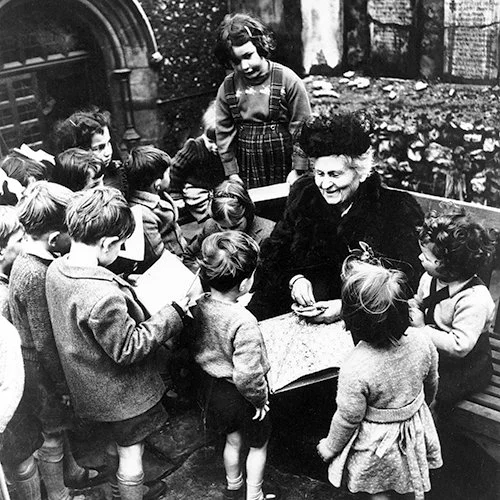
Maria Montessori with children
Credit: Pinterest
“It is not a question of abandoning the child to himself so that he may do what he wants, but of preparing an environment in which he can act freely.”
Maria Montessori
She believed that this method would teach children respect, tolerance, and dignity through daily practice, ultimately nurturing humanity toward a more peaceful world.
Evolution in Schools — and Its Impact on Architecture
Since the end of World War I, the Montessori philosophy has spread widely, leading to the creation of countless Montessori schools, as well as nurseries and libraries inspired by her approach.
Today, there are over 30,000 Montessori schools in more than 50 countries, particularly in Italy, the United Kingdom, Germany, the Netherlands, North America, and Japan.
Many architects have been invited to design these schools, drawing inspiration from the Montessori philosophy and its emphasis on freedom, order, and sensory experience.
Some notable examples include:
Carrick Howell and Lawrence Architects, Richard Partridge — Maria Montessori School, Hampstead, London, UK (2015)


Credit : Montessori Architecture a Design Instrument
Or mroe recently the Atelier-Opa :
MICRO-CRECHE MINI MONTESSORI, ECOLE MODERATO, PANTIN-PARIS,
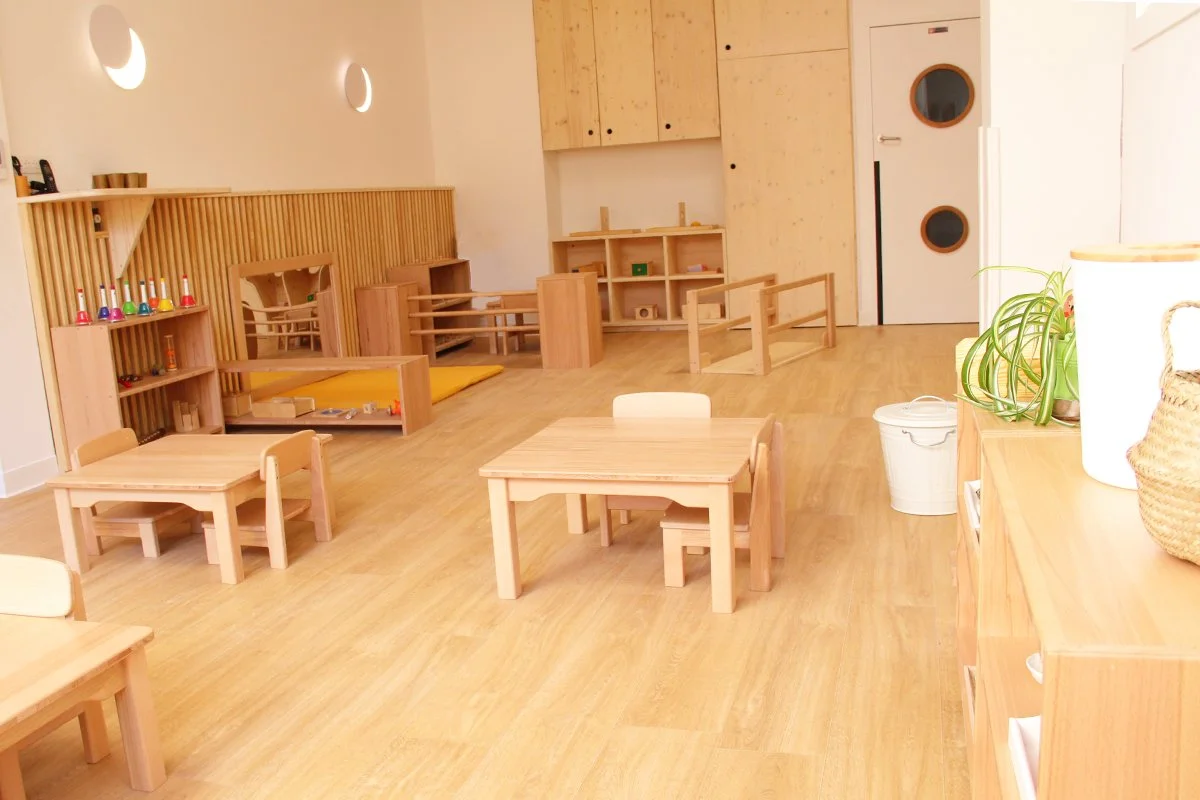
Micro-crèche Montessori
Credit : Atelier Opa
However, there are still relatively few architects specialized in spatial design based on the Montessori principles.
One notable exception is Matali Crasset, whose work resonates strongly with Montessori values.
Matali Crasset — Design for Autonomy
Originally trained as an industrial designer, Matali Crasset’s career has taken an unexpected yet fascinating path — from scenography to furniture design, graphic design, interior architecture, and ultimately, children’s environments.
Guided by deep reflections on everyday life, movement, and experimentation, she now creates spatial concepts that foster autonomy and initiative in children. Her projects often feature modular, custom-made elements arranged to encourage exploration and independence.
Some of her remarkable projects include:
Sid et le Monde de Dessous, Centre Pompidou × West Bund Museum, Shanghai (2022)
ENS École Normale Sociale, Paris (2021)
Espace Ludo – Halle Secrétan, Paris (2016)
Petite Pousse, Carré d’Art, Nîmes (2015)


Projets inspiration Montessori
Credit : Matali Crasset
In the Private Sphere: Montessori at Home
The Montessori method is also widely adopted by families seeking to move away from traditional room layouts and create spaces that encourage independence and curiosity.
One particularly fascinating example is the Reversible Destiny House, designed by the Reversible Destiny Foundation and conceived by architects Arakawa and Gins as an experimental home inspired by the Montessori philosophy.
This house was designed to adapt to its external environment and is often cited by Montessori schools as a prime example of architecture that promotes sensory engagement and active learning.
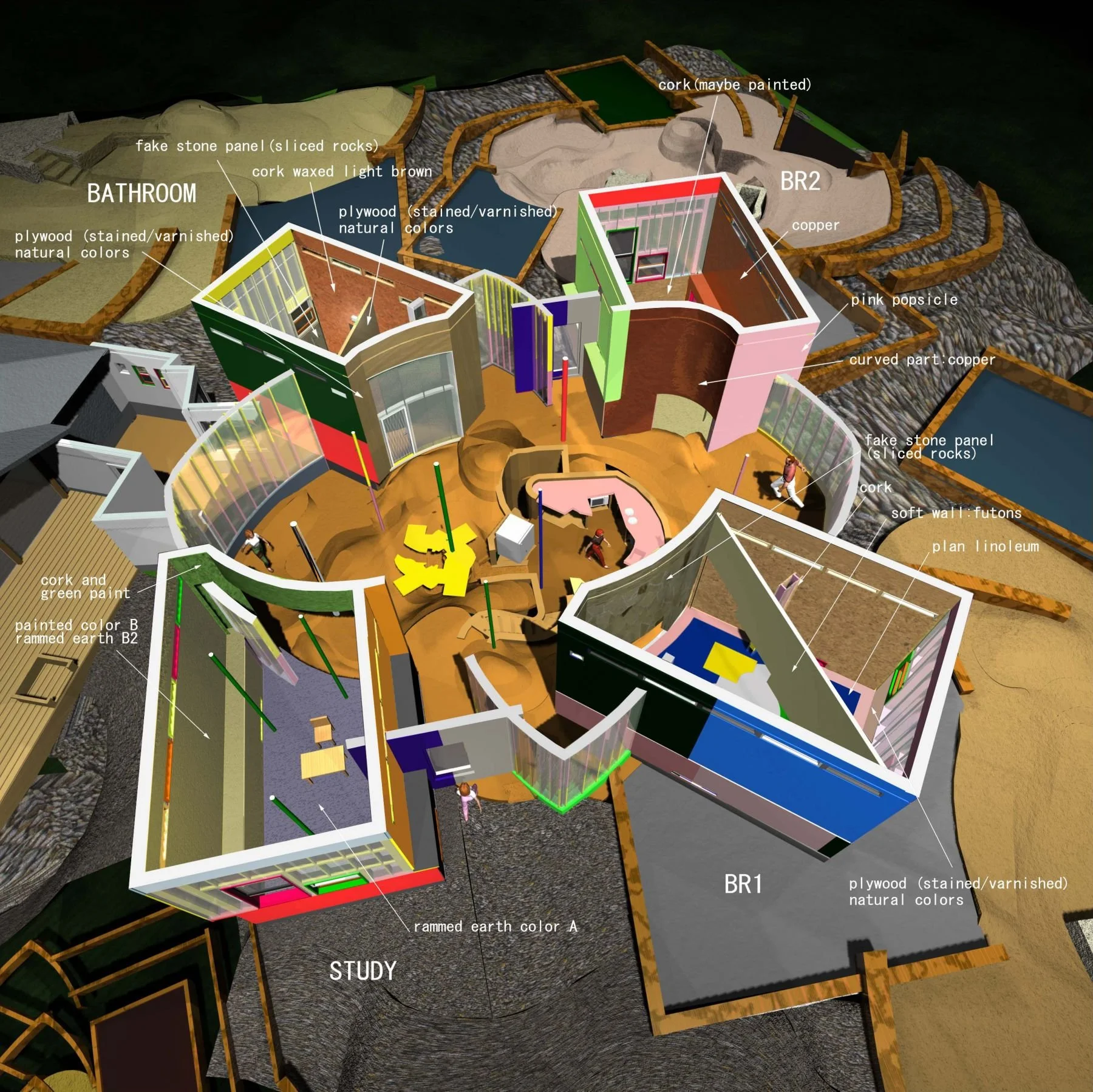
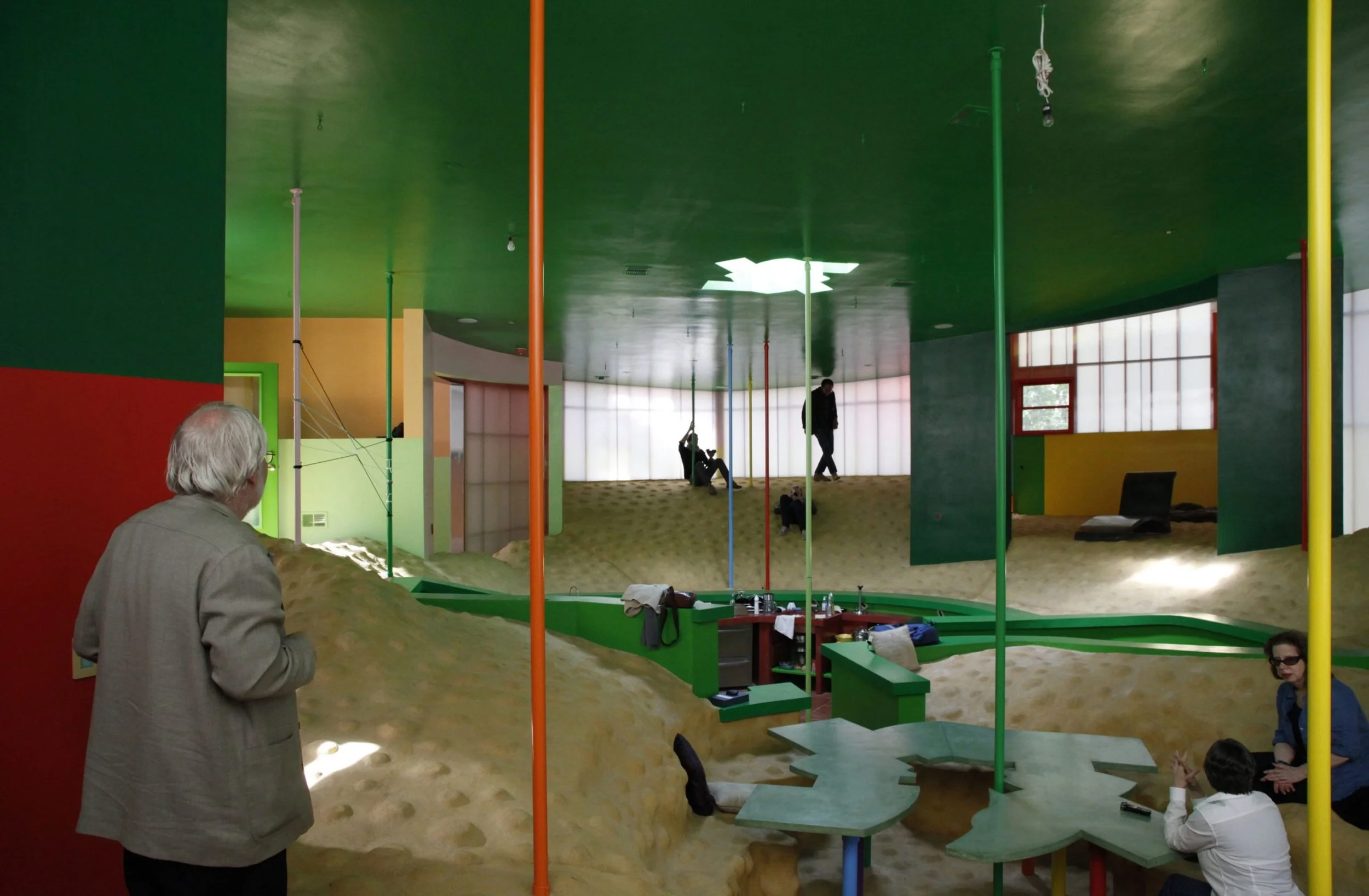
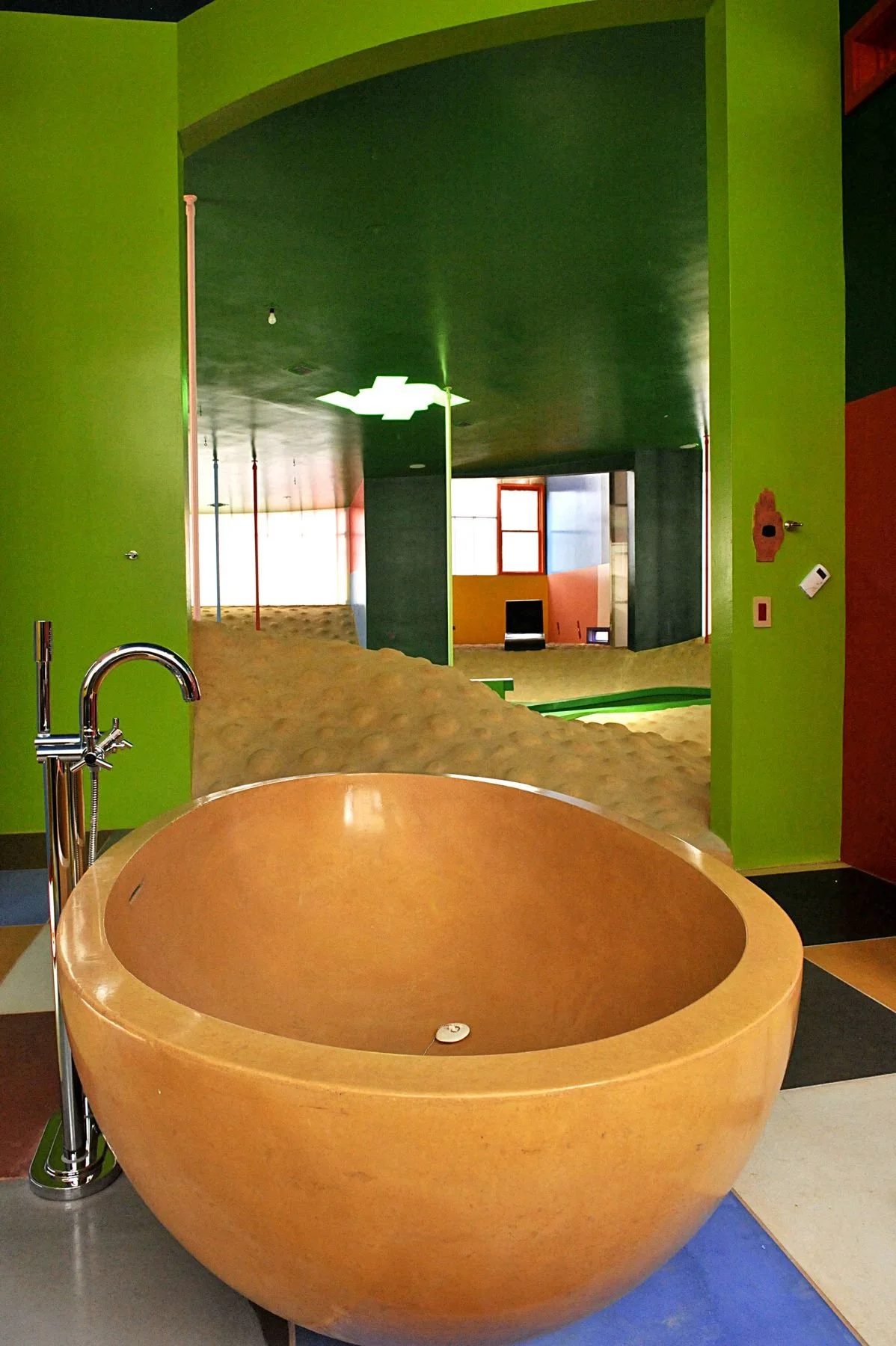
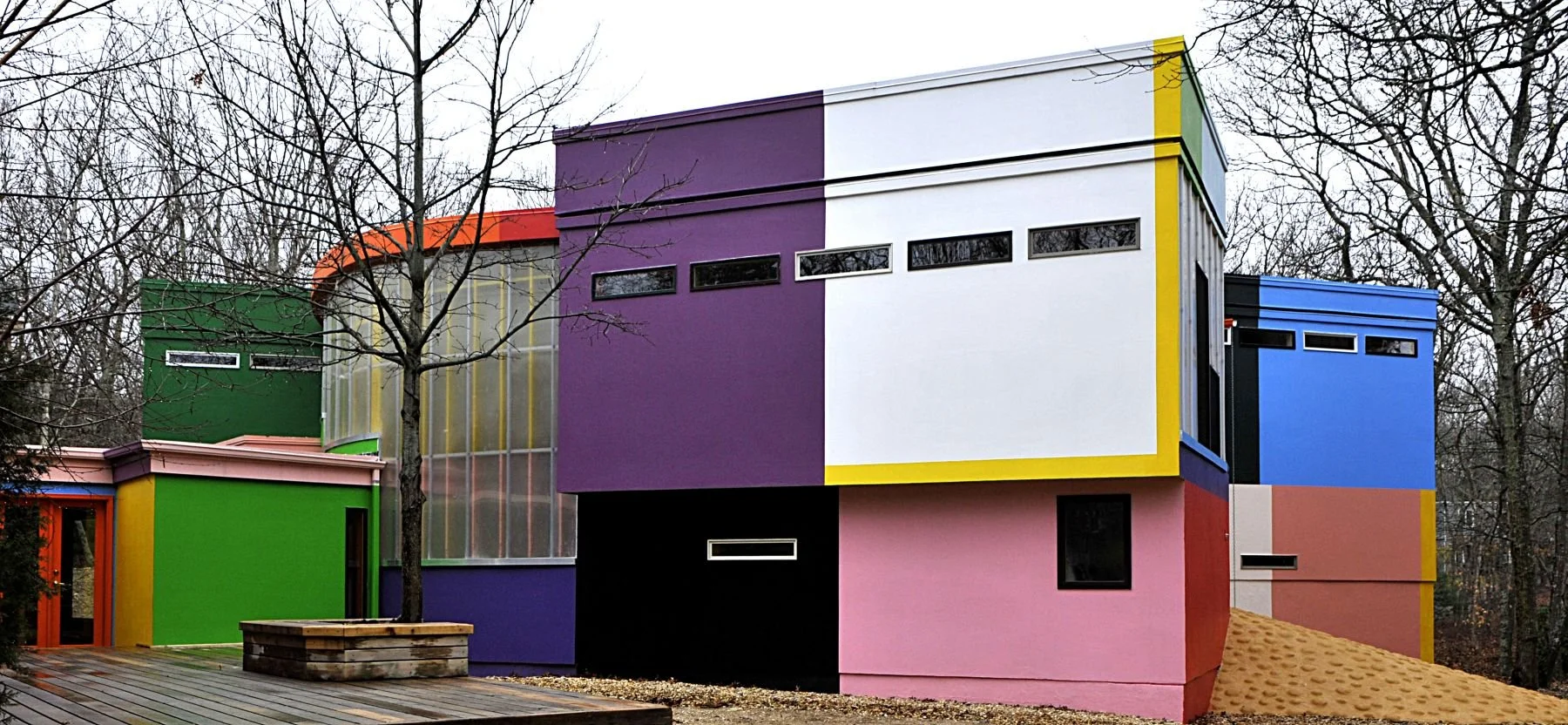

Maison expérimentale Montessori
Credit : Reversible Destiny Fondation
II. The Child’s Bedroom — A Space That Encourages Independence
A child’s bedroom is one of the most important environments in their development. It should be carefully designed to suit the child’s needs, supporting independence and self-sufficiency from an early age.
The Montessori approach encourages the use of materials that are both natural and appropriate for the child’s environment, such as linen, wool, cotton, hemp, bamboo, and light wood.
The goal is to ensure the child can get up, go to bed, sit down, get dressed, and play safely — without adult assistance.
To reduce risks, it’s essential to cover or block electrical outlets, and install door stoppers (but avoid those made with harmful chemicals, as they may look like toys to young children).
Furniture should have rounded edges and be proportionate to the child’s height, allowing them to move around safely.
Objects and toys should be within easy reach, preventing accidents that might occur if the child tries to grab items from higher shelves.
To promote focus and calm, the room’s decor should remain simple, minimal, and well-organized.
This helps avoid overstimulation from excessive decorations such as posters, stickers, music, or colorful lighting.
When it comes to lighting, maximize natural light whenever possible, and complement it with soft, gentle artificial lighting for the evenings.
Finally, the color palette should remain neutral and soothing, with tones such as white, blush pink, beige, or soft gray, creating a peaceful and balanced atmosphere ideal for growth and learning.
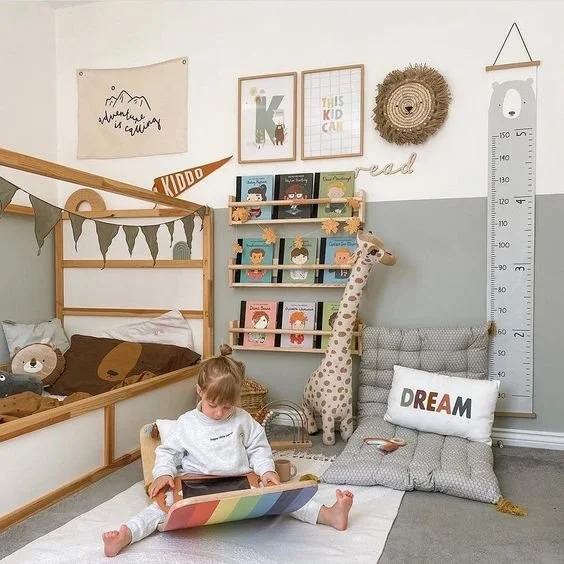
A kid in his Montessori bedroom
Credit: Instagram/ @istome_store
Spaces and Layout Ideas for a Montessori-Inspired Child’s Bedroom
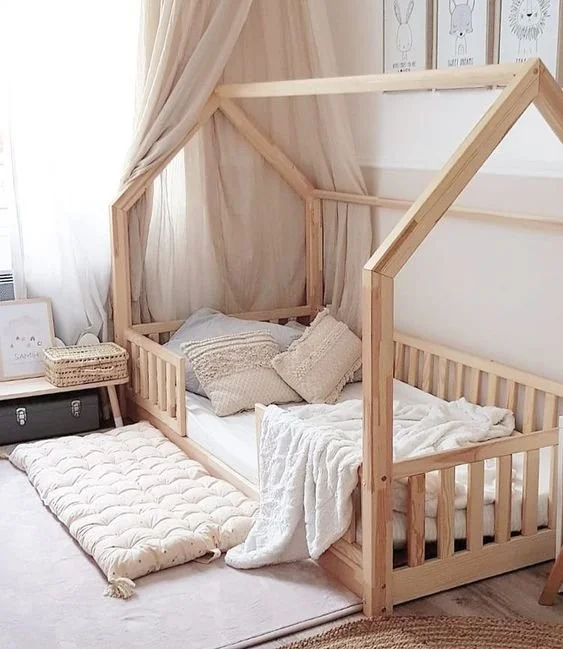
Montessori Bed
Credit : Pinterest / Mon Lit Cabane
SLEEP AREA
The child’s bed can be placed directly on the floor, on a soft rug surrounded by cushions, creating a cozy, cabin-like nook.
This setup allows the child to get in and out of bed independently, helping them learn to regulate their own sleep rhythm.
A traditional bed can be introduced once the child is able to climb into it on their own.
For smaller spaces, a trundle bed is also a clever option that helps optimize room layout.
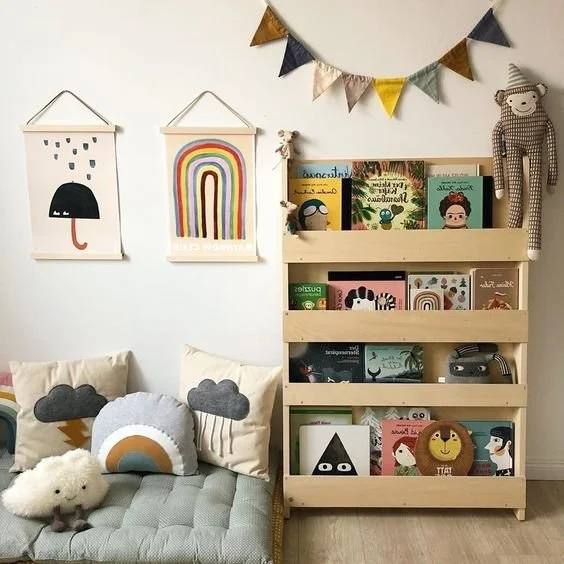
Espace Lecture Montessori
Credit : Pinterest / Wahyu
READING AREA
This space can be integrated into the bedroom or arranged separately.
It’s easily created with cushions, quilts, and blankets chosen by the child, fostering a sense of ownership and comfort.
Add a low bookshelf displaying a few illustrated books and nursery rhymes to spark curiosity and quiet moments of reading.
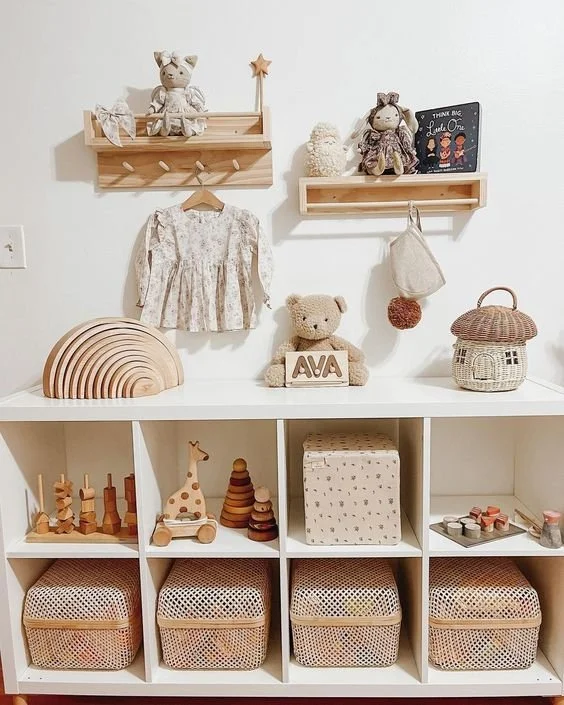
Crédit photo : Instagram/ @life_with_ava_madeline
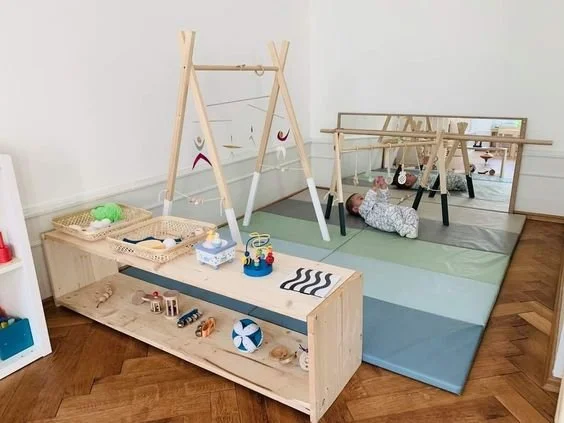
Credit: Pinterest / Estelle Cdou
PLAY & MOTOR SKILLS AREA
A small open shelf can hold a curated selection of manual and sensory activities that the child can access freely.
To keep their interest, you can rotate the toys from time to time — for example, grasping balls, rain sticks, or other tactile games.
The key is to design the space so the child can take and put back items independently.
Storage bins, drawers, or baskets can be differentiated by color, material, or shape, or even made of transparent materials so the child can see what’s inside.
As the child grows, a small age-appropriate desk can be added to the setup.
For the sleeping area, choose a firm mattress to support spinal development and provide stability when the child begins to pull themselves up.
A rug can also be placed nearby to encourage rolling, crawling, and movement.
Above the bed or rug, consider adding visual modules or mobiles to help babies under six months develop visual acuity, using colorful yarn balls or iridescent paper that catches the light.
For children under three, a mirror with a support bar can be added near the mattress to help them discover their body awareness and practice standing.
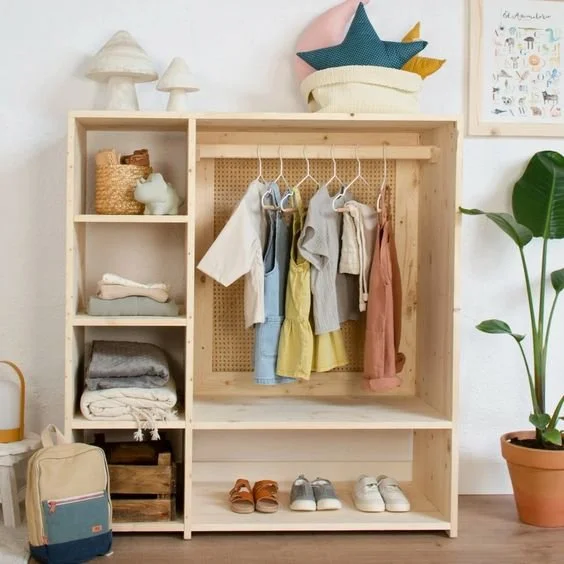
Credit : Pinterest
DRESSING AREA
Once your child starts dressing themselves, create a small dressing zone with a wardrobe at their height.
As with the activity shelf, only offer a few seasonal outfits at a time.
Why not make it a weekly ritual — letting your child help choose their clothes for the week?
Creating Flow Between Montessori Spaces
The different zones of a Montessori-inspired bedroom don’t all need to fit within one room.
If space is limited, you can extend certain areas into other parts of the home, as long as you maintain a logical flow between them.
For instance, to encourage calm and rest, you might arrange the reading corner and sleeping area along the same path — so that as your child moves from reading to bed, they naturally transition into a quieter, sleep-ready state.
In conclusion the Montessori approach to a child’s bedroom is an inspiring and adaptable way to understand how children learn and grow.
It’s not a rigid set of rules, but rather a flexible philosophy you can tailor to your child’s needs and personality.
Don’t hesitate to experiment — try new layouts, decorations, or activity zones until you find what truly works for your little one.
We’d love to see your own creative solutions — share your ideas with us!
