
Designing a Yoga Studio
What Are the Key Characteristics of a Yoga Studio?
The design of a yoga studio goes far beyond aesthetics. It creates an atmosphere that encourages relaxation, focus, and a deeper connection with oneself. Whether you are a regular practitioner or simply curious to explore yoga, a yoga studio is a sanctuary—a place for transformation and personal growth.
But how do you design and decorate a yoga studio that truly supports this practice? And how can you create a dedicated yoga space at home?
In this article, we take a closer look at the essential characteristics of yoga studios and guide you step by step through designing a harmonious and functional yoga space, whether it’s intended to welcome the public or to support your personal practice at home.
Yoga is an ancient practice that originated in India over 5,000 years ago. Over time, different schools of thought have developed distinct yoga practices, each with its own techniques and objectives. In recent decades, yoga has experienced remarkable growth and continues to gain popularity worldwide.
Among the most widely practiced styles today are Hatha and Hatha Flow, Ashtanga, and Vinyasa, though many other forms exist—offering something for every preference and lifestyle.

Credit : @ashes-sitoula
Today, yoga is highly accessible. It can be practiced in small group studios, wellness centers, fitness clubs, at home, or even online. There are truly no excuses left not to give it a try!
Yoga Interior Design: Where to Begin?
Yoga studios are places of peace, calm, and inner connection. The design of these spaces plays a crucial role in creating an atmosphere that truly supports the practice.
The harmonious combination of architecture, color, lighting, and the thoughtful arrangement of accessories can transform an ordinary yoga room into a calming and inspiring sanctuary. Curious to learn more?
Here are the key fundamentals and a few tips to help you design a welcoming yoga studio:
1) Yoga Studio Interior Layout
First and foremost, the layout of the yoga studio is essential for creating a harmonious atmosphere.
Reception area & circulation: The reception area is the first point of contact and sets the tone for the entire experience. It should be a pleasant space where practitioners can check in, remove their shoes, and prepare before and after class.
Our tip: Circulation within the studio should feel coherent and fluid. Create a clear path that follows the natural flow of the practice—from the entrance to the changing rooms, then into the studio itself, and finally toward a refreshment area near the exit. Make sure all walkways are intuitive, clear, and unobstructed.


Providing Sufficient Space for Yoga Practice: It’s essential to allow enough space for yogis to move freely and perform different postures without feeling cramped. Yoga studios should remain uncluttered, creating a sense of openness and freedom that supports both movement and breathing.
Our tip: You can base your layout on the size of yoga mats and the number of practitioners you wish to accommodate in the main studio. A standard yoga mat generally measures 170 × 60 cm, and it’s recommended to allow at least 50 cm of space between each person to ensure comfort and freedom of movement.

Madera Yoga / Design Awards
Credit : @maderayoga
2) Openings and Lighting for an Optimal Yoga Studio Design
Favor large openings facing the outdoors, as they create a sense of freedom and calm while allowing practitioners to connect with nature.
Our tip: Use curtains or blinds to adjust the intensity of natural light throughout the day. Complement this with soft, warm artificial lighting for moments when natural light is insufficient.


Credit photos : @archdaily / @designboom / @deezen / @designboom
3) Which Colors to Choose for a Yoga Studio?
You’ve probably guessed it — neutral tones are key. Shades such as white, beige, or gray create a serene backdrop that allows yogis to fully focus on their practice.
Tip: Accents of more vibrant colors, such as green or soft blue, can be added to stimulate energy and creativity without overwhelming the space.
Want to learn more about color choices? Discover our guide to mastering color combinations.
4) Natural Materials for a Zen Yoga Practice
Nothing should be left to chance — the materials used in a yoga studio should encourage a strong connection with nature. We recommend wood or bamboo flooring, which brings natural warmth to the space while offering both durability and gentle flexibility.
Choose natural-fiber mats, such as jute or organic cotton, as they provide a comfortable and grounding surface for practice.
Add indoor plants to introduce freshness and vitality into the space — nothing purifies the air quite like plants!
Our tip: Avoid synthetic materials, as they can generate static electricity and disrupt the sense of calm.


Credit : @deezen
https://www.dezeen.com/tag/yoga/
5) Designing a Yoga Studio Through Acoustics
The acoustics of a yoga studio are often overlooked, yet they play a vital role in creating an atmosphere conducive to relaxation and meditation.
Sound-absorbing materials such as rugs, cushions, and curtains can help reduce echoes and create a calm, pleasant sound environment.
Our tip: Make sure the space is well insulated from outside noise to preserve tranquility and support deep focus during practice.
6) Storage & Equipment: A Custom-Made Yoga Furniture Approach
When designing a yoga studio, think ergonomics, comfort, and clutter-free spaces.
Yoga sessions often involve a variety of accessories such as mats, blocks, straps, and bolsters. Be sure to include shelves, cabinets, or storage benches to keep this equipment neatly organized and easily accessible during class.
Our tip: Also plan for small storage areas where participants can safely place their personal belongings.
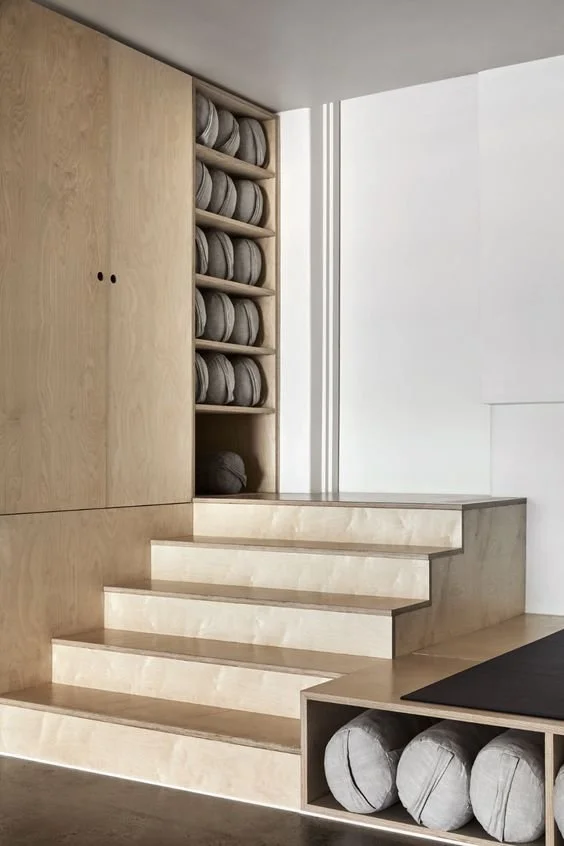

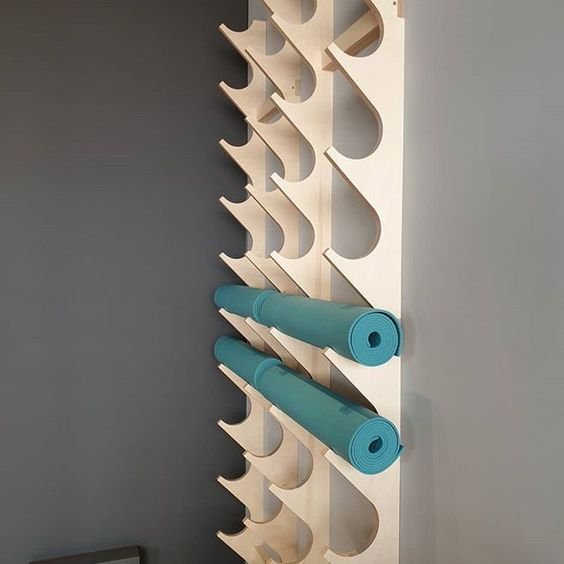
Credit : @designmilk / @goodmood / @pinterest
The design of a yoga studio should be carefully considered to create a calm, harmonious atmosphere that supports the practice of yoga.
Through thoughtful architecture and interior planning, a yoga studio can encourage relaxation, focus, and a deeper connection with oneself.


By Invisible studio
Credits : © Jim Stephenson
Conclusion
The design of a yoga studio goes far beyond aesthetics alone. When planning a space, it’s essential to consider adequate room, natural light, soothing colors, natural materials, proper acoustics, and overall comfort to create an environment where practitioners feel both at ease and inspired in their yoga practice.
Thinking about creating your own yoga studio? Studio Bisson supports you throughout the design process, crafting bespoke furniture solutions tailored to your practice and the specific constraints of your space.
