
Types of Door Openings and Hinges
Are you planning a custom-made piece of furniture or building your own furniture for your interior? Have you considered the different opening options available? Often overlooked or underestimated during the design process, hinges and opening systems are small details that can truly make a difference. Here is a complete guide to help you get it right.
Here is a detailed guide for you!
I. How to Choose Your Hinges
Hinges are essential components for attaching a door to a piece of furniture. Given the wide variety of installation methods and uses, there are countless hinge variations in terms of materials, features, shapes, and pivot systems. It’s easy to feel overwhelmed.
At Studio Bisson, nothing is chosen at random — from the wood selection to the hinge type. Today, we are sharing a complete guide to help you find what best suits your project.
Let’s start by defining two key hardware elements: hinges and butt hinges (paumelles).
What Are They Used For? What’s the Difference?
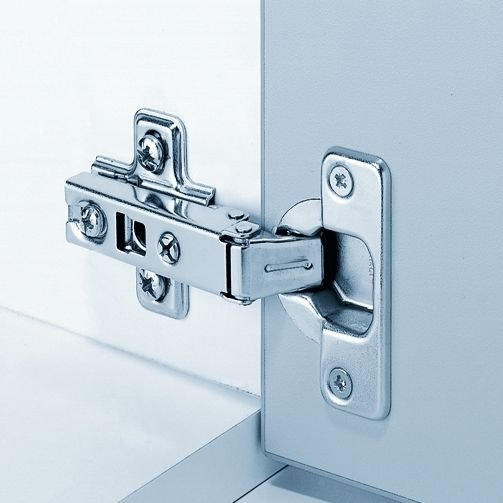
A hinge consists of two metal plates joined by a central pin, allowing rotational movement. There are many types of hinges, each designed for specific uses.
Hinge
Credit : Au comptoir de la quincaillerie

A butt hinge (paumelle) also supports and enables rotation, but it is made of two interlocking parts — a male and a female section. While visually similar to a standard hinge, a butt hinge can be detached. The key difference lies in whether or not the two parts can be separated.
Butt Hinge on doors
Credit : Leroy Merlin
Beyond their definition, what really matters is how they are used. Hinges and butt hinges are suitable for any installation where a door needs to open or close — but choosing the right model is essential. Selecting the correct hinge for your furniture will extend its lifespan and, most importantly, improve everyday comfort.
II. Basic Types of Furniture Hinges
There are many hinge types available on the market, each offering specific opening capabilities. Here are the main ones you may need:

Universal Hinges
A standard model that can be mounted on various supports. The knuckle remains visible when the door is closed, giving a more raw or rustic look.
Credit : Leroy Merlin
Pin Hinges
A suitable option when drilling holes for standard hinges is not possible. These are assembled using screws.
Angle Hinges :
As the name suggests, these allow for very precise opening angles — 30°, 45°, 90°, 165°, even 270°. They are commonly used for corner kitchen cabinets.

Piano Hinges :
Often seen on trunks or storage chests, these are long and very thin hinges with elongated rectangular sections.
Credit : Leroy Merlin
Concealed Cup Hinges: A highly popular and versatile solution today. They are easy to install and adjustable. You only need a drill (or screwdriver) and a drill bit for installation.
Spring Hinges: Ideal if you want the door to close automatically.
Stay Hinges (Compas Hinges): Useful for allowing a door to open horizontally, either upward or downward.
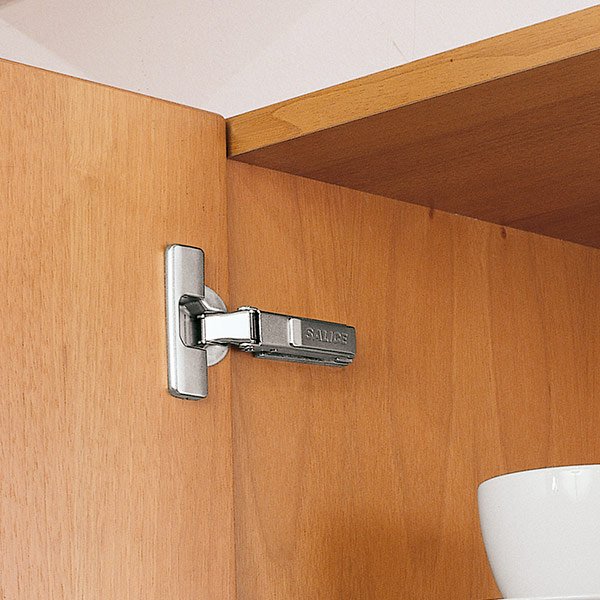
Invisible Hinges
Very common and appreciated for their discretion. They can be surface-mounted or recessed. The recessed option is widely used in kitchen cabinetry because it is completely hidden when the door is closed, preserving the aesthetic of the furniture.
Credit : https://www.salice.com

Pocket / Retractable Door Hinges
These allow doors to retract fully into the cabinet. They feature damped opening and closing mechanisms and provide significant space savings — particularly practical for closets and kitchens.
Credit : https://www.wovar.fr/
III. Special Features of Modern Hinges
Modern furniture is now equipped with hinges that offer additional features. The goal is to make everyday use more comfortable while also extending the lifespan of the furniture.
You have probably already seen — or even used — some of these options. Let’s take a closer look at the features that can enhance your comfort.
Very common and often used on drawers, the soft-close mechanism slows down the closing of a door or drawer. It offers several advantages: it prevents the loud noise caused by slamming doors and, most importantly, it significantly protects your furniture from long-term damage.
Wide angle opening : Often used in kitchens, especially for L-shaped cabinets or cabinets with internal drawers. This allows easier access to items stored at the back.
Push to Open system A light press triggers full door opening — no handles needed. Press again to close. This system is ideal for modern, minimalist interiors.
The only drawback is that you must press in the correct location (where the internal mechanism is positioned), which can sometimes reduce ease of use. For a minimalist look, we often prefer recessed handles instead.
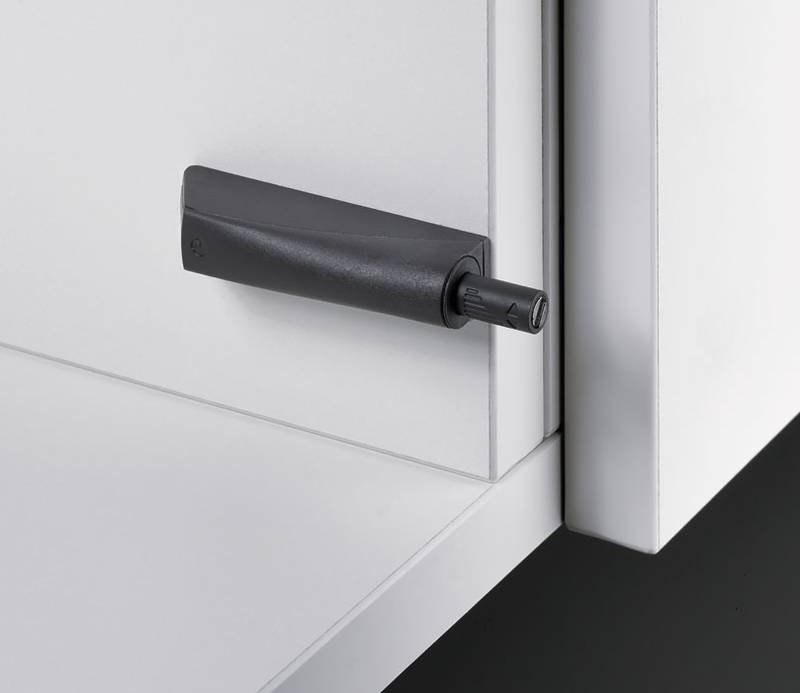
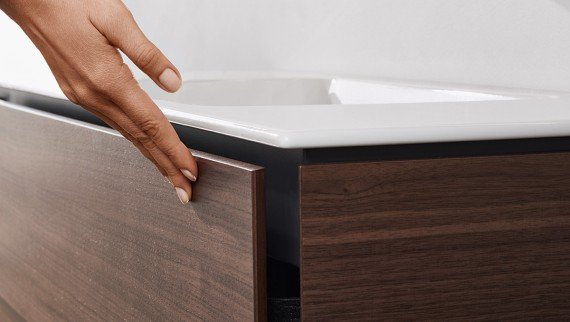

Credit : Hettich France
https://shop.hettich.com/fr_FR/
Pivot Doors
Very contemporary and still relatively uncommon compared to traditional hinged, folding, or sliding doors. They open smoothly and create a feeling of lightness. With specialized hardware, pivot doors can rotate up to 360 degrees. When closed, they align seamlessly with the wall, becoming almost invisible.
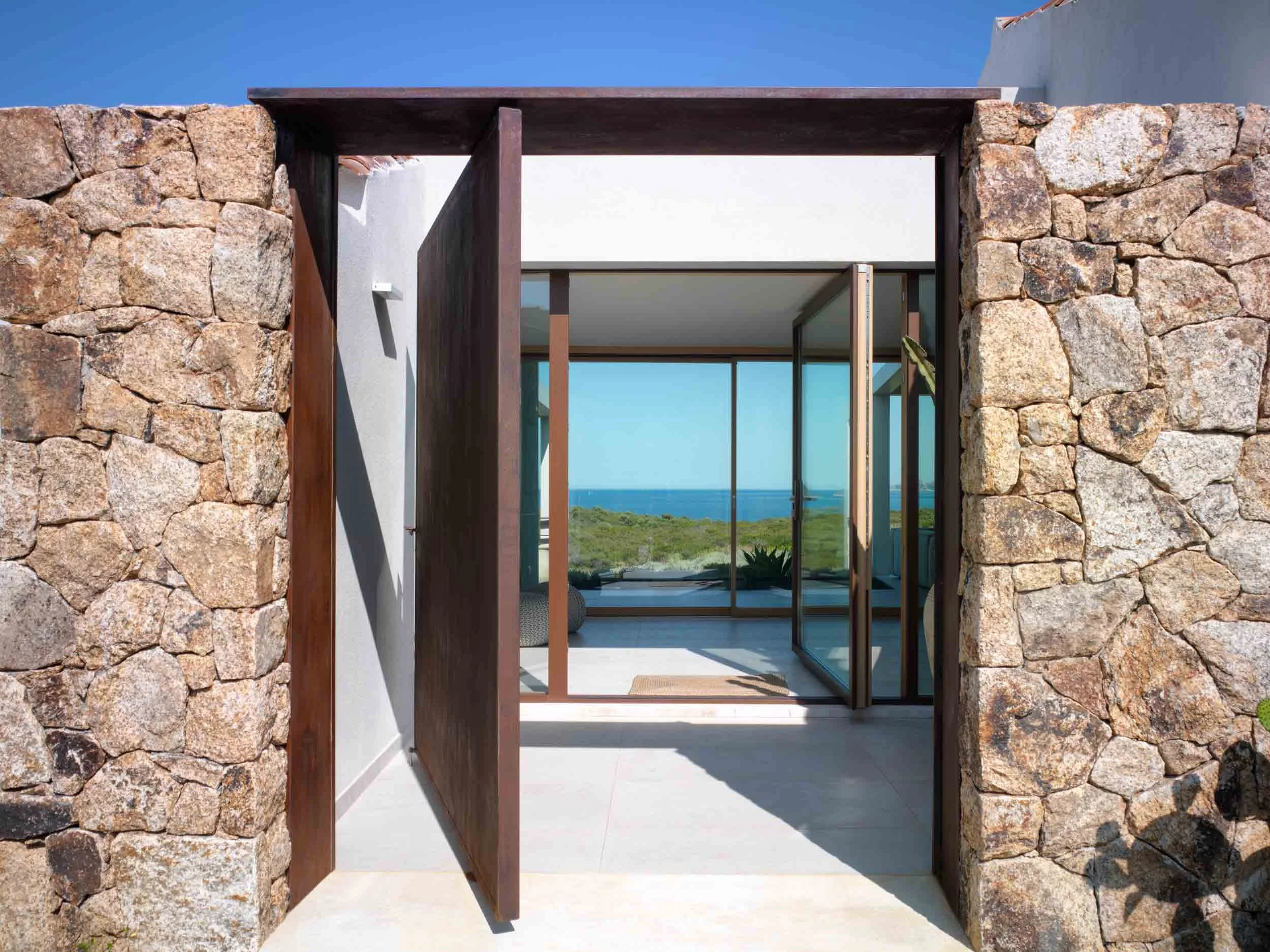


Credits : 1) Skyline Pivot 2) Passage Porte 3) L’invisible
La bonne combinaison du style et de la fonctionnalité permet de coller au mieux avec votre intérieur et votre mode de vie. Désormais, vous connaissez les principales options qui s'offrent à vous. Mais vous vous demandez peut-être encore laquelle colle parfaitement aux fonctionnalités de votre meuble. C’est pourquoi on vous propose de définir pas à pas les caractéristiques à prendre en compte en fonction de votre utilisation.
Few questions to ask yourself to Choose the Right Hinge
1. What Is the Support Material?
The material determines the fixation method. Is your furniture made of wood, concrete, metal, or glass?
Wood or concrete: screw-mounted hinges are recommended.
Metal: welded hinges are preferable.
2. How Is the Door Mounted?
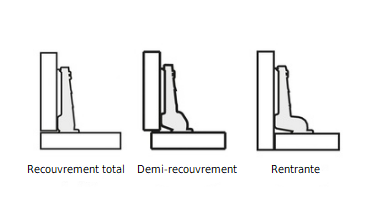
Is it overlay, inset, or partially overlay? This impacts hinge choice.
Credit : Wovar
3. Where Will the Furniture Be Installed?
Indoor or outdoor use? For outdoor installations, stainless steel is recommended to ensure durability and weather resistance.
4. What Mechanical Properties Do You Need?
Do you want specific features such as soft-close?
What opening angle do you need?
Do you want the hinge to be invisible when the door is closed?
5. What Installation Type Do You Want?
Surface-mounted: both parts are screwed onto the frame and door. Recessed: integrated into the furniture structure.
6. What Weight Must the Hinge Support?
This is crucial. Knowing the door’s weight helps determine both the hinge type and the number of hinges required. Heavy doors require multiple hinges distributed evenly to ensure durability.
7. Do You Want Handle-Free Doors?
If so, opt for push-to-open hinges or recessed handles.
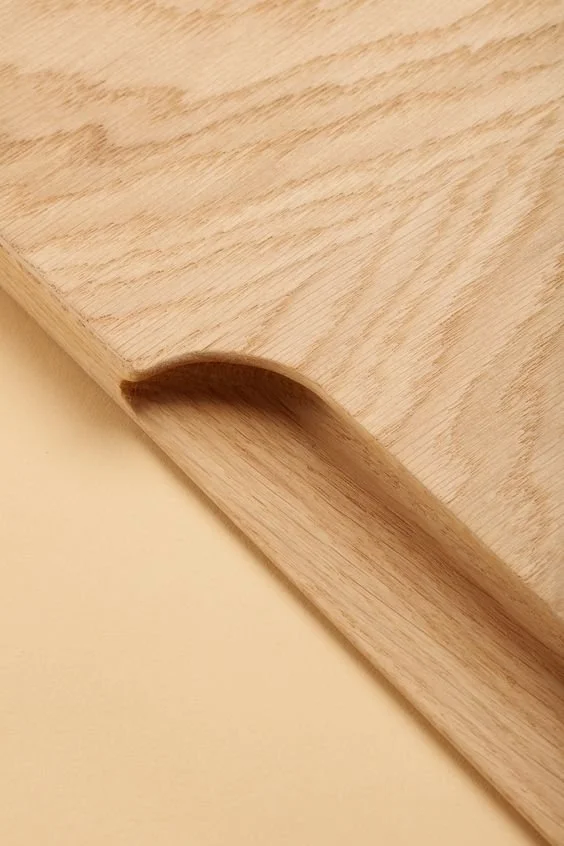
Credit : holte.studio
Conclusion
We’ve just reviewed a fundamental element of your furniture. Though small, hinges are essential — doors and cabinets simply wouldn’t function without them.
Making the right choice will simplify installation and greatly improve everyday use. We hope hinges now hold no more secrets for you.
At Studio Bisson, our architect and craftsmen ensure that the most suitable solution is selected for your custom-made furniture.