
Everything You Need to Know About Shou Sugi Ban, the Art of Burnt Wood
Have you ever been struck by blackened wooden façades? Today, we’re focusing on an ancestral technique that is slowly coming back into style.
Burnt wood is an ecological, durable solution with a unique aesthetic and a wide range of finishes that create rich textures. Curious to learn more?
The Origins of Shou Sugi Ban: An Ancestral Technique
Increasingly popular in France, the burnt wood technique—also known as Shou Sugi Ban or Yakisugi—is mainly used for building façades. But let’s go back to its origins in Japan.
Beyond its aesthetic appeal, it is прежде all a traditional method that consists of charring the surface of the wood to protect it while enhancing its natural imperfections. Practiced for centuries, it is deeply rooted in the philosophy of Wabi-Sabi.
Originally, Shou Sugi Ban was used to protect Japanese homes from storms and heavy rain. Like many European cities, Japanese houses were largely built from wood, which made them vulnerable to devastating fires—such as those that destroyed the former capital, Edo.
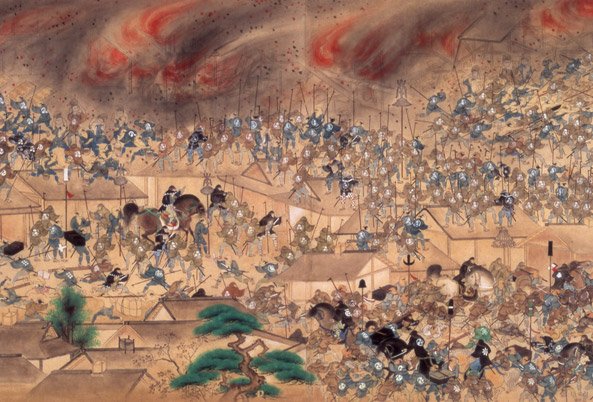
Urban fires were a true calamity, greatly feared by inhabitants. To prevent such disasters, the Japanese began charring the cedar cladding used on their façades. Fires were frequent—Edo experienced a total of 85 major fires—and these events had a lasting impact on the city’s urban development and reconstruction (now Tokyo).
The History of Shou Sugi Ban – The Meireki Fire
Credit : @Tokyo Metropolitan Foundation for History and Culture
Why and How Is Wood Burned? Let’s take a closer look at this fascinating process.
The Burnt wood process
Don’t worry—Yakisugi is actually quite simple. Our architect Nathalie has even experimented with it herself. Try it—you might love it!
There are several ways to approach it, depending on the type of wood, its thickness, and the desired result. Let’s briefly look at the two main techniques:
Traditional technic :
This is the original method used in Japan. Three wooden planks are assembled into a triangular chimney. Fire is then introduced inside, allowing oxygen to flow and intensify combustion.
Once burned, the cedar planks are separated, brushed to remove impurities, and sprayed with water to stop the carbonization process.

Credit : @Hopfab
Modern Technic :
This method involves burning the wood with a blowtorch, ensuring an even application to achieve a uniform tone. The charred residue is then brushed off, and the wood is rinsed with water.
Once dry, a natural oil is applied to seal the pores and create a refined finish. Depending on the wood and the burning technique, tones can vary from soft grey to deep ebony black (this is the method Nathalie used).
During this process, the moisture within the wood is released, making it highly resistant.
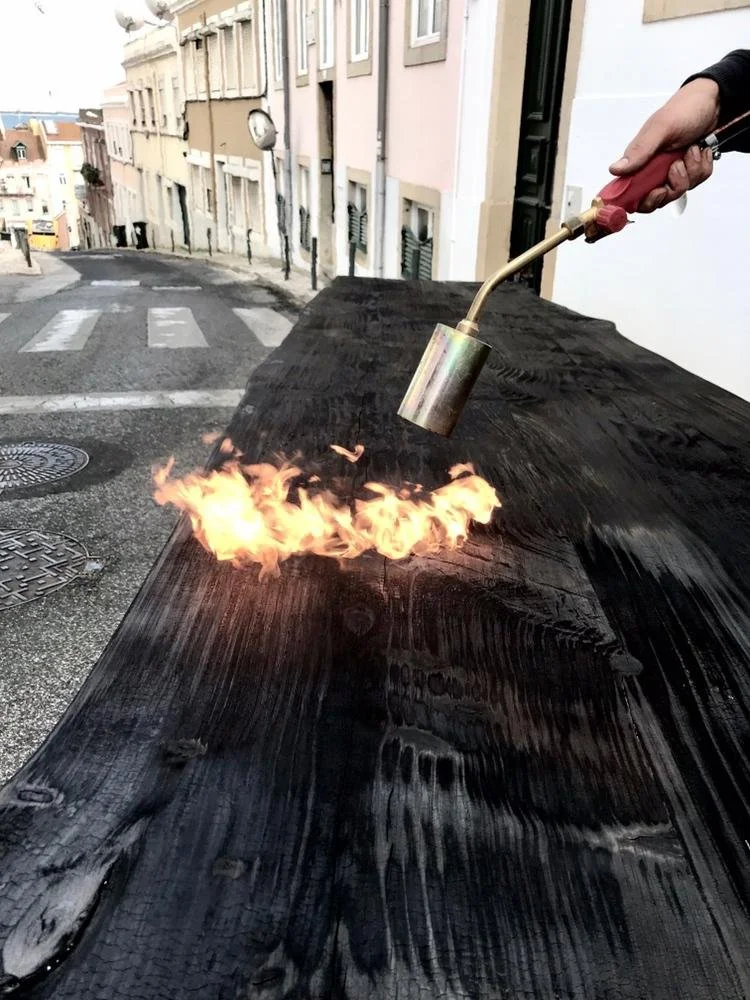
Credit : Studio Bisson
Since the 2000s, countries like Canada and those in Scandinavia have revived this technique. Today, the blowtorch method is the most commonly used, offering similar results while preserving the spirit of traditional Shou Sugi Ban.
What Finishes Are Possible?
Various techniques and wood species can be used to achieve this charred effect, but cedar (sugi) remains the preferred choice due to its unique reaction to heat.
The final result depends on several factors: the level of burning, the intensity of brushing, and the application of a finish.
A Wide Range of Effects
Many elements influence the final appearance. The intensity of the fire controls the depth of color, while the type of wood—cedar, Douglas fir, oak, pine—affects the texture and finish.
The cutting method (flat-sawn or quarter-sawn) also plays a role. This technique offers endless possibilities—it's all about experimenting to find the aesthetic that best suits your interior or exterior.
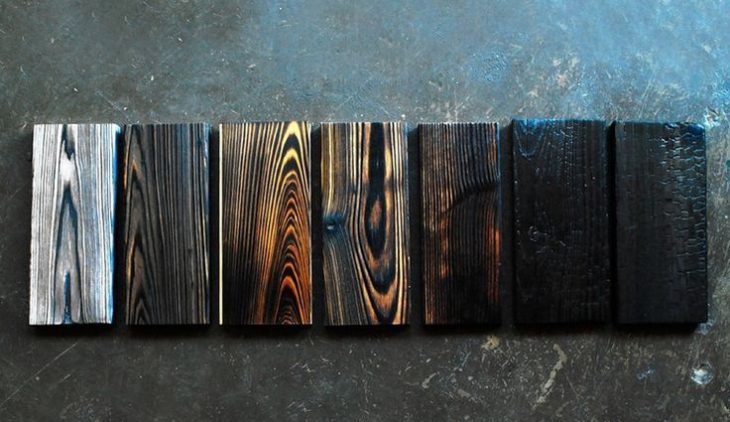
Different finishing options
Credit : peintures-tendances.com
The avantages of Shou-Sugi-Ban
Beyond its striking appearance, this technique offers numerous benefits:
Durability
The charred layer protects the wood, significantly extending its lifespan—often estimated at over 80 years.
Resistance
It becomes more resistant to weather conditions such as moisture, rain, and UV exposure.
Low Maintenance
No chemical treatments are required. Burnt wood naturally resists mold and oxidation—an economic advantage as well.
Water Resistance
Carbonization strengthens the wood, making it impermeable and hydrophobic, especially when finished with oil.
Protection Against Insects
The charred surface repels pests, including termites and other insects that typically damage wood.
Aesthetic Appeal
From subtle greys to deep blacks, the range of finishes allows for highly distinctive and refined designs.
So, convinced? Ecological, durable, protective, and decorative—what more could you ask for in solid wood for outdoor use?
Two Inspiring Projects Using Burnt Wood
Dans les intérieurs contemporains ou les maisons de campagne, le revêtement mural en bois brûlé fait des ravages. Voici deux maisons construites au Japon qui ont retenu notre attention.
YAMANONE NO IE
BY FUDO
A house at the foot of a mountain in Kamakura, perfectly adapted to its unique terrain. Its form and blackened walls blend seamlessly with the surrounding landscape.


Credit : @Yohei Sasakura
https://www.archilovers.com/projects/301021/yamanone-no-ie.html
SETOYAMA HOME
BY MORIYA AND PARTNERS
A villa immersed in its environment, almost hidden within the forest. Inside and out, burnt wood creates a refined, high-end finish, enhanced by breathtaking views.


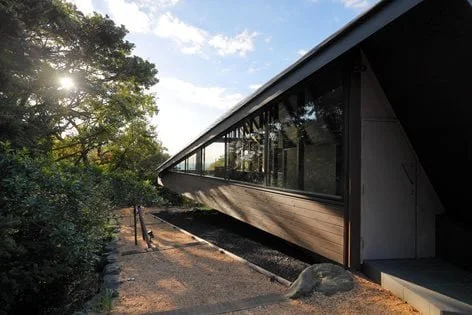
Credit : @Gen Inoue
https://www.archilovers.com/projects/302034/setoyama-home.html
Shou-Sugi-Ban for our interiors!
As seen in these projects, burnt wood is not limited to exterior cladding. It has become a powerful interior design element.
Architects, designers, and artists are increasingly exploring its possibilities. By adjusting the burning and brushing process, a wide palette of blacks can be achieved. Brushing softens the surface, removes residue, and reveals a smooth, almost skin-like texture.
This technique elevates materials and fascinates with its deep, rich tones.
Our tip: Pair a black solid wood table with lighter furniture to create balance and soften your space.
And contrary to what one might think, properly treated burnt wood does not leave charcoal residue—you can confidently use it for furniture without worrying about stains.


Credits : 1 / @caroline.andreoni - 2 / @brut.et.vegetal - 3 & 4/ @noir_de_bois
Conclusion
Both functional and aesthetic, this technique is ideal for adding character to both interiors and exteriors. Versatile and timeless, burnt wood adapts to all architectural styles—from traditional homes to contemporary spaces, façades, terraces, kitchens, and even furniture.
What do you think of this technique? We’re hooked!
