
The Complete Guide to Choosing the Perfect Sofa: Styles, Proportions & Design Tips
The sofa is often the largest and most used piece of furniture in a home. It anchors the living room, defines circulation, shapes conversations, and influences how a space feels on a daily basis. Yet, despite its importance, many people choose a sofa based on only two criteria: its appearance and whether it fits the room. At Studio Bisson, our approach is quite different. When selecting a sofa, we consider architecture, proportions, ergonomics, natural light, circulation, materials, and the way our clients actually live. A beautiful sofa should not only look exceptional on the day it arrives—it should continue to feel comfortable, functional, and timeless for years to come.
Here are the key principles we use when selecting the perfect sofa.
Start with Lifestyle, Not Style
Before looking at colours or fabrics, ask yourself one simple question: How do you use your living room?
Is it where your family gathers every evening? Do you often entertain guests? Do you watch television regularly? Do you enjoy reading? Do children or pets share the space? Your answers should determine the type of seating you choose.
A formal reception room requires a completely different sofa than a family living room designed for everyday comfort. The best interiors always reflect the lifestyle of the people who live in them.
Understanding Sofa Proportions
A sofa should feel perfectly balanced within a room. One of the most common mistakes we see is choosing a sofa that is simply too large. An oversized sofa can make even generous living rooms feel heavy and restrict circulation. Equally, a sofa that is too small often leaves the room feeling disconnected and under-furnished. As a general rule, we often aim for a sofa that occupies around two-thirds of the main wall, while leaving enough breathing space around it. Maintaining 70–90 cm (28–36 inches) of circulation around key furniture allows movement to feel natural and effortless. Luxury interiors rarely maximise every square metre—they prioritise comfort and flow.
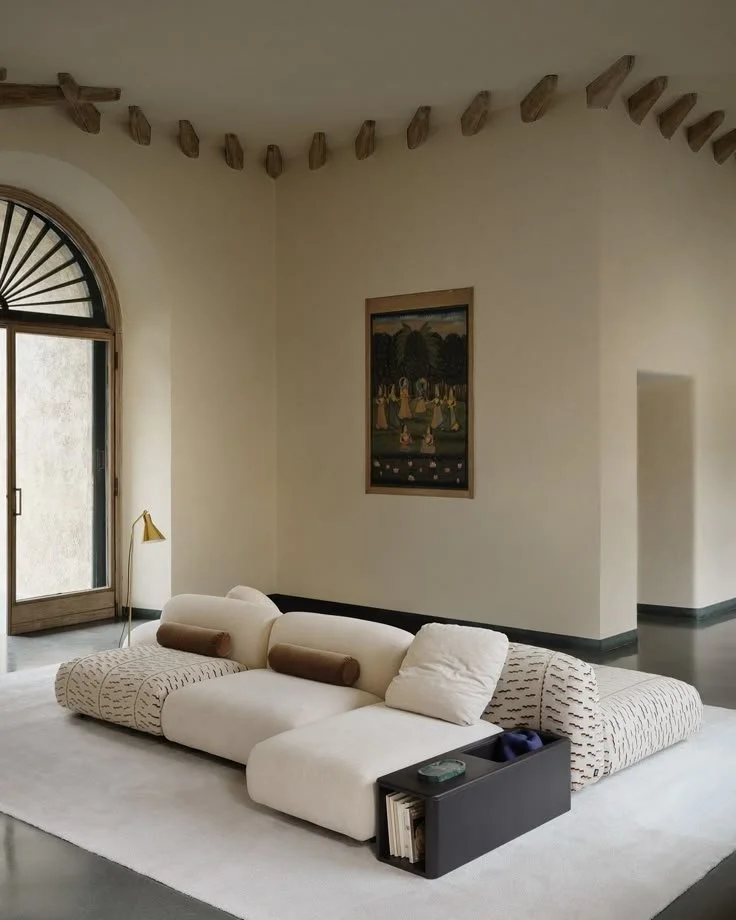
Credits: Pinterest
Seat Depth: The Detail Most People Overlook
One of the biggest differences between sofas is something many people never measure: Seat depth.
It completely changes the sitting experience.
Standard depth (55–60 cm / 22–24 inches)
A shallower seat encourages an upright posture. Ideal for formal living rooms, conversation spaces, or anyone who prefers sitting rather than lounging.
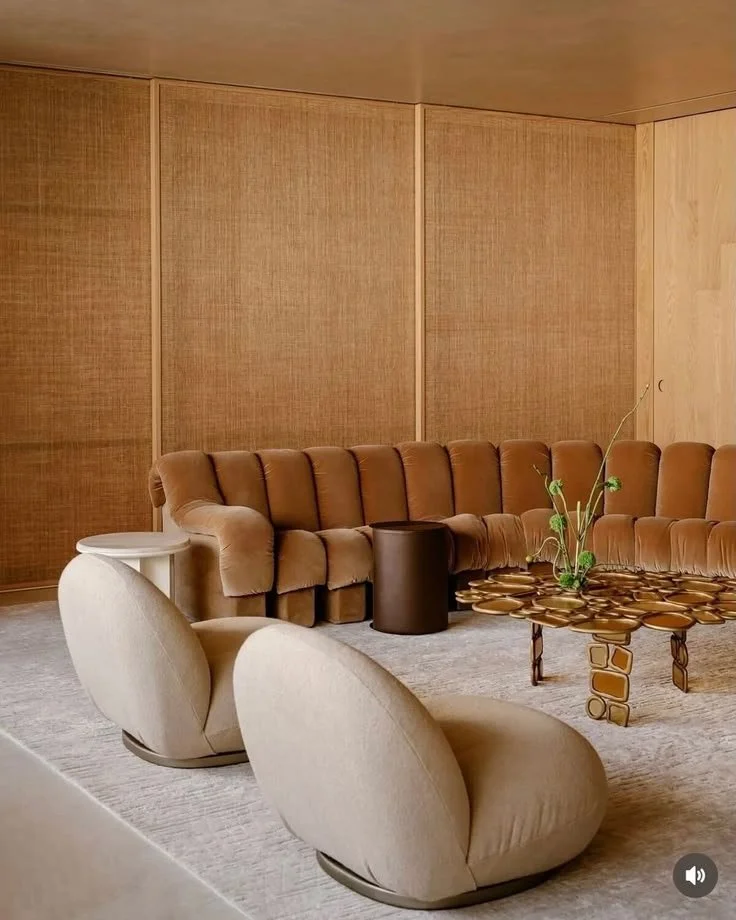
Modular Sofa
Credits: Pinterest
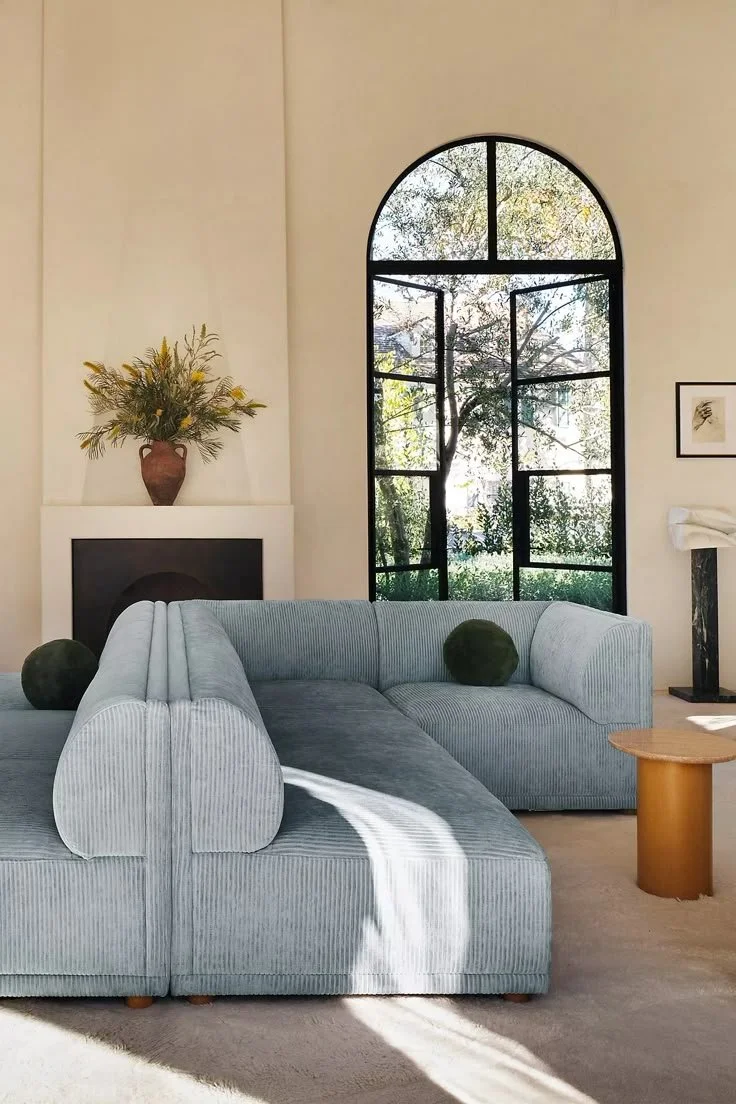
Modular Sofa
Credits: Pinterest
Medium depth (60–70 cm / 24–28 inches)
The most versatile option. Comfortable for everyday use while still offering good support.
Deep seating (70–90 cm / 28–35 inches)
Perfect for relaxing, reading or watching films. Deep sofas create an informal atmosphere associated with contemporary luxury interiors.
If multiple people will use the sofa regularly, testing different seat depths before purchasing is always worthwhile.
Seat Height Matters More Than You Think
Seat height influences both comfort and accessibility. Lower sofas create a relaxed, contemporary atmosphere inspired by Japanese architecture and modern European design. Higher seats provide easier movement and greater support, particularly for taller people or older family members. Choosing the correct height is just as important as choosing the right look.
Sofa Styles: Finding the Right Design
1. The Curved Sofa
Curved sofas have become a defining feature of contemporary luxury interiors. Their sculptural silhouette softens architectural lines while encouraging conversation. Rather than directing attention towards a television, they naturally bring people together. They work particularly well in open-plan spaces where they help define different living zones without creating visual barriers.
2. The Modular Sofa
Flexible, practical and increasingly popular. Modular sofas can be rearranged as lifestyles evolve, making them ideal for growing families or clients who move frequently. Their versatility makes them particularly suited to large contemporary homes. However, careful planning is essential to avoid overly bulky compositions that dominate a room.
3. The Low-Profile Sofa
Inspired by Japanese architecture, low sofas create a calm and understated atmosphere. Because they sit closer to the floor, they allow natural light to travel further across a room and emphasise ceiling height. They pair beautifully with minimalist interiors and spaces where architecture takes centre stage.
4. The Sectional Sofa
A sectional combines generous seating with strong spatial definition. Rather than filling a room with multiple smaller pieces, one carefully proportioned sectional can organise an entire living area. This is particularly effective in open-plan homes.
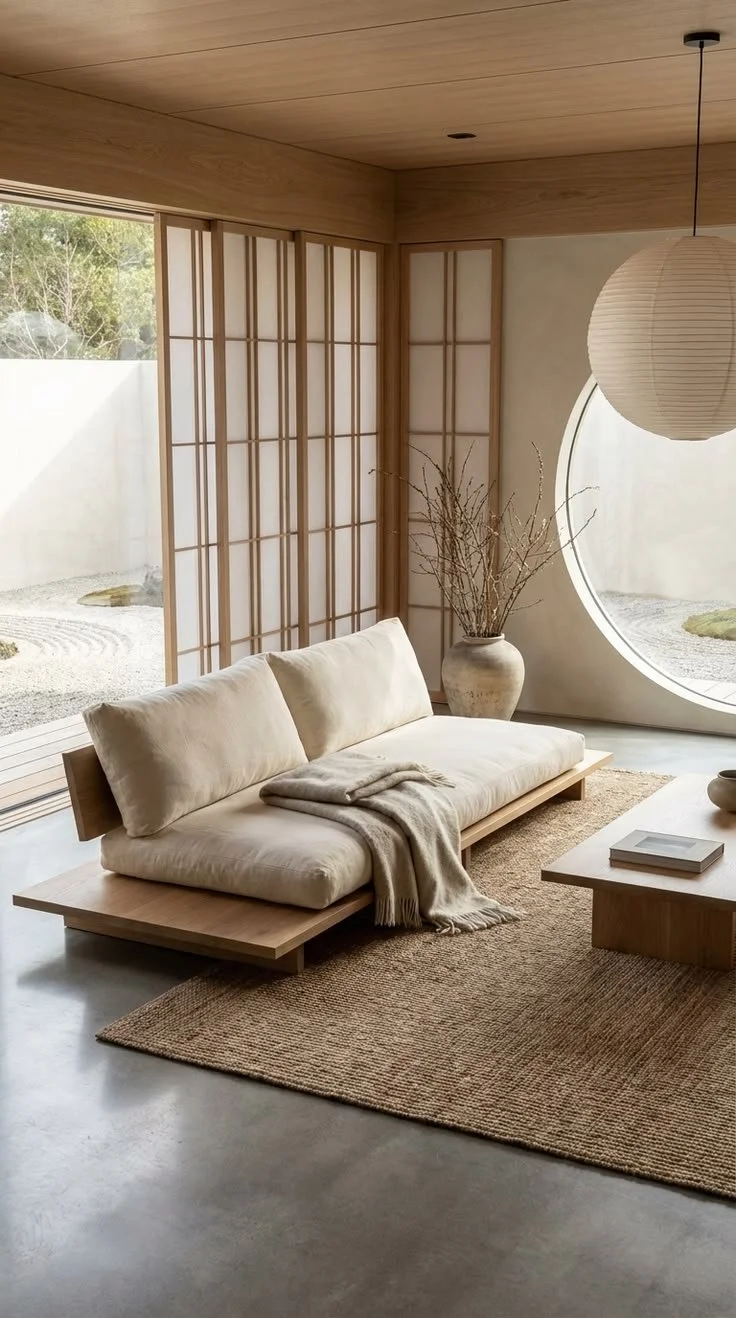
Low profile sofa
Credits: Pinterest
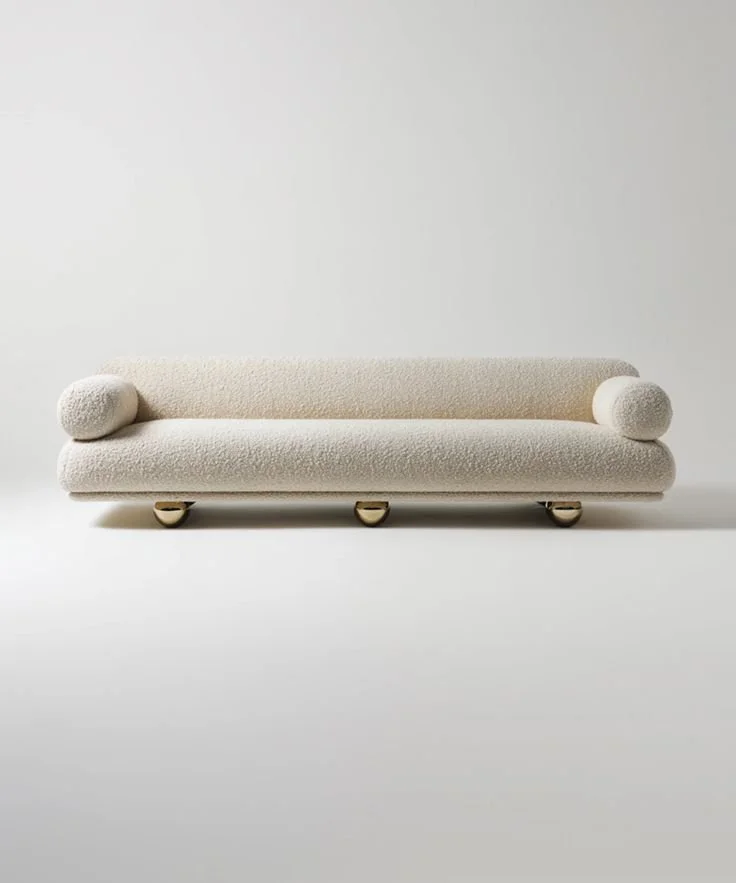
Bench Sofa
Credits: Pinterest
5. The Bench Seat Sofa
Recognisable by its single seat cushion, the bench seat sofa offers clean, uninterrupted lines. Its simplicity creates a more refined and architectural appearance while making the sofa feel visually lighter. It also avoids the gaps created by multiple seat cushions, resulting in a cleaner aesthetic.
6. The Conversation Layout
Sometimes the best seating arrangement is not a single sofa at all. Pairing a sofa with two armchairs, or placing two sofas opposite one another, creates a space designed around conversation rather than television. Many luxury hotels and boutique residences adopt this layout because it immediately feels more welcoming and sociable.
Choosing the Right Fabric
Fabric influences not only appearance but also longevity and comfort.
Linen: Naturally textured and breathable. Linen softens beautifully over time, making it one of our favourite choices for relaxed luxury interiors.
Wool: Warm, durable and naturally resistant to wrinkles. Ideal for creating cosy living spaces.
Velvet: Elegant and rich in texture. Velvet reflects light beautifully, adding depth and sophistication to a room. It works particularly well as an accent fabric or in formal living rooms.
Leather: One of the few materials that genuinely improves with age. High-quality leather develops a beautiful patina, making every sofa unique over time. It is exceptionally durable when properly maintained.
Performance Fabrics: Today's performance textiles combine luxury aesthetics with exceptional practicality. Many are stain-resistant, washable and ideal for homes with children or pets, without compromising on appearance.
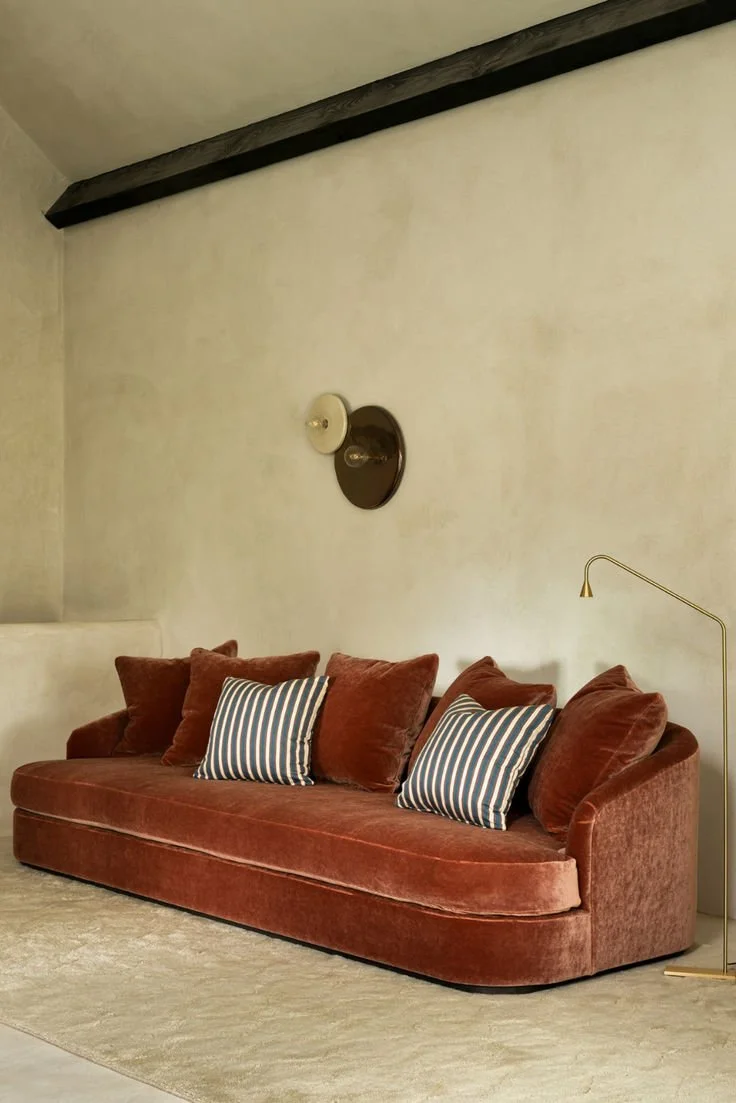
Velvet Sofa
Credits: Pinterest
Cushion Construction: What Makes a Sofa Last?
Two sofas may look identical, yet feel completely different after five years. The difference often lies inside. High-quality sofas typically combine:
High-resilience foam for long-term support
Feather or down wraps for softness
Pocket springs for improved comfort
Solid hardwood frames for durability
Understanding these hidden details is just as important as choosing the fabric. A well-constructed sofa is an investment that should remain comfortable for decades.
Colour: Think Beyond Trends
While bold colours can be beautiful, we often recommend choosing timeless neutral tones for larger pieces such as sofas. Warm whites, soft taupes, sand, stone, camel, olive and earthy greys create flexible foundations that can evolve with changing accessories and artwork. This approach allows your interior to adapt over time without replacing its largest piece of furniture.
One Last Piece of Advice: Always Sit Before You Buy
A sofa should never be selected from photographs alone. Spend time sitting on it. Read a book. Lean back. Cross your legs. Notice how the cushions support your back. The most beautiful sofa is ultimately the one that invites you to stay a little longer.
Our Philosophy at Studio Bisson
At Studio Bisson, we believe a sofa is far more than a piece of furniture. It is where everyday life unfolds. Where families gather, conversations begin, guests are welcomed, and quiet moments are enjoyed. Choosing the right sofa is therefore about much more than aesthetics. It is about understanding how a home should feel. Because true luxury is never simply seen. It is experienced.
