
10 Iconic Sofas That Shaped Interior Design
Some pieces of furniture are designed to fill a room. Others have the ability to define it.
The sofa belongs to the latter category. It is one of the largest pieces in a living space, but also one of the most intimate. We sit on it, read on it, entertain around it, take naps on it and, quite often, spend more time with it than with almost any other piece of furniture in the home.
Over the past century, certain sofas have gone beyond their original function to become genuine icons of design.
Some challenged traditional ideas of comfort. Others introduced entirely new ways of constructing furniture. Some became symbols of an era, while others have remained remarkably relevant decades after their creation.
At Studio Bisson, we particularly love these pieces because they demonstrate something fundamental about good design: a sofa can be both functional and architectural, comfortable and sculptural, contemporary and timeless.
Here are ten designs that have left a lasting mark on interior design.
1. LC2 — Le Corbusier, Pierre Jeanneret & Charlotte Perriand, 1928
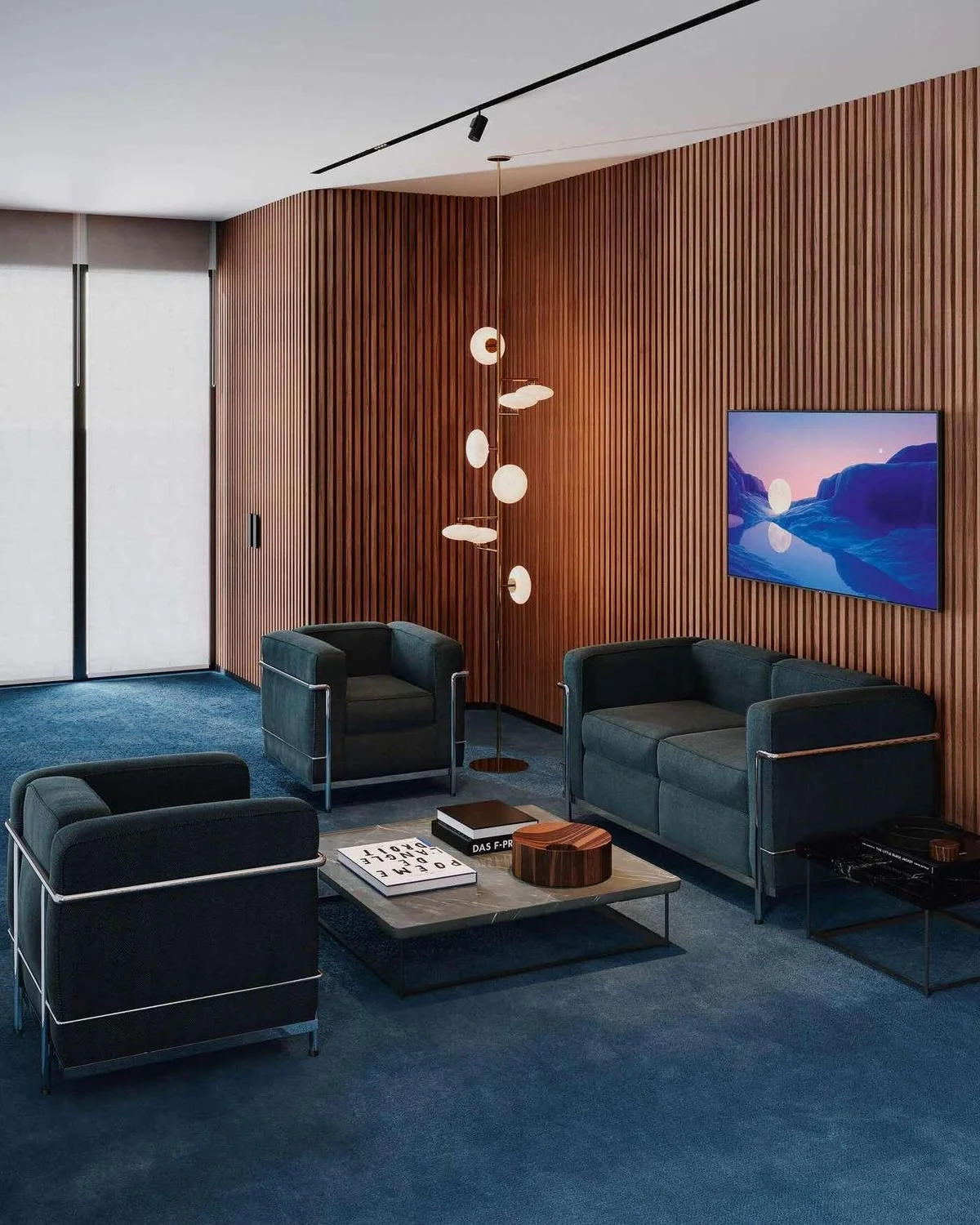
Few sofas are as recognisable as the LC2. Designed in 1928 by Le Corbusier, Pierre Jeanneret and Charlotte Perriand, the LC2 was part of their revolutionary approach to furniture design. Rather than hiding the structure inside the upholstery, the designers placed the steel frame on the outside.
The result was radically different from the traditional upholstered sofa of the time: a visible architectural framework supporting separate cushions. The proportions are compact and geometric, while the generous cushions create a striking contrast with the precision of the frame. It is a beautiful example of the relationship between architecture and furniture — almost as though a building had been reduced to the scale of a chair.
Why it remains relevant: Nearly a century later, the LC2 still works particularly well in contemporary interiors because of its architectural clarity. It can sit comfortably within a minimalist apartment, a historic home or an eclectic interior filled with art. Its lesson is perhaps even more relevant today: structure can be beautiful when it is allowed to be seen.
Credits: Pinterest
Credits: Pinterest
2. Barcelona — Ludwig Mies van der Rohe & Lilly Reich, 1929
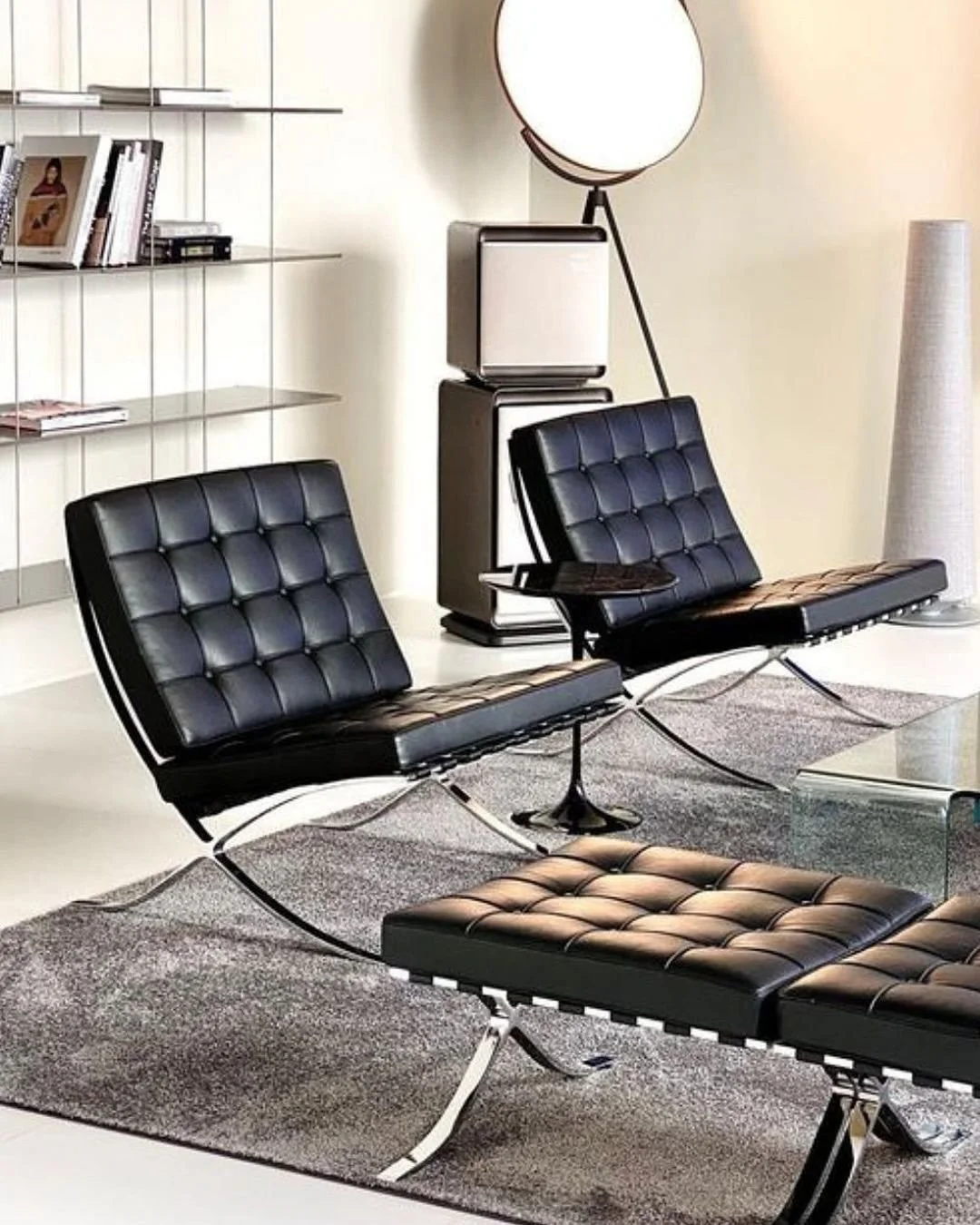
Designed for the German Pavilion at the 1929 International Exposition in Barcelona, the Barcelona sofa was created by Ludwig Mies van der Rohe and Lilly Reich. Its design is an exercise in restraint. A refined metal frame supports a series of carefully proportioned leather cushions, producing an object that feels simultaneously substantial and remarkably light. The Barcelona sofa reflects Mies van der Rohe's famous design philosophy: less, but better. There is almost nothing decorative about it. Its character comes from proportion, craftsmanship and the relationship between its materials.
Why it remains relevant: The Barcelona is particularly interesting in a luxury interior because it demonstrates that sophistication doesn't require visual complexity. Placed alongside stone, timber, textured plaster or a large artwork, its simplicity allows the surrounding architecture to take centre stage.
3. Marshmallow Sofa — George Nelson, 1956
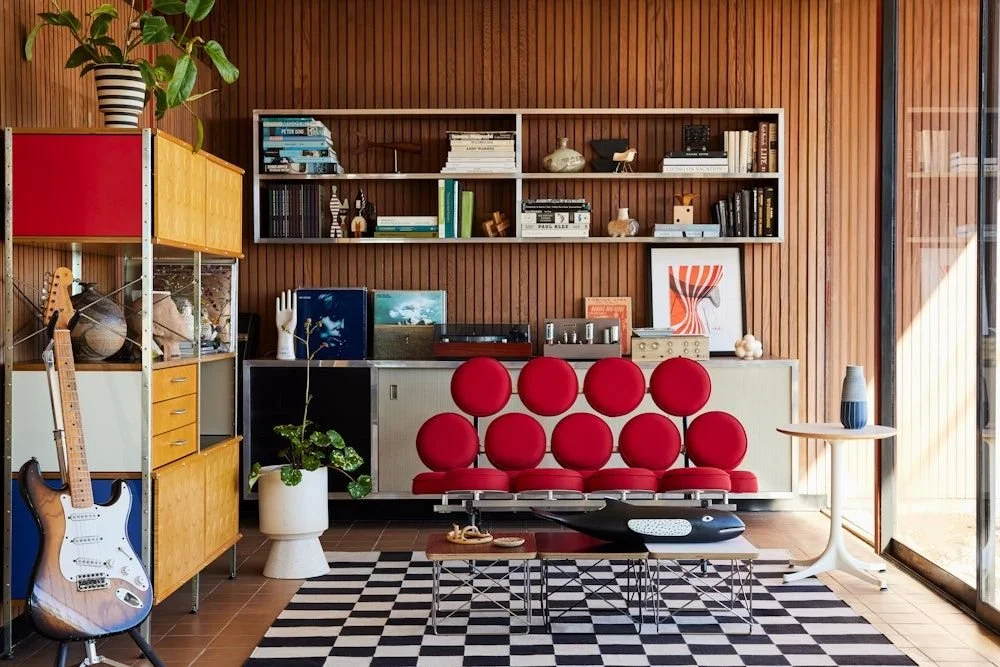
The Marshmallow Sofa is perhaps one of the most playful pieces on this list. Designed by George Nelson in 1956, it consists of a series of individual circular cushions mounted onto a simple frame. At first glance, it looks almost cartoon-like. But the design was actually an innovative response to a manufacturing experiment involving small round cushions that could be produced relatively inexpensively. The result became one of the most recognisable examples of American modernism.
Why it remains relevant: The Marshmallow Sofa reminds us that iconic design doesn't always have to be serious. Its unusual geometry introduces humour and personality into an interior — something that can be particularly powerful when placed within an otherwise restrained space.
Credits: Pinterest
Credits: Pinterest
4. Camaleonda — Mario Bellini, 1970
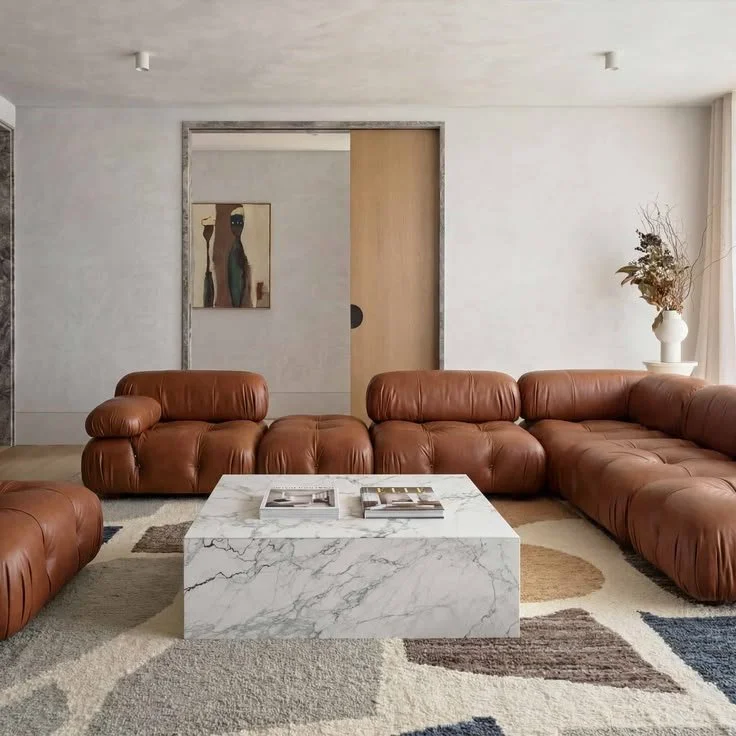
Few sofas have experienced such a strong revival in recent years as Mario Bellini's Camaleonda. Originally designed in 1970, the sofa is composed of large, generous modules that can be separated and rearranged. Its name combines camaleonte — chameleon — with onda — wave. The concept was simple but revolutionary: create a sofa capable of adapting to different environments and ways of living. The characteristic deep buttoning is not merely decorative. The system of cables, rings and upholstery allows the modules to be connected and separated while maintaining their structure.
Why it remains relevant: The Camaleonda is a perfect example of a design that anticipated contemporary lifestyles. Open-plan living, flexible spaces and informal entertaining have made modular furniture increasingly relevant. Its generous proportions also illustrate an important shift in twentieth-century design: comfort itself became part of the aesthetic.
5. Togo — Michel Ducaroy, 1973
If there is one sofa that perfectly represents relaxed French design, it is the Togo. Designed by Michel Ducaroy in 1973, the Togo abandoned the traditional rigid frame almost completely. Instead, its distinctive folded form is created from layers of foam, producing a sofa that looks almost like a piece of fabric that has been casually dropped onto the floor. It was unconventional when it was introduced — and remains unconventional today.
Why it remains relevant: The Togo changed the perception of what a sofa could be. It prioritises informality, softness and relaxation rather than formality or rigid posture. Its low profile also works particularly well in contemporary interiors where maintaining visual connections and a sense of openness is important.
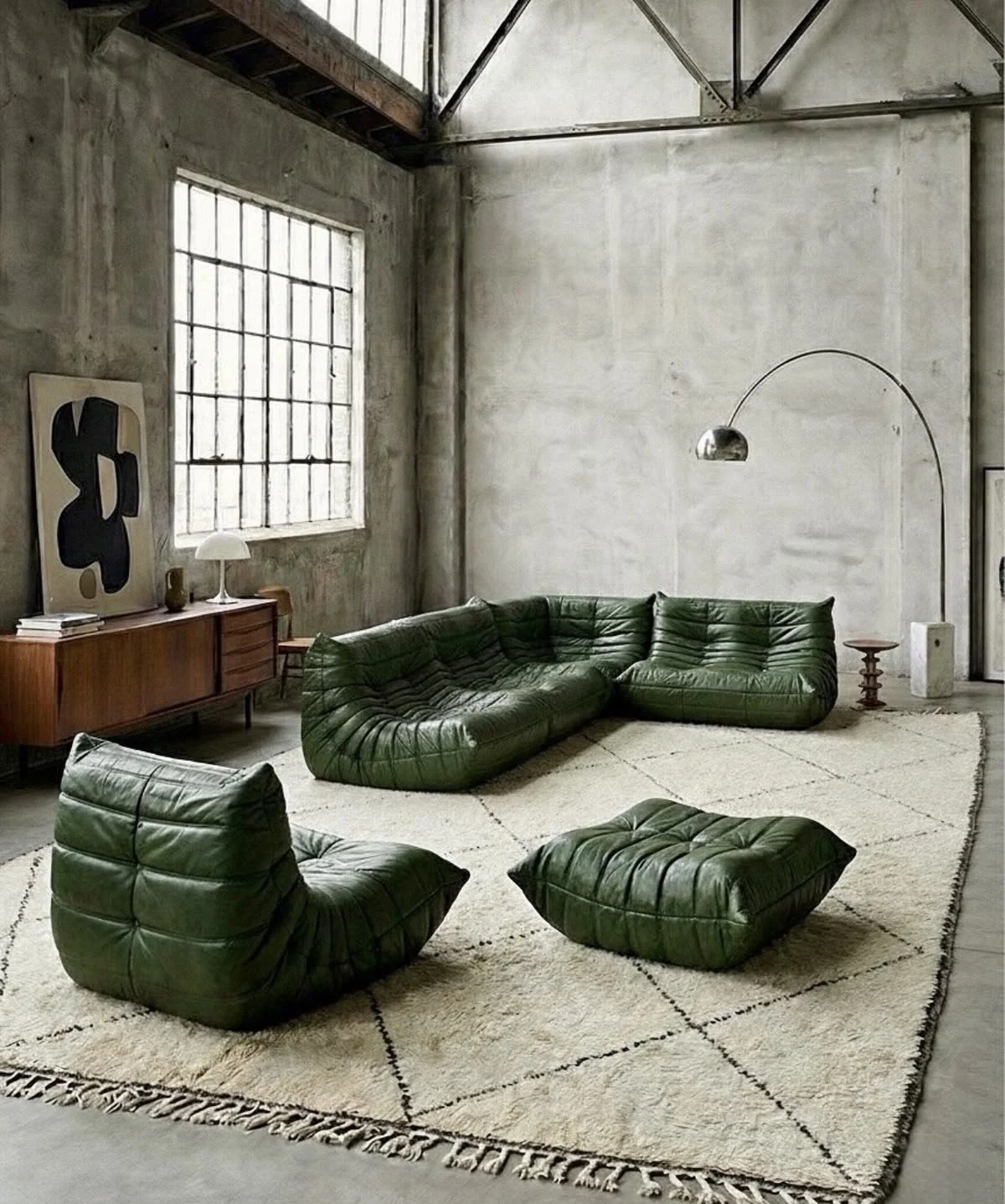
Credits: Pinterest
Credits: Pinterest
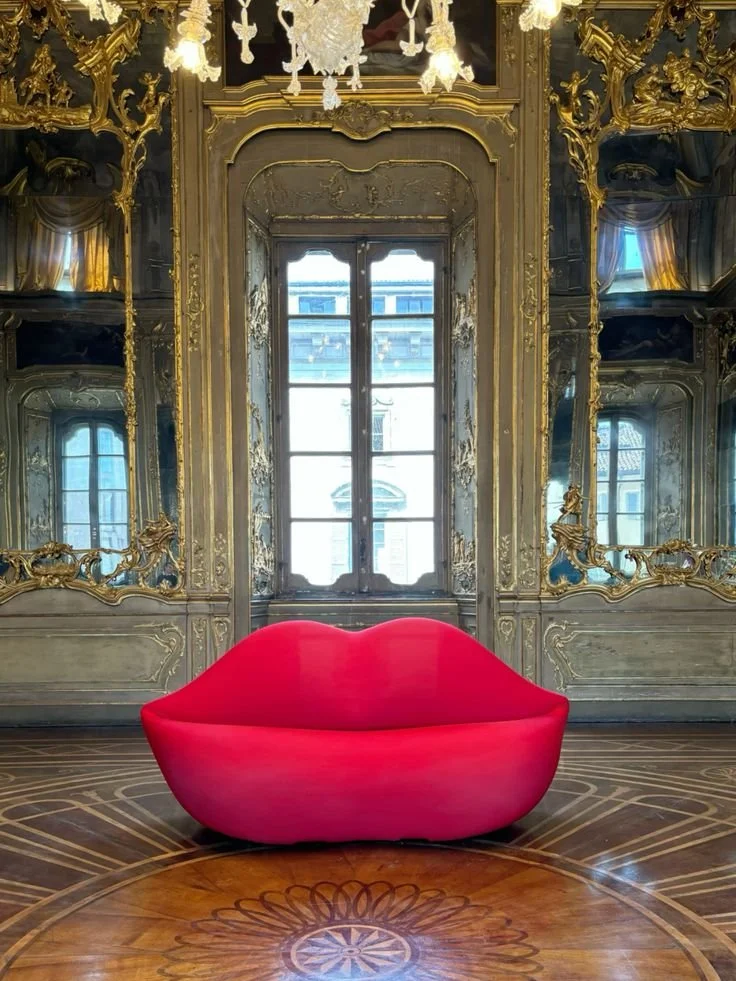
6. Bocca — Studio 65, 1970
Designed by Italian radical design collective Studio 65, the Bocca sofa is one of the most instantly recognisable furniture pieces of the twentieth century. The design takes the form of oversized lips.
It was inspired by Salvador Dalí's Mae West Lips Sofa, while transforming the idea into a distinctly Pop-era piece of furniture.
This is not a sofa that tries to disappear. It is sculpture, furniture and provocation at the same time.
Why it remains relevant: The Bocca demonstrates the role furniture can play beyond functionality. In the right setting, an iconic piece can act almost like artwork. This is something we increasingly appreciate in residential interiors: not every piece needs to be quiet. A single unexpected object can give an otherwise restrained room its personality.
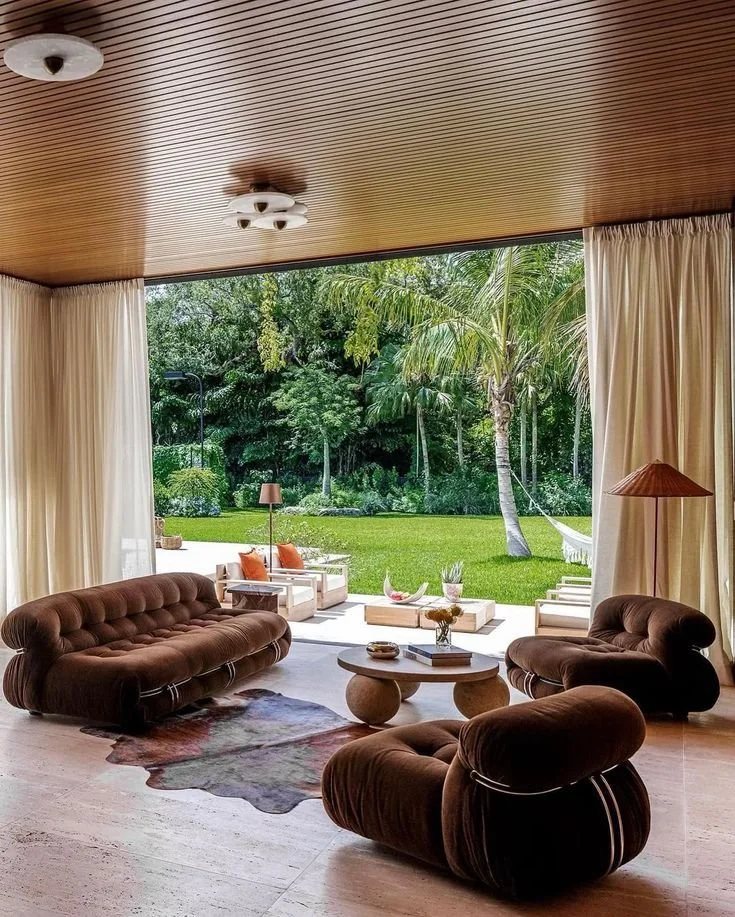
7. Soriana — Afra & Tobia Scarpa, 1969
The Soriana is a wonderful example of Italian design's ability to combine softness with a strong visual identity. Designed by Afra and Tobia Scarpa in 1969, it is characterised by generous, rounded upholstery held within a metal structure. Unlike many sofas of its period, the Soriana doesn't hide its volume. It celebrates it. The result is generous, relaxed and distinctly sculptural.
Why it remains relevant: The resurgence of soft, enveloping furniture has brought renewed attention to designs like the Soriana.
It also demonstrates how a sofa can create an atmosphere through volume alone, without relying on elaborate decoration.
Credits: Pinterest
10 Iconic Sofas - Studio Bisson
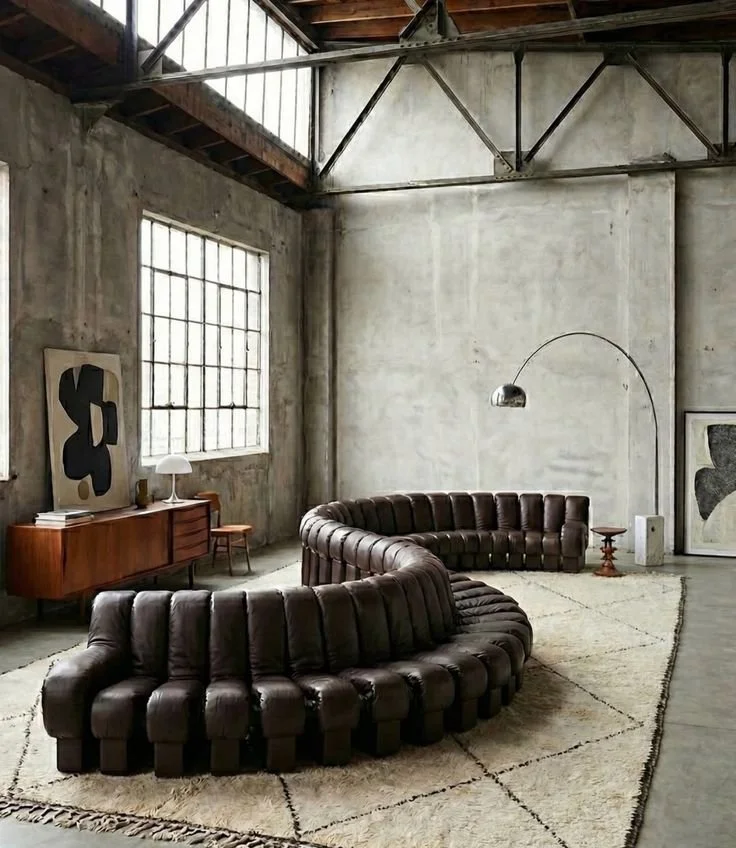
9. DS-600 "Non-Stop" — De Sede, 1972
The DS-600 takes modularity to another level. Developed by a team of Swiss designers for De Sede in 1972, the sofa is made from individual upholstered elements that can be connected almost endlessly. Straight line? Curve? Circle? Sinuous composition? The system allows the user to create different configurations according to the space.
This is where the name "Non-Stop" becomes particularly appropriate.
Why it remains relevant: The idea of furniture adapting to architecture rather than the other way around feels especially contemporary.
For large living spaces, curved rooms or unusual floor plans, modular systems can provide considerably more flexibility than conventional sofas.
Credits: Pinterest
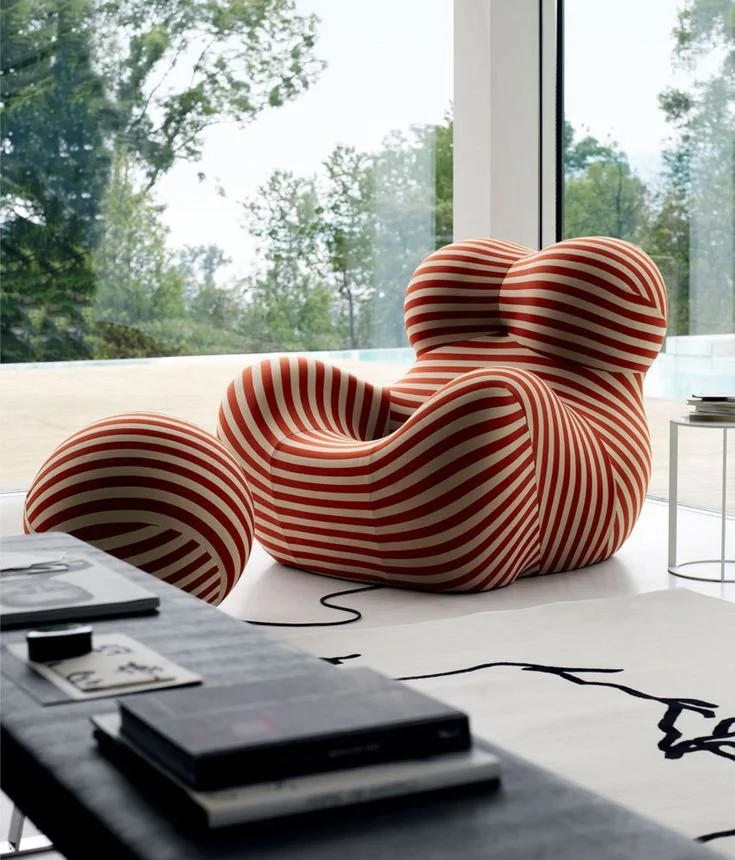
8. Up5 & Up6 — Gaetano Pesce, 1969
Gaetano Pesce's Up5 & Up6 is perhaps one of the most conceptual sofas on our list.
The enormous armchair, accompanied by its spherical footstool, was conceived as a commentary on the female body and on themes of oppression and freedom.
Its exaggerated proportions make it impossible to ignore. The piece was produced using moulded polyurethane foam and became one of the defining objects of Italian Radical Design.
Why it remains relevant: The Up chair demonstrates how furniture can carry an idea. It challenges the assumption that design exists purely to solve a functional problem.
Sometimes, furniture can be political, emotional or provocative — and still be extraordinarily beautiful.
Credits: Pinterest
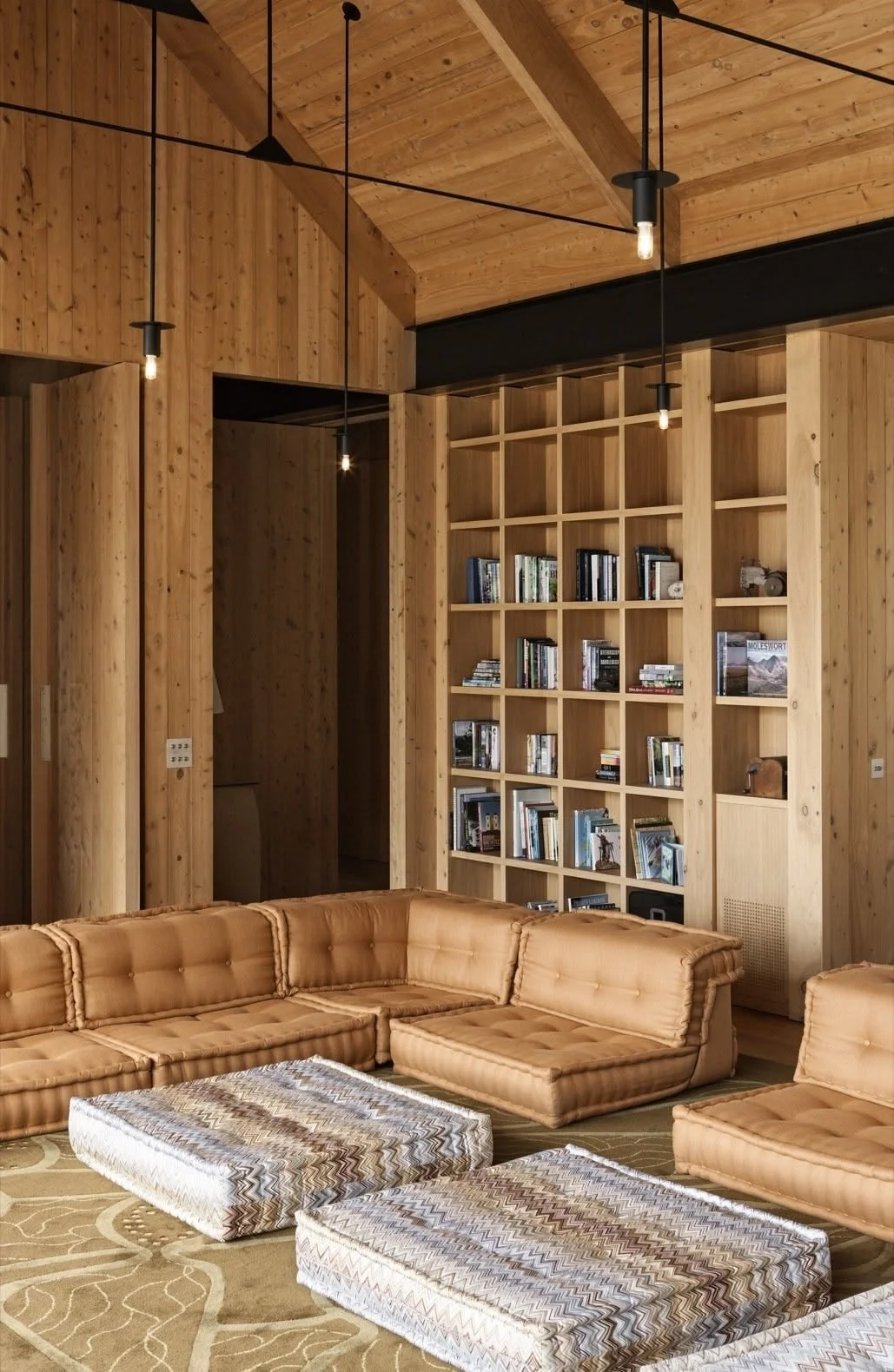
10. Mah Jong — Hans Hopfer, 1971
The Mah Jong takes a completely different approach.
Designed by Hans Hopfer in 1971, it is composed of individual mattress-like modules that can be arranged freely.
The design was inspired partly by the informal way people sit and relax on the floor.
Rather than defining a single correct configuration, the Mah Jong allows the user to create their own.
It can become a sofa, a daybed, a corner composition or an almost landscape-like seating arrangement.
Why it remains relevant: The Mah Jong anticipated our increasingly fluid relationship with furniture.
Today, we expect our homes to accommodate different activities throughout the day — working, relaxing, entertaining, playing and resting.
Flexible furniture allows the interior to evolve with us.
What Makes a Sofa Iconic?
Looking at these ten designs together, something becomes clear. There is no single formula for creating an iconic sofa.
Some are minimalist. Some are playful. Some are incredibly comfortable. Some are almost impossible to sit on without thinking about their sculptural qualities. But they share several characteristics.
They introduce a new idea: The LC2 exposed the structure. The Camaleonda reinvented modularity. The Togo challenged traditional construction. The Mah Jong questioned the idea of a fixed sofa.
They have recognisable proportions: An iconic sofa can often be identified from its silhouette alone. This is a testament to the importance of proportion in furniture design.
They respond to their time. Each of these pieces reflects something about the period in which it was created — from the industrial optimism of modernism to the experimentation of Italian Radical Design.
And most importantly, they continue to feel relevant. Trends come and go. An iconic design survives because the idea behind it remains interesting.
How to Introduce an Iconic Sofa into a Contemporary Interior
Owning an iconic piece doesn't mean creating a museum around it. In fact, we often prefer the opposite. Pair a highly recognisable sofa with quieter elements: A vintage sofa + contemporary artwork. A sculptural sofa + natural stone. A colourful design icon + a restrained architectural palette. A classic piece + contemporary lighting
The contrast creates tension — and tension is often what makes an interior feel sophisticated. An iconic sofa should have enough space around it to be appreciated, but it shouldn't necessarily become the only statement in the room.
Our Approach at Studio Bisson
When we select a sofa for a project, we don't begin by asking whether it is iconic. We ask whether it is right.
Right for the architecture. Right for the proportions. Right for the way our clients live. Right for the atmosphere we want to create.
Sometimes that means choosing a famous design. Sometimes it means discovering a lesser-known piece from a talented designer or an exceptional artisan. The ultimate goal is not to fill a room with recognisable names. It is to create an interior where every piece has a reason to be there. Because the best furniture doesn't simply occupy a space. It changes the way we experience it.
