
A New Cultural Destination in Graça
Nestled within the historic walls of Voz do Operário, in the heart of Lisbon's Graça neighbourhood, Sonora was conceived as more than a café.
It is a place where music, design, food and culture intersect. A venue designed to evolve throughout the day, welcoming morning coffee drinkers, remote workers, vinyl enthusiasts, artists and concert-goers within the same carefully curated environment.
When Studio Bisson was invited to redesign the former café of Voz do Operário, the ambition was never to create simply another hospitality venue. The challenge was to imagine a space capable of preserving the cultural legacy of the institution while introducing a contemporary identity rooted in Brazilian creativity and community.
The result is Sonora: a Brazilian-inspired café, listening bar and cultural platform where architecture becomes a framework for connection, discovery and shared experiences.
Part neighbourhood café, part audiophile destination and part cultural venue, Sonora reflects a broader vision of hospitality—one where people come not only to eat and drink, but also to listen, learn, meet and participate.
The Story Behind Sonora: Reimagining a Historic Lisbon Institution
Every project begins with a place, and few places in Lisbon carry as much cultural significance as Voz do Operário.
Founded in the nineteenth century, Voz do Operário has played an important role in the educational, social and cultural life of the city for generations. More than a building, it represents a long-standing commitment to community, culture and collective exchange.
Designing Sonora therefore required a careful balance between preservation and transformation.
Rather than creating a complete rupture with the past, Studio Bisson approached the project as a continuation of an ongoing story. The objective was not to erase the existing identity of the space but to introduce a new chapter capable of attracting a younger generation while respecting the values that have historically defined the institution.
This approach influenced every design decision.
The project embraces contemporary interventions while maintaining a strong sense of authenticity. Existing architectural elements were preserved wherever possible, allowing the new design to coexist naturally with the history of the building.
In many ways, Sonora can be understood as a bridge between generations: a place where long-time members of the neighbourhood and first-time visitors can share the same space while experiencing it in different ways.
A Contemporary Vision of Brazilian Culture
Although Sonora draws inspiration from Brazil, the project deliberately avoids the clichés often associated with Brazilian-themed hospitality spaces.
There are no obvious tropical references or stereotypical decorative gestures.
Instead, Sonora celebrates a contemporary vision of Brazilian culture through music, craftsmanship, art, materiality and human connection.
Brazil is one of the world's richest cultural ecosystems, shaped by a unique combination of Indigenous, African, European and immigrant influences. This diversity is expressed through its music, architecture, artisanal traditions and artistic production.
The ambition for Sonora was to create a space capable of reflecting this richness in a subtle and sophisticated way.
Throughout the project, Brazilian culture appears not as decoration but as substance.
It can be found in the carefully curated music programme, the collaborations with Brazilian artists and makers, the choice of materials and the overall atmosphere of the venue.
The result is a space that feels deeply connected to Brazil while remaining firmly rooted in Lisbon.
Designing Around Sound
Unlike most hospitality projects, Sonora did not begin with a visual concept.
It began with sound.
Music was one of the project's primary architectural drivers and informed decisions from the earliest stages of the design process.
The concept draws inspiration from audiophile cafés and listening bars, spaces where music is treated as a central experience rather than background entertainment. Originating in Japan through the tradition of Jazz Kissa cafés, these venues are designed around attentive listening and carefully curated sound environments.
For Studio Bisson, the question became simple:
How do you design a space that sounds as good as it looks?
The answer required a holistic approach.
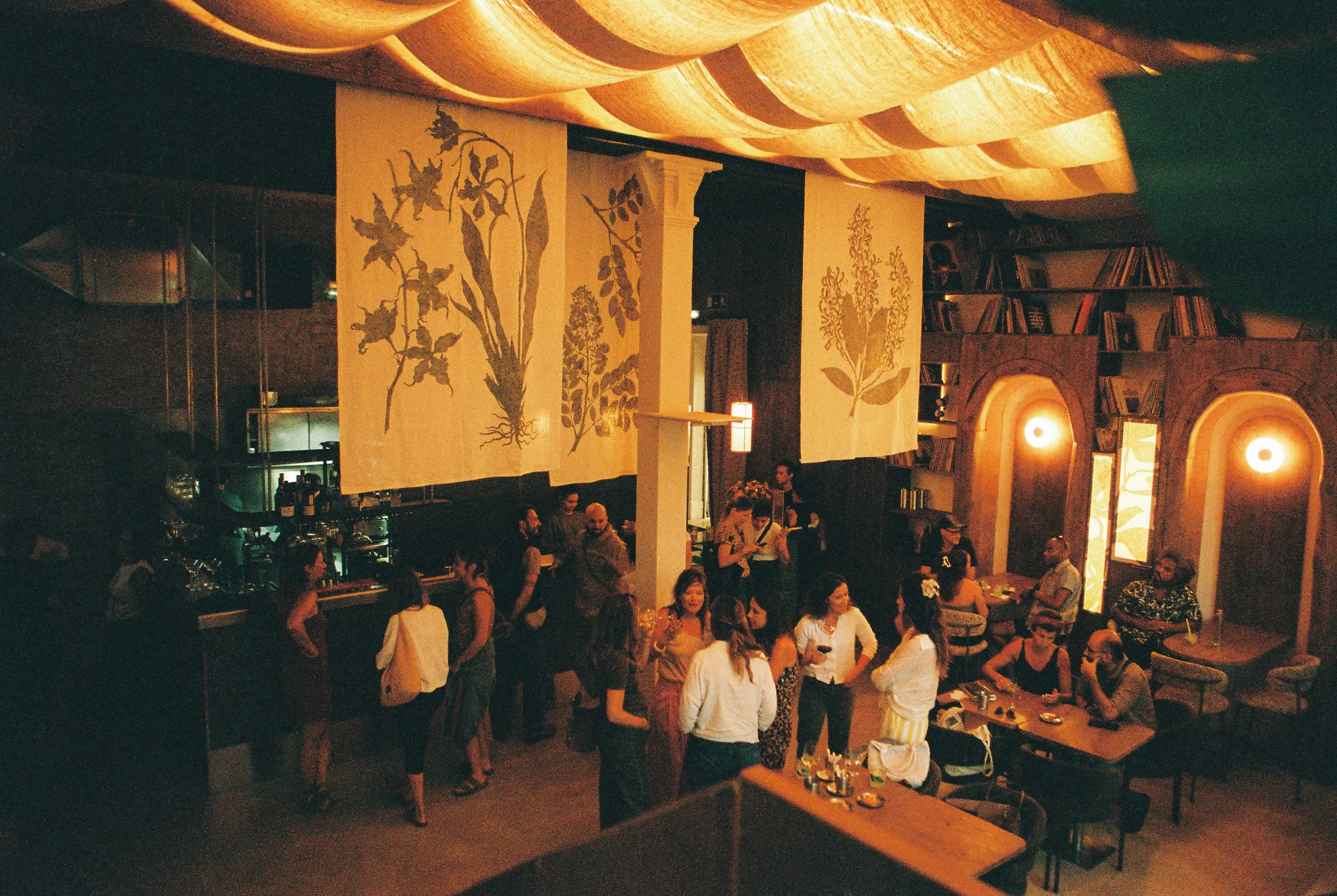
Acoustic comfort was considered throughout the design process. Natural linen curtains, upholstered seating and carefully selected finishes help control reverberation and improve listening conditions without compromising the warmth of the interior.
The objective was not to create silence but balance.
Visitors should be able to enjoy a conversation over coffee during the day, while musicians and audiences should feel equally comfortable during evening performances.
The flexibility of the venue was also essential. Sonora was designed to accommodate multiple activities:
café service
remote work sessions
vinyl listening experiences
DJ performances
live concerts
community gatherings
Rather than designing separate spaces for each activity, the project creates a single environment capable of adapting throughout the day.
This flexibility is one of Sonora's defining characteristics.
Materiality: Warm Minimalism Meets Brazilian Influences
The material palette reflects Studio Bisson's broader design philosophy, combining warm minimalism with a strong emphasis on natural materials and craftsmanship.
Every material was selected not only for its aesthetic qualities but also for the atmosphere it helps create.
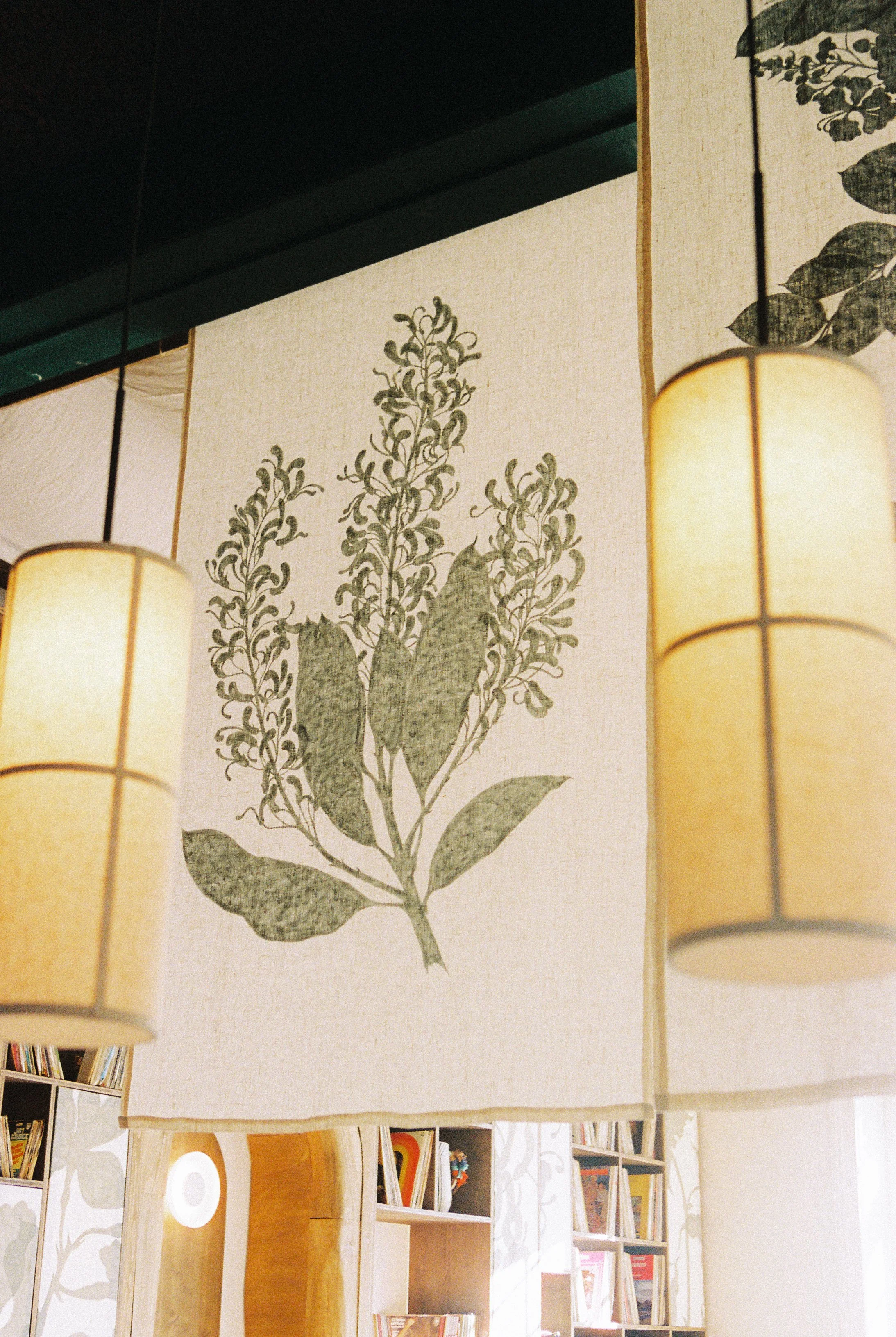
Natural linen plays a central role throughout the space. Beyond its visual softness, it contributes to acoustic comfort while introducing movement, texture and warmth.
Wood was equally important.
Used extensively throughout the project, it provides a sense of permanence and authenticity while creating a welcoming environment that encourages people to stay and linger.
In contrast, brushed stainless steel introduces a more contemporary and technical dimension.
Its subtle reflections reference the world of audio equipment, recording studios and music production while creating visual depth throughout the interior.
The dialogue between these materials became one of the defining characteristics of the project.
Natural and industrial.
Soft and precise.
Traditional and contemporary.
Together, they create an atmosphere that feels both sophisticated and approachable.
Signature Design Pieces
One of the defining characteristics of Sonora is the integration of bespoke pieces created specifically for the project.
Rather than relying on decorative objects, the design focuses on functional elements that contribute directly to the identity of the venue.
The Vinyl Library and Integrated Sound System
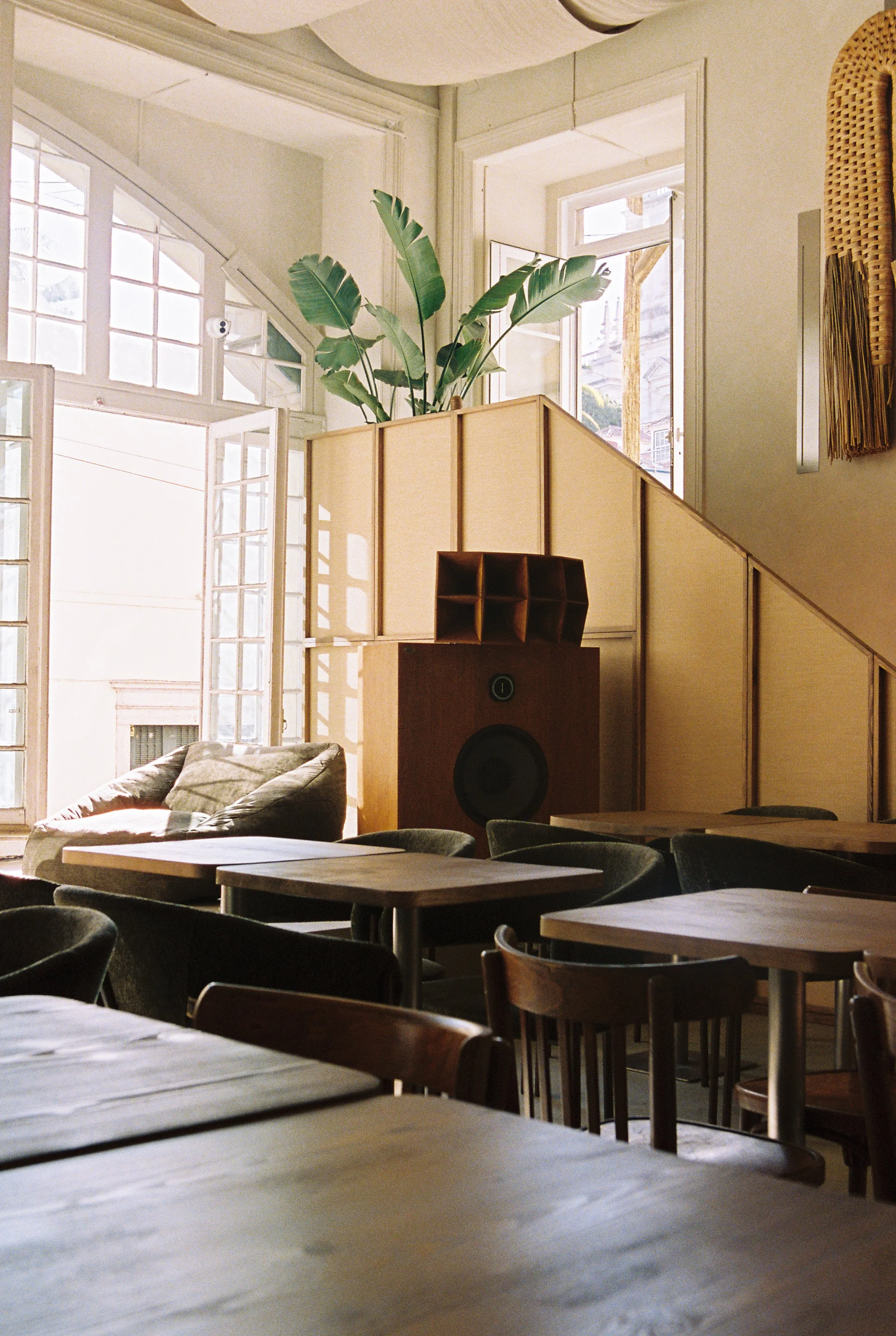
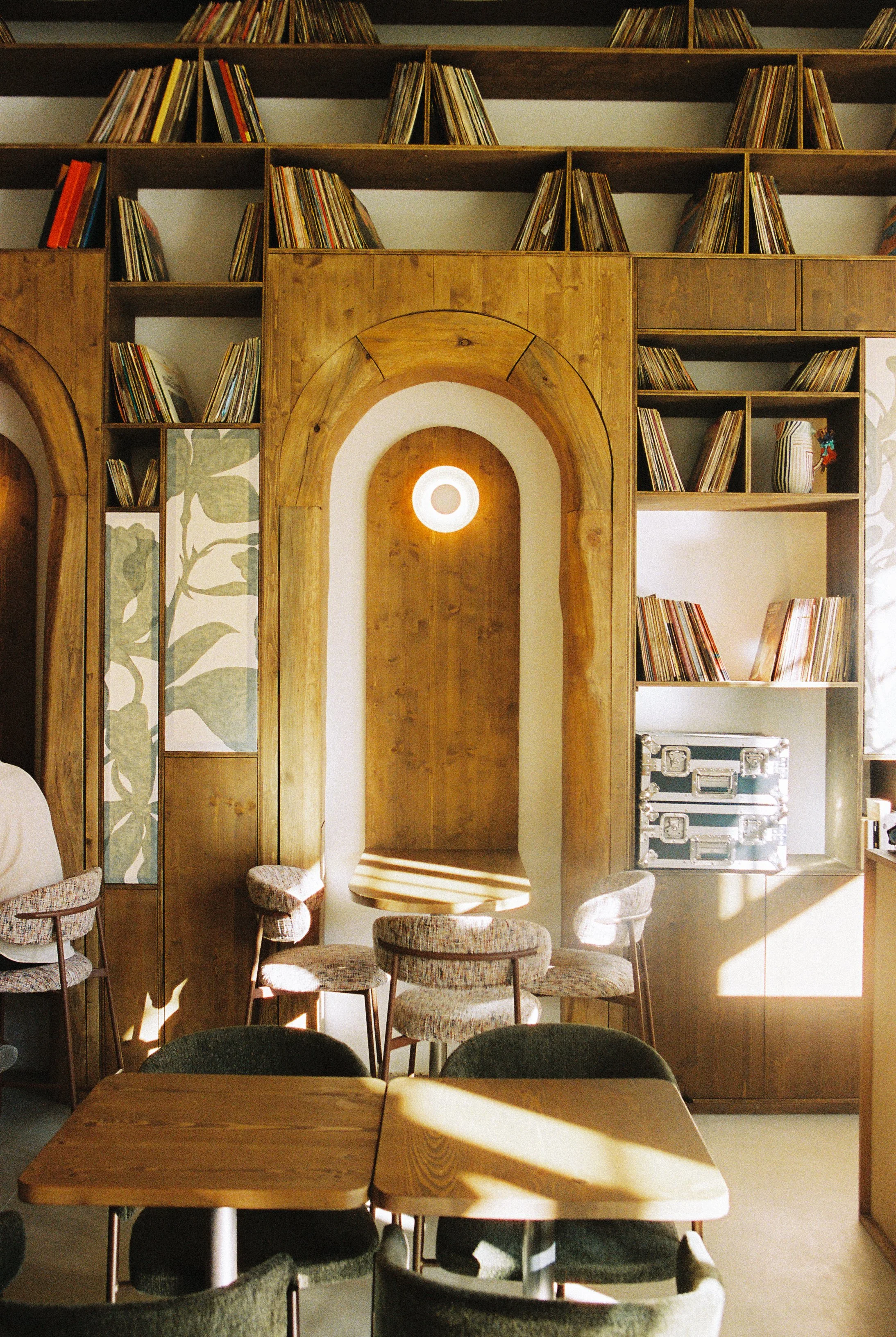
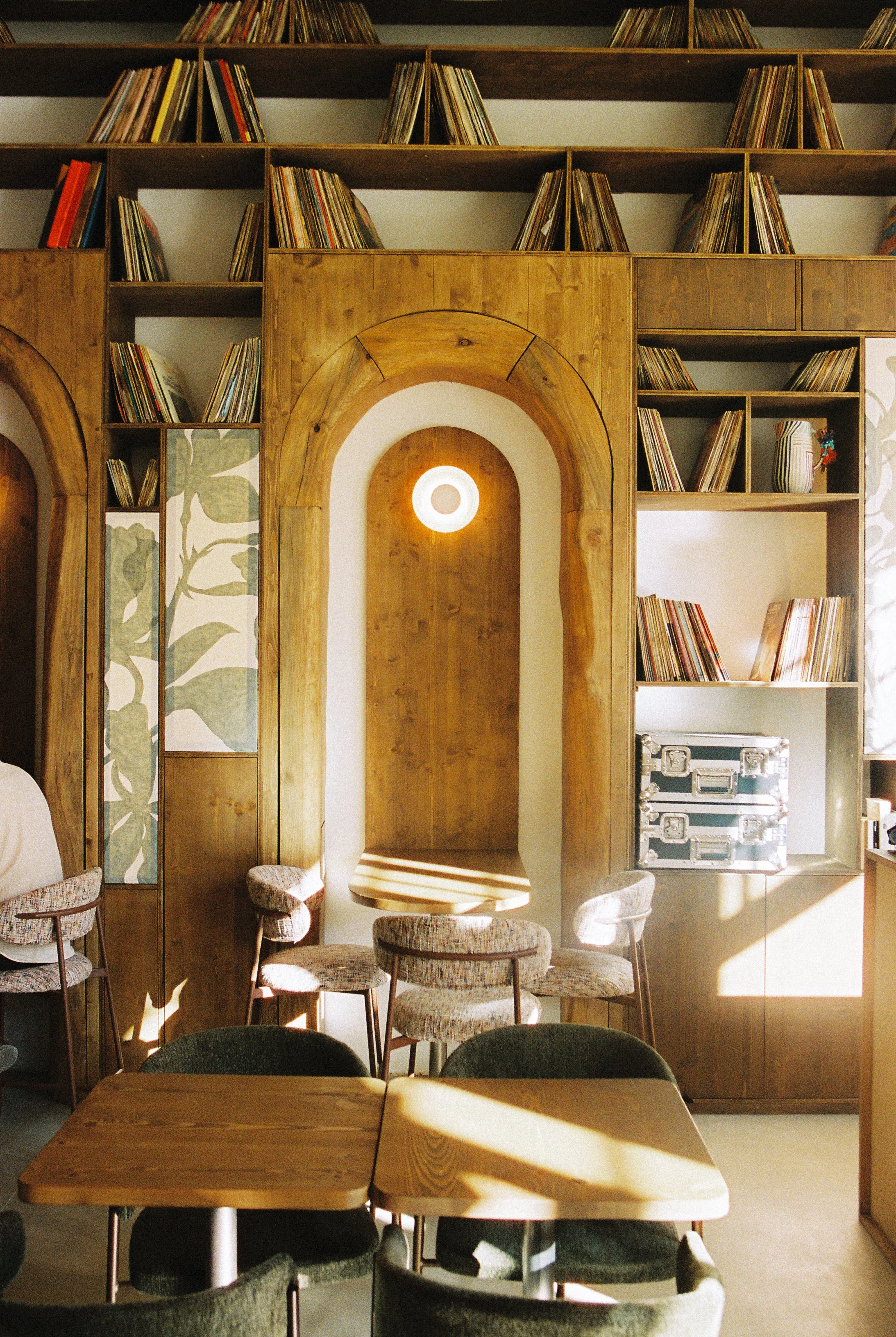
At the centre of Sonora stands a large custom-made wooden cabinet designed as both furniture and cultural archive.
The piece houses an extensive collection of vinyl records while concealing a bespoke sound system developed by Palladium.
Rather than treating speakers as technical equipment to be hidden away, they were fully integrated into the architecture of the furniture itself.
The result is a listening experience where design and sound become inseparable.
The Custom Listening Station
A second bespoke furniture piece incorporates the turntables directly into the design.
This dedicated listening station reinforces Sonora's identity as an audiophile destination and transforms the act of playing records into a visible part of the experience.
Together, these two elements establish music not simply as entertainment but as a central component of the space.
Art Inspired by Brazilian Botanical Heritage
Art plays a fundamental role in shaping Sonora's atmosphere.
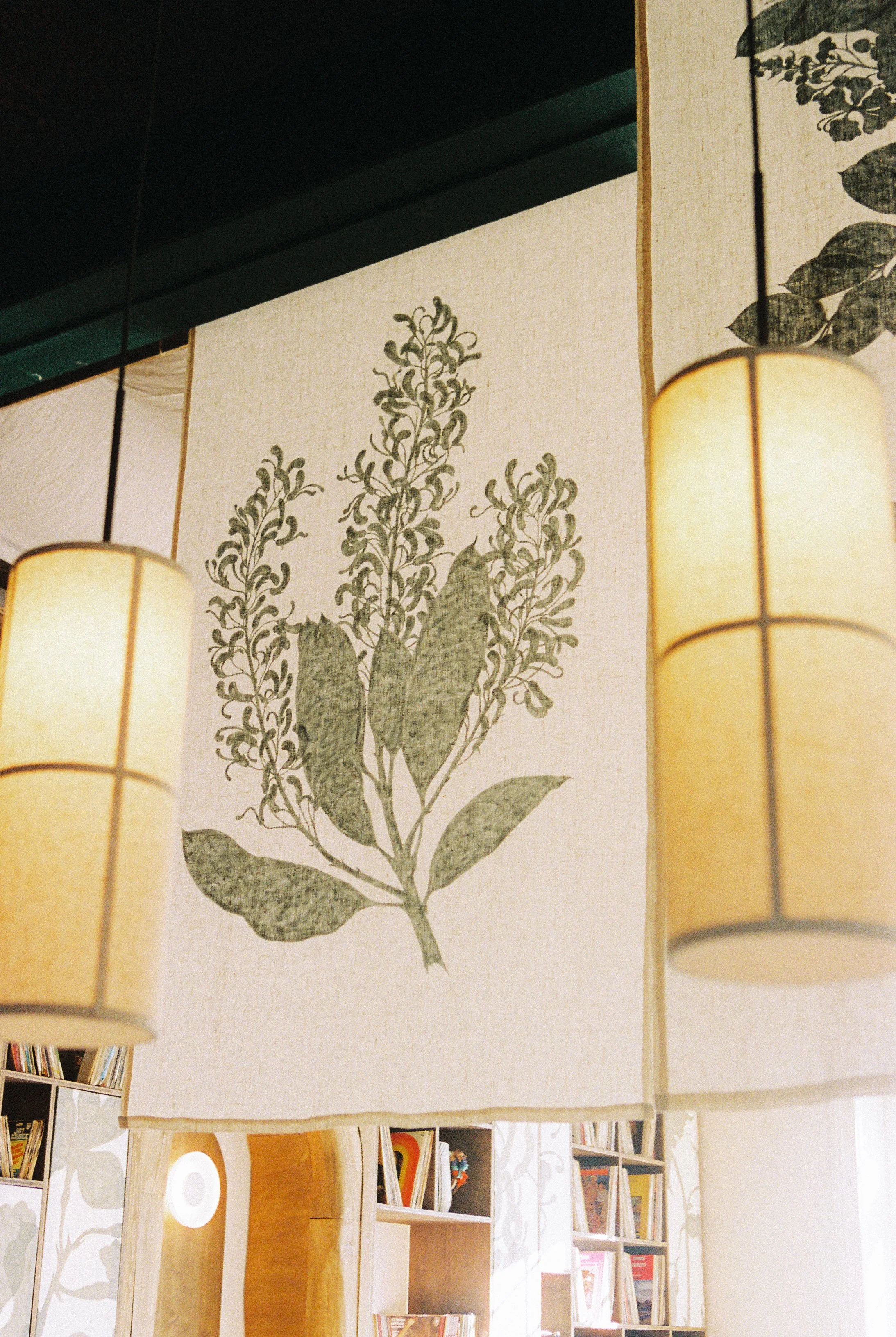
For the project, artist Weronika developed a series of textile artworks inspired by endemic Brazilian plants.
Coming from a unique family background — with a painter mother and a chemist father — Veronika's practice combines artistic expression with scientific observation.
For Sonora, she undertook extensive research into Brazilian flora before creating a collection of hand-painted textile pieces.
The works celebrate the beauty and complexity of native Brazilian ecosystems while introducing softness, texture and storytelling into the interior.
They create a visual dialogue between nature, science and art, reflecting Sonora's broader cultural ambitions.
Contemporary Craftsmanship: The Work of Macheia
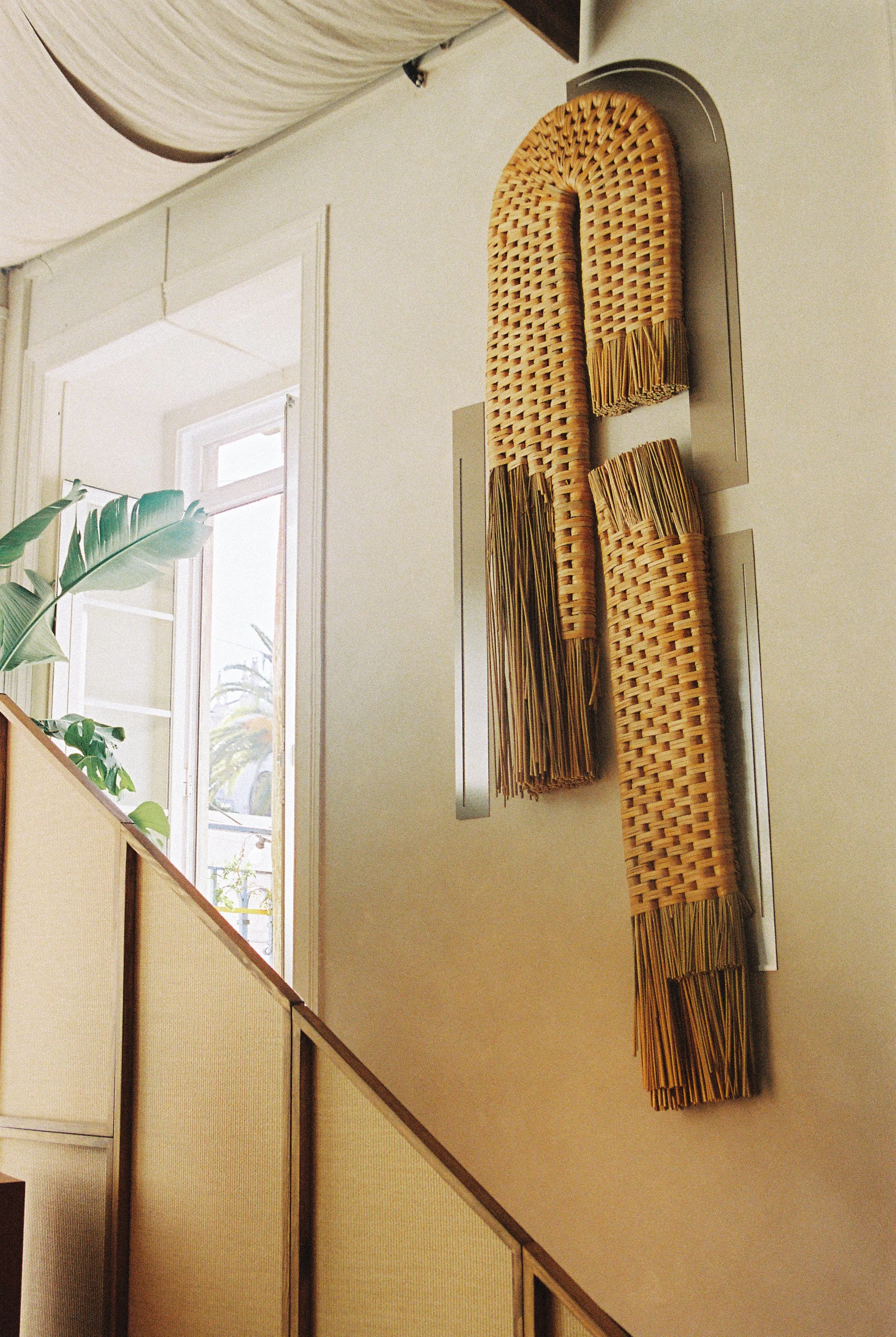
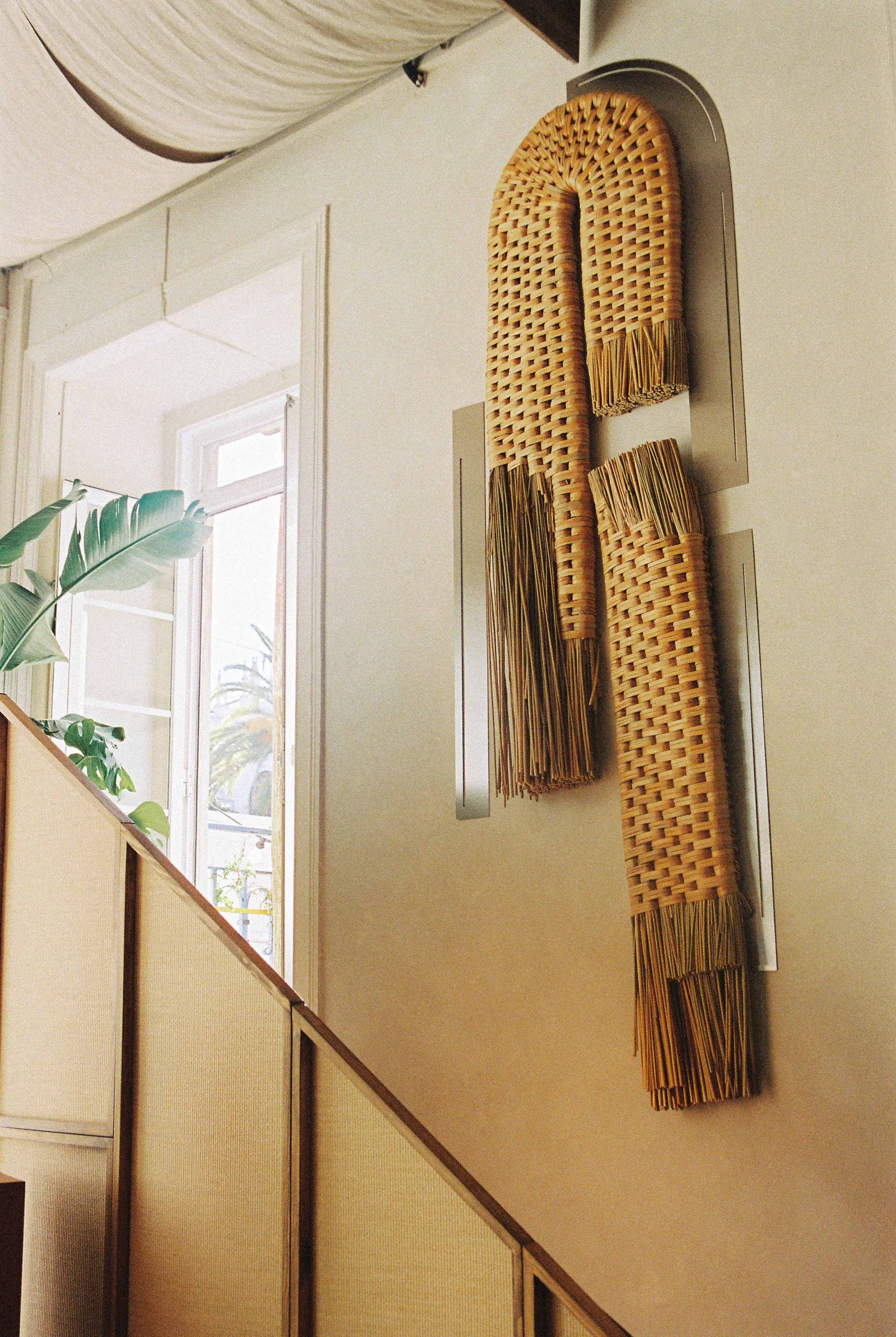
Another important collaboration came from Macheia, a Brazilian design studio founded by two artists dedicated to reinterpreting traditional Brazilian craftsmanship.
Their work explores bunho weaving, an ancestral technique deeply rooted in Brazilian material culture.
For Sonora, Macheia developed bespoke pieces that combine woven natural fibres with brushed stainless steel.
The result is a fascinating contrast between tradition and modernity.
These objects perfectly embody the spirit of the project: respecting heritage while embracing contemporary design languages.
They also reinforce Sonora's connection to Brazilian culture through craftsmanship rather than clichés.
Creating Different Atmospheres Throughout the Day
One of the challenges of the project was designing a venue capable of changing character throughout the day.
In the morning, Sonora functions as a bright and relaxed café.
Throughout the afternoon, it becomes a place for informal meetings, reading and remote work.
As evening approaches, lighting levels shift, music becomes more prominent and the atmosphere becomes increasingly intimate.
Rather than creating separate spaces, the design focuses on creating multiple moods within a single environment.
More Than a Café
Sonora was conceived as more than a hospitality project.
It is a platform for cultural exchange, bringing together musicians, artists, designers and local residents.
Through concerts, exhibitions, listening sessions and community events, the project continues the cultural mission historically associated with Voz do Operário while introducing a new generation of visitors to the neighbourhood.
A New Chapter for Graça
For Studio Bisson, Sonora demonstrates how interior architecture can create meaningful connections between culture, craftsmanship and community.
By bringing together bespoke furniture, contemporary Brazilian art, artisanal craftsmanship and a deep passion for music, Sonora offers a new interpretation of what a neighbourhood café can become.
It is not only a place to eat or drink.
It is a place designed to listen, discover and connect.
www.sonoradavoz.com
FAQ
Where is Sonora located?
Sonora is located inside Voz do Operário, in the Graça neighbourhood of Lisbon.
What is an audiophile café?
An audiophile café is a venue designed around high-quality music listening experiences, often combining food, drinks, vinyl records and live performances.
Who designed Sonora Lisbon?
The interior design project was developed by Studio Bisson, a Lisbon-based interior architecture and design studio.
Does Sonora host live music events?
Yes. Sonora regularly hosts concerts, DJ sets and cultural events.
What design style was used for Sonora?
The project combines warm minimalism, natural materials and contemporary hospitality design, influenced by Studio Bisson's quiet luxury approach.