
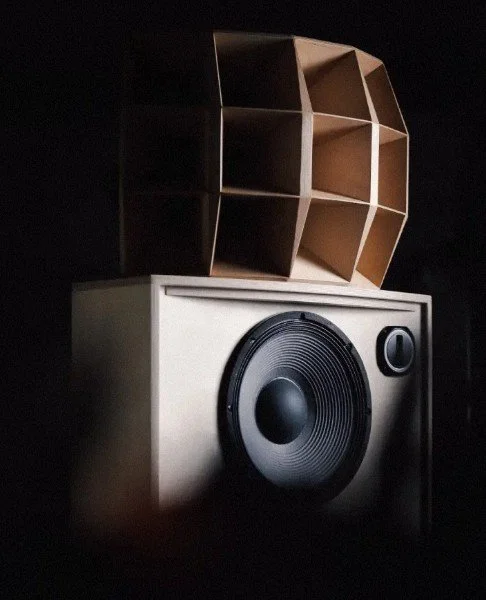
Palladium Sound System at Sonora
When people think about interior design, they usually think about what they can see.
Colour palettes. Furniture. Lighting. Materials. Art.
Yet one of the most influential aspects of any space remains largely invisible.
Sound.
Long before we consciously analyse a room, our brains are already processing its acoustic environment. We instinctively notice whether a space feels calm or chaotic, intimate or overwhelming, comfortable or stressful.
The way a space sounds has a profound impact on how we experience it.
It affects how long we stay, how easily we communicate, how relaxed we feel and ultimately how we remember a place.
For hospitality venues in particular, acoustics have become one of the most important — and often overlooked — aspects of design.
The design of Sonora, a Brazilian-inspired audiophile café and cultural venue in Lisbon, provides an interesting case study into the relationship between sound, architecture and human experience.
Why Sound Matters More Than We Realise
Human beings are constantly interpreting their environment through sound.
Unlike visual information, which we can choose to ignore, sound surrounds us continuously.
Even when we are not actively listening, our brains remain highly sensitive to acoustic conditions.
This explains why a beautiful restaurant can still feel uncomfortable if it is excessively noisy.
Likewise, a visually simple space can feel remarkably pleasant if its acoustic environment is carefully controlled.
Research has shown that noise levels influence:
stress levels
concentration
conversation quality
customer satisfaction
length of stay
overall perception of quality
In hospitality environments, these factors directly affect the success of a venue.
Visitors may never consciously identify acoustics as the reason they enjoyed a space, yet it often plays a decisive role in their experience.
Good acoustic design is rarely noticed.
Poor acoustic design is impossible to ignore.
Sound as a Design Material
Architects and interior designers routinely work with materials such as wood, stone, metal and textiles.
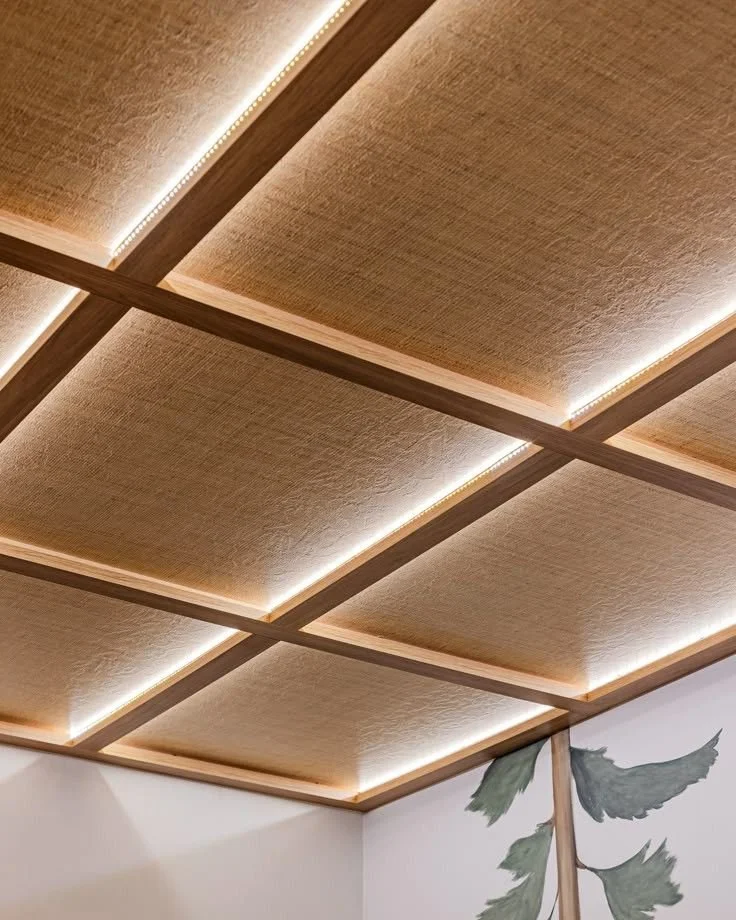
What is less commonly discussed is that these materials are also acoustic tools.
Every surface either reflects, absorbs or diffuses sound.
Hard materials such as glass, concrete, stone and stainless steel tend to reflect sound waves.
Soft materials such as curtains, carpets and upholstered furniture absorb them.
Neither approach is inherently better.
The objective is balance.
A space that reflects too much sound becomes loud and fatiguing.
A space that absorbs too much sound can feel strangely lifeless.
Successful acoustic design is therefore not about eliminating sound but shaping it.
In many ways, sound behaves much like light.
It can be reflected, softened, diffused and directed.
Understanding these principles allows designers to create environments that support specific activities and emotional experiences.
The Hospitality Industry's Acoustic Problem
Many contemporary hospitality spaces prioritise visual impact above all else.
Polished concrete floors.
Large glass surfaces.
Exposed ceilings.
Minimalist interiors.
While visually striking, these elements often create challenging acoustic environments.
Restaurants and cafés frequently suffer from excessive reverberation, where sound continues to bounce around the room long after it has been produced.
As occupancy increases, noise levels rise exponentially.
Conversations become more difficult.
People raise their voices.
The room becomes progressively louder.
This phenomenon is so common that many hospitality operators accept it as unavoidable.
In reality, it is largely a design issue.
Acoustic comfort should be considered as early as lighting, circulation and furniture layout.
What We Learned While Designing Sonora
From the earliest stages of the project, Sonora required a different approach.
The venue was never intended to be simply a café.
It needed to function as:
a neighbourhood café
a coworking environment
a listening bar
a concert venue
a cultural gathering space
Each of these activities comes with different acoustic requirements.
A concert environment requires energy and presence.
A daytime café requires comfort and conversation.
A workspace requires concentration.
The challenge was creating a space capable of supporting all of these experiences without becoming overly specialised for any single one.
This led us to consider sound as an architectural parameter from the very beginning.
Designing Around the Listening Experience
The concept of Sonora draws inspiration from audiophile cafés and listening bars.
In these environments, music is not background noise.
It becomes a central part of the experience.
Visitors are encouraged to engage actively with sound rather than merely consuming it passively.
This philosophy influenced numerous design decisions.
Furniture layouts were organised to create comfortable listening zones.
Materials were selected not only for their appearance but also for their acoustic behaviour.
Technical equipment was integrated directly into the architecture rather than hidden away.
The objective was to create a venue where music could be appreciated without overwhelming social interaction.
Furniture as Acoustic Architecture
One of the most interesting aspects of Sonora is the role played by custom-designed furniture.
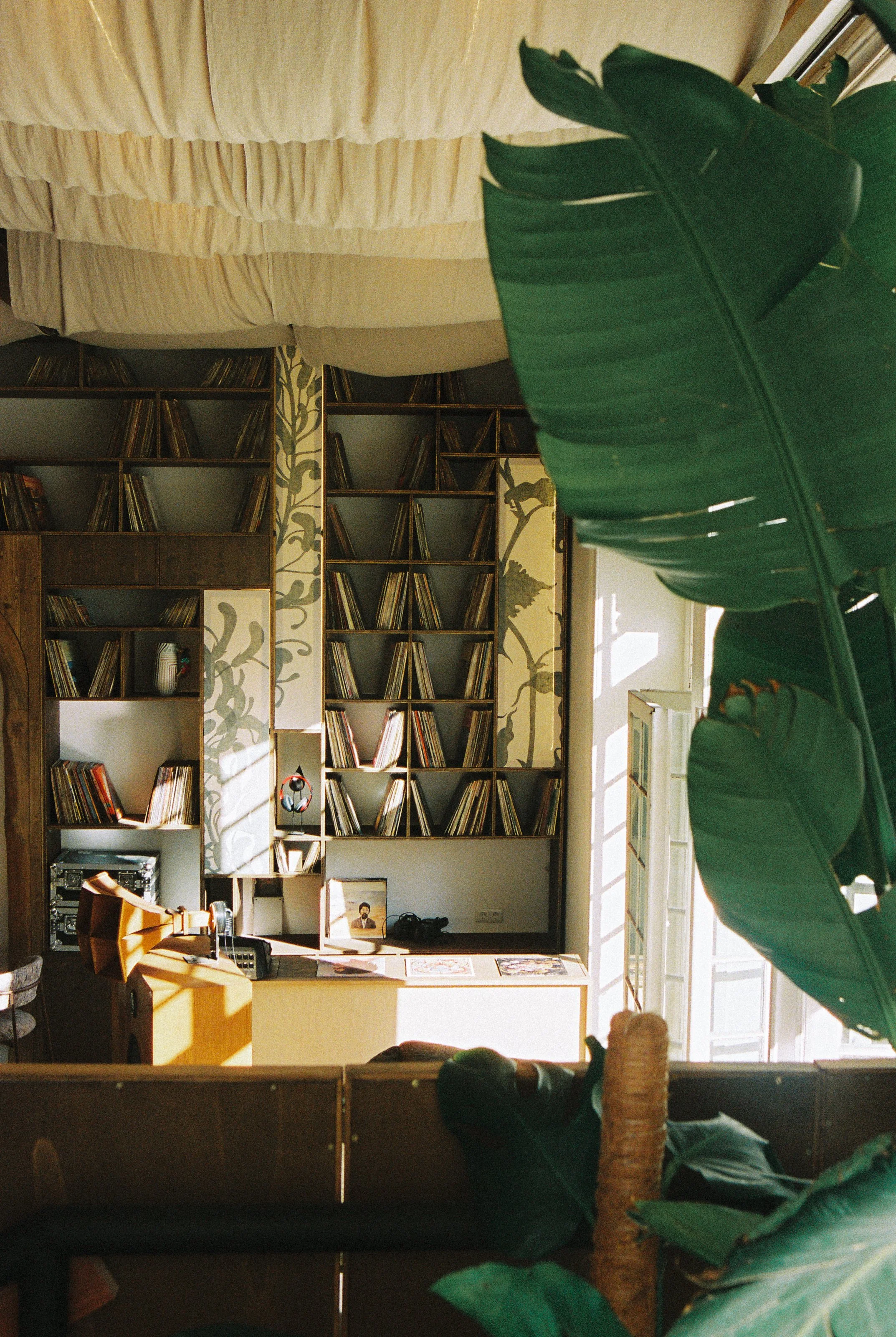
At the centre of the space stands a bespoke wooden vinyl library designed by Studio Bisson.
The piece houses the venue's record collection while incorporating a custom audio system developed by Palladium.
Rather than treating speakers as technical equipment to be concealed, they became part of the architecture itself.
This approach creates a more cohesive relationship between sound and space.
The furniture helps organise how sound is distributed throughout the room while simultaneously becoming one of the venue's defining visual features.
The listening station follows a similar philosophy.
Turntables are integrated directly into custom-designed furniture, transforming the act of playing records into a visible ritual.
These elements demonstrate how technical requirements can become opportunities for design rather than constraints.
Designing Emotional Atmospheres
Acoustics influence more than comfort.
They influence emotion.
The same room can feel completely different depending on how sound behaves within it.
A highly reverberant space often feels energetic and social.
A more controlled acoustic environment feels intimate and calm.
Neither is inherently better.
The desired atmosphere depends entirely on the intended experience.
At Sonora, different moments throughout the day required different emotional qualities.
Morning coffee service benefits from a relaxed atmosphere.
Afternoon conversations require clarity and comfort.
Evening concerts demand greater energy and presence.
Rather than creating separate rooms, the architecture was designed to support these changing moods within a single environment.
Multi-Sensory Design and the Future of Hospitality
The hospitality industry is increasingly moving beyond purely visual design.
Restaurants, hotels and cafés are beginning to recognise that memorable experiences engage all the senses.
People remember how a place made them feel.
That feeling emerges from the interaction of light, sound, texture, temperature, smell and social atmosphere.
Sound plays a central role within this ecosystem.
As hospitality becomes more experience-driven, acoustics will likely become one of the defining factors separating exceptional venues from ordinary ones.
Projects such as Sonora illustrate how acoustic thinking can enrich a space without requiring visible interventions.
Often the most successful design decisions are the ones visitors never consciously notice.
Conclusion
Great interior design extends far beyond aesthetics.
It shapes behaviour, emotions and human interaction.
The way a space sounds influences how people move through it, how they communicate and how they remember it long after they leave.
At Sonora, sound was not treated as a technical problem to solve after the design was completed.
It became one of the project's guiding principles.
By considering acoustics alongside architecture, materials and furniture, the project demonstrates a broader approach to hospitality design — one where every sensory dimension contributes to the overall experience.
Because ultimately, the most memorable spaces are not only the ones we see.
They are the ones we hear, feel and remember.
www.sonoradavoz.com
Frequently Asked Questions
Why are acoustics important in interior design?
Acoustics influence how people experience a space. Poor acoustic conditions can create stress, reduce comfort and make conversations difficult. Well-designed acoustics improve communication, concentration and overall well-being while contributing to a more pleasant and memorable experience.
How does sound affect customer experience in restaurants and cafés?
Sound directly impacts how customers feel inside a venue. Excessive noise levels can shorten visits, increase stress and reduce customer satisfaction. A balanced acoustic environment encourages guests to stay longer, interact more comfortably and enjoy the overall atmosphere.
What materials improve acoustics in hospitality spaces?
Soft and textured materials generally help absorb sound and reduce reverberation. Examples include:
linen curtains
upholstered seating
acoustic panels
rugs and carpets
wood surfaces with texture
woven natural fibres
The objective is not to eliminate sound but to create an appropriate balance between absorption and reflection.
What is acoustic comfort?
Acoustic comfort refers to the quality of a sound environment. A space with good acoustic comfort allows people to communicate easily, enjoy music without excessive noise and feel relaxed throughout their visit.
What is an audiophile café?
An audiophile café is a hospitality venue designed around high-quality music listening experiences. Inspired by the Japanese Jazz Kissa tradition, these spaces combine carefully curated music, specialised sound systems and environments designed to enhance listening quality.
How did acoustics influence the design of Sonora?
At Sonora, acoustics were considered from the earliest stages of the design process. Material selection, furniture design, spatial organisation and technical equipment were all developed with sound quality in mind. The objective was to create a venue capable of supporting café service, coworking, vinyl listening sessions and live performances within the same space.
What role does furniture play in acoustics?
Furniture can significantly influence the way sound behaves in a room. Large wooden elements, upholstered seating and custom-built structures can help absorb, diffuse or direct sound. At Sonora, bespoke furniture was designed to contribute both visually and acoustically to the overall experience.
Can acoustics influence emotions?
Yes. Research shows that acoustic environments affect stress levels, mood, concentration and social behaviour. Spaces with balanced acoustics often feel calmer, more welcoming and more comfortable than environments with excessive reverberation or background noise.
Why are acoustics becoming more important in hospitality design?
As hospitality increasingly focuses on experience rather than simple consumption, designers are paying greater attention to all sensory aspects of a space. Acoustics have become a key factor in creating memorable environments that encourage visitors to stay longer and return.
Who designed Sonora Lisbon?
Sonora was designed by Studio Bisson, a Lisbon-based interior architecture and design studio specialising in hospitality, residential and lifestyle projects. The project combines contemporary Brazilian influences, bespoke craftsmanship, acoustic thinking and cultural programming within the historic setting of Voz do Operário.